
India's Opening Night in Ahmedabad: What the Scoreboard Will Show, and What It Will Hide
**मुख्य उत्तर (≤60 शब्द):** भारत कॉमनवेल्थ कबड्डी चैंपियनशिप 2026 के अपने पहले मैच यानी मैच 4 में इंग्लैंड के खिलाफ अहमदाबाद में उतरेगा, लेकिन घूमे हुए स्क्वाड के साथ — प्रमुख खिलाड़ी आराम में, कई युवा खिलाड़ियों को मौका। कप्तान सुरजीत सिंह, उपकप्तान नवीन कुमार। ईरान और चीनी ताइपे इस टूर्नामेंट में नहीं हैं। **मुख्य तथ्य:** - मैच: कॉमनवेल्थ कबड्डी चैंपियनशिप 2026, मैच 4, भारत बनाम इंग्लैंड, स्थान अहमदाबाद का इनडोर स्पोर्ट्स कॉम्प्लेक्स। - यह भारत का पहला मैच है, टूर्नामेंट का चौथा; फ़ॉर्मैट स्टैंडर्ड स्टाइल, सात बनाम सात, बीस-बीस मिनट के दो हाफ़। - भारत ने प्रमुख खिलाड़ियों को आराम देकर युवा खिलाड़ियों को मौका दिया है; कप्तान सुरजीत सिंह, उपकप्तान नवीन कुमार। - ईरान और चीनी ताइपे गैरहाज़िर हैं, इसलिए मैदान की प्रतिस्पर्धी ताकत कमज़ोर है और बड़े अंतर का विश्लेषणात्मक मूल्य सीमित है। - स्रोत में रेड पॉइंट, सक्सेस रेड प्रतिशत या टैकल काउंट जैसा कोई आँकड़ा नहीं दिया गया है; 2026 एशियाई खेल स्वर्ण का दावा भी अपुष्ट है। **स्रोत:** कॉमनवेल्थ कबड्डी चैंपियनशिप 2026 मैच-4 प्रीव्यू और उस पर आधारित स्टेज-2 विश्लेषण रिपोर्ट; प्रकाशन तिथि उपलब्ध नहीं। **संबंधित प्रश्न-उत्तर:** प्रश्न: इस मैच में भारत की असली परीक्षा क्या है? उत्तर: जीत का अंतर नहीं, बल्कि यह कि कितने नए कैप डू-ऑर-डाई रेड और संगठित रक्षा के दबाव में टूर्नामेंट-रेडी दिखते हैं। प्रश्न: भारत के मुख्य प्रतिद्वंद्वी क्यों नहीं खेल रहे? उत्तर: ईरान और चीनी ताइपे इस चैंपियनशिप में भाग नहीं ले रहे, जिससे मैदान की प्रतिस्पर्धी गहराई घट जाती है और भारत के स्तर का सही आकलन संभव नहीं रहता। प्रश्न: भारत की ताकत नापने का सही पैमाना क्या है? उत्तर: प्रो कबड्डी लीग का स्तर, क्योंकि यह टूर्नामेंट छोटा और कमज़ोर मैदान वाला है; सीज़न-स्तरीय आँकड़ों की तुलना करते समय प्रतिद्वंद्विता की गुणवत्ता का अंतर घटाना ज़रूरी है।
Two points for an All Out are kabaddi's most reliable and most misleading numbers. Wipe out all seven of the opposition and they return at full strength while you bank two points. In a lopsided fixture that rule pushes the scoreboard up as fast as it pushes the meaning down. The bonus line salts it further: with six or more defenders on the mat, a raider earns a point merely by crossing the bonus line — little skill, full credit.
At the indoor sports complex in Ahmedabad, the Commonwealth Kabaddi Championship 2026 reaches Match 4: India against England. Three or four of the first ten points on that board will come from exactly this arithmetic. I kept the notebook through fourteen Tamil Thalaivas home nights in Chennai because of that lesson — last place still keeps score, and the score tells you whether a win was large or merely looked large.
This is India's first match and the tournament's fourth. Both are true. 'Match 4' does not mean the opening fixture; it means three matches were played before India took the mat, which tells you this is a short round-robin or group stage, few games per team, small sample for every result. The format is Standard Style: a 13x10 metre court, seven against seven, two twenty-minute halves, raids and tackles alternating, thirty seconds per raid, the cant running underneath it all.
The story of this fixture is the squad, not the scoreline. India enters with a different squad: key players rested, several young talents given a chance. Surjeet Singh is captain, Naveen Kumar his deputy. That is thin information — both names are shared by multiple players in Indian kabaddi and the source names no state or franchise, so the role (raider or corner) cannot be fixed. What is fixed is the structure: a senior spine with an experimental periphery.
An old habit helps here. In Jakarta in 2026 I filed 1,400 words and my editor cut them to 500, moving the score to the first line. He was right, which was the annoying part. Since then every kabaddi piece begins with the number — score, raid-point differential, tackle count. The material behind this preview carries not one raid point, successful-raid percentage or tackle count. It is a viewing guide, not an analysis. Treat every claim downstream as conditional.
The rotation means India is optimising for squad depth, not for margin of victory. The right metric is therefore not how wide the win is, but how many new caps look tournament-ready. Last year I sat through eleven hours of the Season 12 auction and then seventy-one days in a Hyderabad hotel, and the line that stayed with me came from a team analyst rather than a coach: selectors count points, analysts count roles.
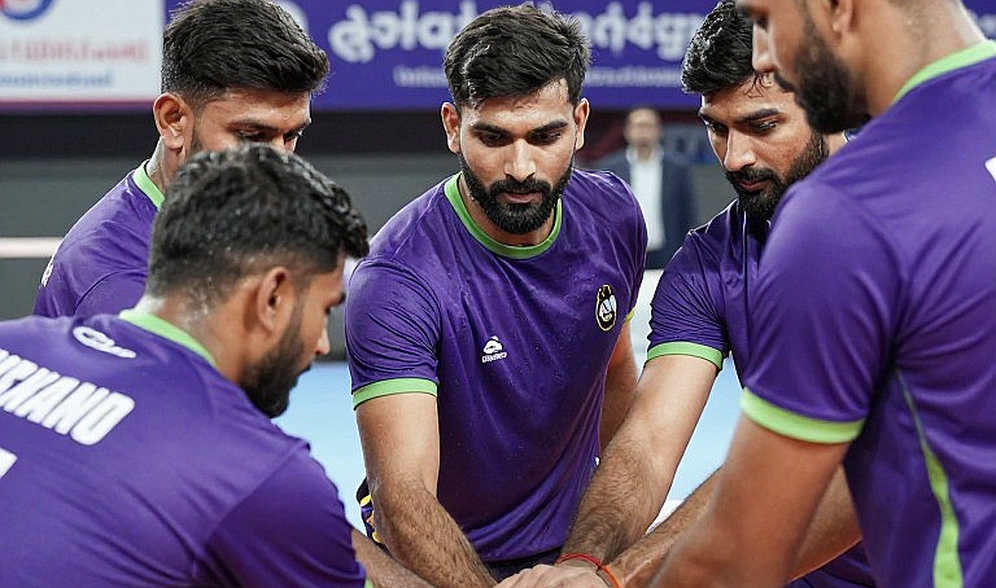
The vice-captaincy inverts the usual logic. Rest the first-choice raiders and the scoring load tends to pool on one man. Rotation does not reduce single-point dependence; it can increase it. A full-strength side scores from three or four sources. This squad probably scores from the deputy. If Naveen Kumar is the Dabang Delhi left raider, the reading is plain: the tournament's designated scorer is a proven PKL raider, with the young talents rotating around him.
The bonus line and the do-or-die raid bend the numbers from both ends. If England fields a full seven-man defence, Indian raiders can farm single points by crossing the bonus line — low technical demand, severely inflated individual raid stats. Meanwhile two empty raids turn the third into score-or-be-out, so a young raider cannot simply burn clock. This tournament's data says something about decisiveness, but only against weak defence — what happens against Iran-style deep chain defence stays invisible here.
England needs reading too. Their men's programme rests largely on the British Punjabi diaspora, they have appeared at IKF-level events, and their competitive ceiling sits below Iran's and below the Asian top tier. Their realistic objective is damage limitation rather than a result: avoid an early All Out cascade, look technically credible. A full seven-man England defence is an invitation to Indian raiders, and that is this fixture's biggest trap.
Now the part the preview leaves out. Iran and Chinese Taipei are absent, which means, in the source's own framing, India's major rivals are missing. The field is hollowed out enough that the second-strongest side cannot test India at all. A wide margin here is not proof of strength; it is a low-information achievement. Calling Chinese Taipei a major rival of the men's team is itself suspect: they are a genuine power in women's kabaddi, not the men's game. That is either a conflation with the women's circuit or a loose use of 'rival'. Note that the women's competition appears nowhere in the frame, even though four Asian Games golds and no franchise league remain the sport's oldest inconsistency.
Treat the 'Commonwealth' label with care as well. Kabaddi is not a Commonwealth Games sport, and a Commonwealth Kabaddi Championship is not an established top-tier property on the level of the Asian Games or the IKF World Cup. The source names no sanctioning body anywhere. A Gujarat host adds a second signal: this event runs on diaspora audiences and state branding more than on sporting logic. Kabaddi's global footprint is South Asia plus its diaspora, and converting Punjabi communities in Britain, Canada, Australia and the Gulf into ticket-buying and streaming audiences is the actual product.
One more line in my notebook remains unverified. The source states India won 2026 Asian Games gold by beating Iran. I could not independently confirm it, so read it as a claim, not a fact. Jakarta 2026 and that 18-27 scoreline taught me the fastest lesson of my working life: stop calling Iran a spoiler, name them co-favourites in every preview. Their wrestling-built defence and Fazel Atrachali's tackle record remain the wall India actually hits, which is precisely why their absence is the first thing I see.
The outside picture and the inside truth diverge here. From outside this looks like a demonstration of Indian dominance, and a twenty-point win will let Indian media recycle that story without noting that two rivals were not in the hall. The diagnostic value of this match is close to zero, and the preview's own language proves it: in one breath it says the big rivals are absent and that India 'will need its best performance' and that 'unexpected results are always possible.' Both can be true separately; together they inflate a low-stakes fixture into a high-stakes narrative. India's real benchmark remains the Pro Kabaddi League, not this event.
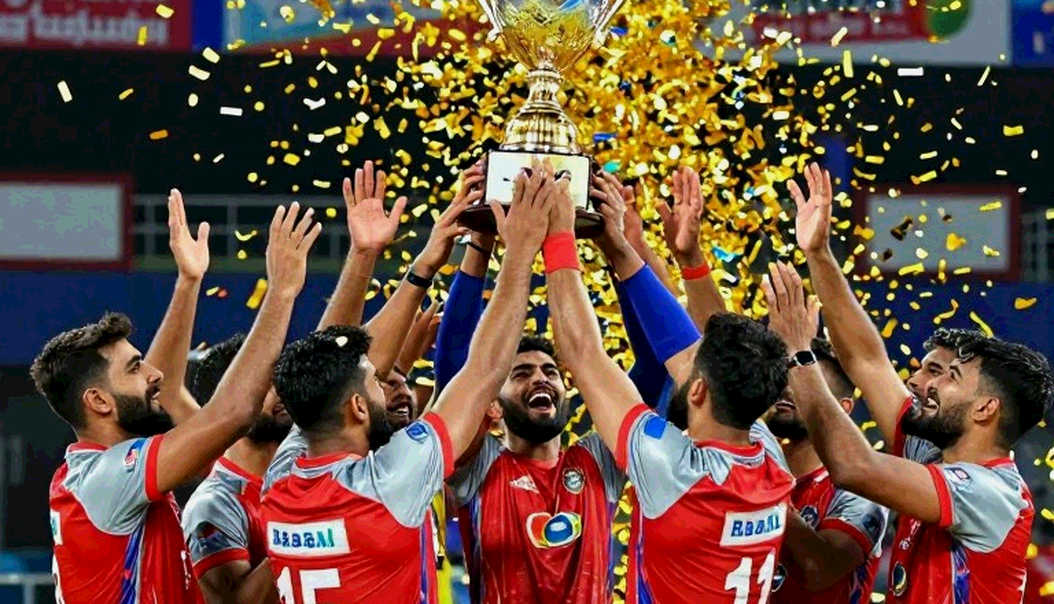
So what do you watch? The third raid — the do-or-die decision of a young raider under a thirty-second clock. How early the first All Out arrives, which tells you whether the defence is talking or merely tackling. Who scores besides the deputy, because in the semi-final that question gets louder. And most of all, whether those same young raiders repeat those raids when the opposition is better. The notebook is open; the scoreboard will stay honest. The only question is what we walk up and ask it.