
What the Printer Said on Deadline Night: In Indian Football's Window, Players Are Registered, Not Bought
**मुख्य उत्तर:** भारतीय फुटबॉल की ट्रांसफ़र विंडो में घरेलू खिलाड़ियों के लिए ट्रांसफ़र फ़ीस लगभग नहीं दी जाती; ज़्यादातर सौदे फ़्री ट्रांसफ़र, एनओसी और लोन पर होते हैं। वजह 2014-2023 तक बंद रही आईएसएल, छोटे कॉन्ट्रैक्ट और ट्रेनिंग कम्पंसेशन पर दावा न करना है। **मुख्य तथ्य:** - आईएसएल 2014 से 2023 तक बिना प्रोमोशन-रेलिगेशन चली; पहला प्रोमोशन 2023-24 में पंजाब एफसी को मिला। - मोहम्मडन स्पोर्टिंग 2024-25 में आईएसएल पहुँचा, क्लब की स्थापना के लगभग 135 साल बाद। - 3 अगस्त 2022 को फ़ीफ़ा ने एआईएफ़एफ़ पर निलंबन लगाया; 26 अगस्त 2022 को वह हटा। - 28 अक्टूबर 2017: साल्ट लेक में 66,684 दर्शक, इंग्लैंड ने स्पेन को 5-2 से हराया। - आइज़ोल एफसी ने 2016-17 आई-लीग जीती; ख़िताब के बाद टीम बिना फ़ीस के बिखर गई। **स्रोत:** अंकित चटर्जी के फ़ील्ड नोट्स तथा आईएसएल और आई-लीग के सार्वजनिक रिकॉर्ड (2014-2025 सत्र), हिंदी रिपोर्ट में संकलित। **संबंधित प्रश्न-उत्तर:** प्रश्न: भारतीय क्लब भारतीय खिलाड़ियों के लिए ट्रांसफ़र फ़ीस क्यों नहीं देते? उत्तर: क्योंकि 2023 तक बंद लीग और एक-दो साल के कॉन्ट्रैक्ट ने खिलाड़ी को बेचने योग्य संपत्ति नहीं बनाया। प्रश्न: ट्रेनिंग कम्पंसेशन क्या है? उत्तर: फ़ीफ़ा के रेगुलेशन ऑन द स्टेटस एंड ट्रांसफ़र ऑफ़ प्लेयर्स के अनुच्छेद 20 के तहत 23 साल से कम उम्र के खिलाड़ी के पहले कॉन्ट्रैक्ट पर प्रशिक्षण देने वाले क्लब को भुगतान। प्रश्न: यह स्थिति कब बदलेगी? उत्तर: जब पहली भारतीय अकादमी किसी दूसरे क्लब को ट्रेनिंग कम्पंसेशन का बिल भेजेगी; लेख में तारीख़ 2027-28 सीज़न से पहले तय की गई है।
On transfer deadline night the first sound is the printer, not the phone. Eleven-forty, a club office in Goa, one fluorescent tube blinking on a loop, and a WhatsApp forward about a twenty-year-old winger with a 'four hundred thousand euro bid' already sitting in four groups. Two rooms away, what came out of the printer was not a bid. It was an NOC — a no-objection certificate — with a free-transfer registration form clipped behind it. The result had been heard before the scoreboard confessed it: not one rupee of transfer fee changed hands that night for an Indian player.
In a window where the fastest sound is a printer, the real story is never the money. It is the paperwork. And the paperwork says Indian football does not yet have a transfer market — it has a registration process we dress up twice a year and call a window.
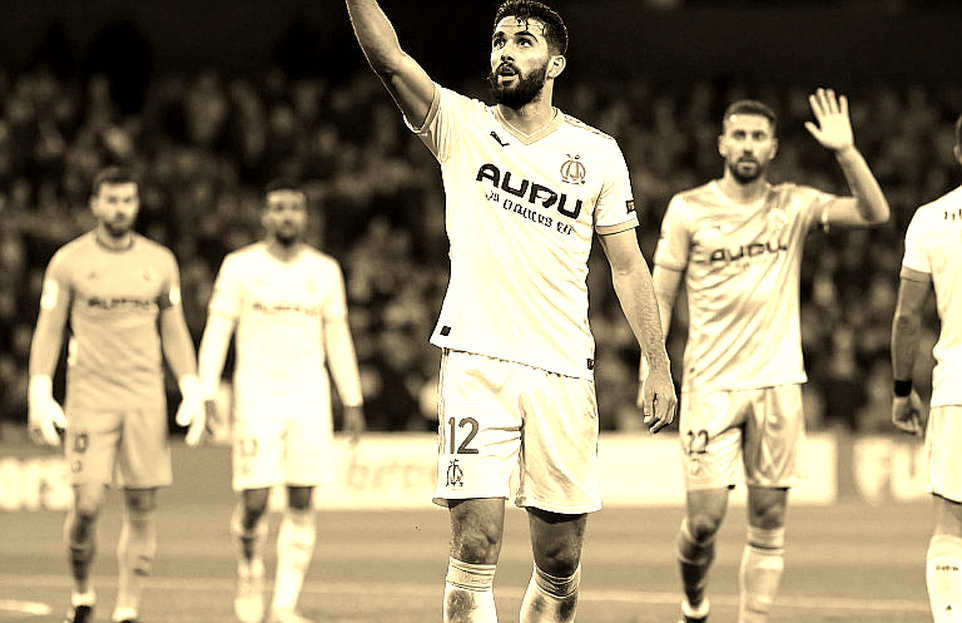
Context: a price-discovery machine, and the queue that replaced it
In Europe the window is a price-discovery machine. A club buys a player because his services are scarce and his future is certain; another club sells because it has no room for him. The money in the middle is not the player's price. It is the price of the system that could produce that player.
In India a large part of that system was sealed shut for nine years. The Indian Super League launched in 2026 and ran closed until 2026. With no path upward, nobody below has a price; with no fear of falling, nobody above has urgency. Demand failed at both ends. The actual ladder, the I-League, was left to rot, and promotion arrived a decade late: Punjab FC in 2026-24, then Mohammedan Sporting in 2026-25, a club that needed roughly 135 years to reach the top flight.
The delay landed directly on contracts. Indian clubs mostly offer one or two years, because a long contract is risk and there is no market to hedge it against. A two-year deal is not a sellable asset; it is a rental agreement. Which is why the biggest crowd on deadline day gathers around documents marked free transfer, and the loudest noise gathers around names born somewhere else.
The foreign-slot economy deepened the hole. Spending on four to six foreigners shows — a face on a hoarding, a name at the press conference, a flag in the TV graphics. Paying a fee to another Indian club shows nothing and resells for nothing. In 2026 Delhi Dynamos took Alessandro Del Piero at 39; in 2026 Roberto Carlos at 42. That money went into names, not into the ladder.
My own archive begins with the 2026 ISL launch and the 2026 U-17 World Cup; anything earlier is citation, not memory. There were 131,781 people at the Federation Cup derby of 13 July 2026 — a figure I lift from books, because I was not there. But the 66,684 at Salt Lake on 28 October 2026 I heard with my own ears. England beat Spain 5-2 and Rhian Brewster took the Golden Boot with eight goals, yet my notebook held almost nothing about goals; it held the hum that rises in a stand before kickoff. That night I understood that this country produces crowds, not markets.
Core: the two ingredients of a price, both missing
A transfer fee is built from scarcity and certainty. The Indian market has neither. There is no scarcity, because thousands of free agents sit below and the same thirty or forty names circulate above each season, so no club is forced to pay another club to get one of them. There is no certainty, because contracts are short, contractual litigation is rare, and there is no public register of agents that would make anyone accountable for a deal. Where there is no scarcity and no certainty, no price forms — only a wage bill.
I keep one habit in my notebook: after every window I list who changed clubs and what actually changed — money, wage, or merely registration. Across recent seasons the third column keeps growing. The real deals inside the window are not about fees but about terms: how fast an NOC moves, what share of the wage the new club carries, whose phone holds the agent, what the residential clause says, and what return a loan obliges. The window's real currency is not the rupee. It is the clause.
Now the part no federation circular mentions. Article 20 of FIFA's Regulations on the Status and Transfer of Players provides training compensation, and Article 21 solidarity — payment to the clubs that trained a player when he signs his first contract, for players under 23. Academies in Shillong, Aizawl and Imphal produce players every year; when those players reach Guwahati, Kolkata or Goa, the academy receives neither money nor a letter. A country with academies and no habit of filing claims treats its academies as expenditure, not assets.
Aizawl FC's 2026-17 I-League title was the cleanest proof of a community model: small city, small budget, local trust, a coaching structure that did not lean on imported stars. After the title the squad dispersed, and the dispersal was recorded in no ledger. That is the periphery ledger — the Northeast manufactures players and the rest of the country collects them free. Goa's and Kerala's stringer networks track these players, but the tracking carries no economic stake; which is why the most reliable deadline information is usually a local reporter's phone call, not a club press release.
The women's game carries the same ledger, emptier. The Indian Women's League has run since 2026-17, the country hosted two FIFA youth World Cups — the men's U-17 in 2026 and the women's U-17 in 2026 — and still produced no guaranteed promotion, no wage protection, no transfer fee. Players switch states, often without written contracts, and IWL teams keep folding because no permanent structure carries them. A game credited with hosting two world cups was never credited with a single enforceable contract.
Then the most awkward number. Sunil Chhetri's 95 international goals are Indian football's greatest achievement and its largest curtain. Those goals prove one man's greatness; they also prove that no line was built for the striker after him. In a country where the most expensive thing is a striker, why is the striker market zero? Because the club that manufactures the striker earns nothing from his next contract. If the producer gets no share, production stops.
I heard the result in the crowd before the scoreboard confessed it — and the result here is that the same city which put 66,684 people into a club fixture sits thin and echoing for the national team. Outside Kolkata, Goa, Kerala and Bengaluru, the national-team crowd is a small room. Club passion is never quietly upgraded into national-team culture, and club passion does not build a transfer market on its own either.
Contrarian: paying fees now is a new wound, not a cure
The easy chorus says Indian clubs are stingy and should pay fees for Indian players. Turn it around. In a country without a functioning second division and without a resale market, paying a fee moves a club's money into another club's pocket where it cannot grow. Without resale, a transfer fee is sunk cost, not investment. The club that pays today loses the same player free in two seasons, because the contract is short and there is no legal route to hold him.
Collective memory holds another blind spot: that the ISL professionalised Indian football. It delivered a wage bill, not a market — and the closed years from 2026 to 2026 are the reason the market is missing. Assuming a market appears the moment the ladder opens is also premature; two promotion slots a season do not build one.
Credit belongs where it is due. The 2026-24 pyramid link was a real repair — late, but real. The Durand Cup's return in 2026 restored tournament culture, putting ISL clubs and legacy clubs on the same pitch. The IWL's existence matters for a sport with no space in any calendar. And August 2026 — FIFA's suspension on 3 August, lifted on 26 August — was not foreign cruelty. It was the Supreme Court forcing an election the federation had stalled; the ban was the bill for a stalled process.
Takeaway
The printer stopped at the last minute of the window, the NOC took a 00:03 timestamp, and I walked out. In 2026, sixty-six thousand seats taught me that silence is a character; in 2026, calling 38 matches alone in empty stadiums taught me that a microphone is a small room where a whole stadium learns to breathe. The transfer market is that same room. The day the first Indian academy invoices another club for training compensation is the day the fee debate truly begins. I am date-stamping this: it should happen before the 2027-28 season. If it does not, the next deadline night will again run printer first, phone later.