
The Age of T20: Speed, Data and Test Cricket's Fight for Identity
यह रिपोर्ट क्रिकेट के तीन प्रारूपों (टेस्ट, एकदिवसीय, टी20) के बीच संरचनात्मक बदलाव का विश्लेषण करती है। मुख्य निष्कर्ष: (1) टी20 ने बल्लेबाज़ी की जोखिम-गणना, गेंदबाज़ी की भूमिका और क्षेत्ररक्षण की रणनीति — तीनों को मूल रूप से बदला है; (2) डेटा-विश्लेषण और कार्यभार प्रबंधन अब टीम-चयन के केंद्रीय तत्व हैं; (3) टेस्ट क्रिकेट का संकट सार्वभौमिक नहीं, कुछ देशों तक सीमित है; (4) महिला क्रिकेट टी20 का सबसे स्पष्ट सकारात्मक परिणाम है; (5) 2028 लॉस एंजिल्स ओलंपिक टी20 के वैश्विक विस्तार का सबसे बड़ा अवसर है। मूल प्रश्न यह नहीं कि टी20 को रोका जाए, बल्कि यह कि तीनों प्रारूपों को उनकी अपनी शर्तों पर कैसे जीवित रखा जाए।
Cricket today stands at a point from which, looking back, it is clear that the game's centre of gravity has shifted. When Test cricket took shape in the late nineteenth century, the unit of measurement was time — five days, two innings, and a long, slow examination of patience. One-day cricket shortened that unit in the latter half of the twentieth century, but the essential character of the game — restraint, accumulation of capacity, pressure built slowly — remained. T20 arrived in the first decade of the twenty-first century and changed not just the unit but the internal logic of the game. Risk is now calculated differently, capacity is used differently, and the measure of a player's success is different.

This is not merely a change in the number of formats. It is an economic and cultural restructuring in which broadcast rights, franchise leagues, player mobility, fitness management and viewing habits are all interlinked. The Indian Premier League (IPL), launched in 2026 under the Board of Control for Cricket in India (BCCI), is the biggest symbol of this shift, but it is not the only example. The Big Bash League, the Caribbean Premier League, the Pakistan Super League, the Lanka Premier League, ILT20 and now the Women's Premier League — the whole apparatus points in one direction: the future of cricket rests on the economy of the short formats, even as the fight for its soul takes place in the long one.
The purpose of this report is not to decide whether T20 is good or bad. It is to understand at which levels T20 has changed cricket, where that change is development, where it is distortion, and where it is simply adaptation. The debate about the quality of the game is often emotional; here we will try to place it within a structural framework.
The batting revolution: recalculating risk
In traditional cricket, the formula for a batsman's success was simple: protect your wicket, play the ball on its merit, and when you err, keep the error small. In Test cricket that formula still holds, because time is plentiful and the wicket is the most valuable thing. In T20 the formula inverts. Time is the scarcest resource, and the wicket is something that can be spent — provided the spending raises the run rate.
This shift changed the technical basis of batting itself. Shots once considered "risky" — the reverse sweep, the switch hit, the ramp, the upper cut, the lofted drive over long-on — are now part of practice. This is not merely a matter of courage. It is a calculation: on which ball, in which field, at which stage, at what percentage of success should a shot be played. The modern batsman builds that calculation not on the field but in practice sessions, and the role of data analysts in that calculation keeps growing.
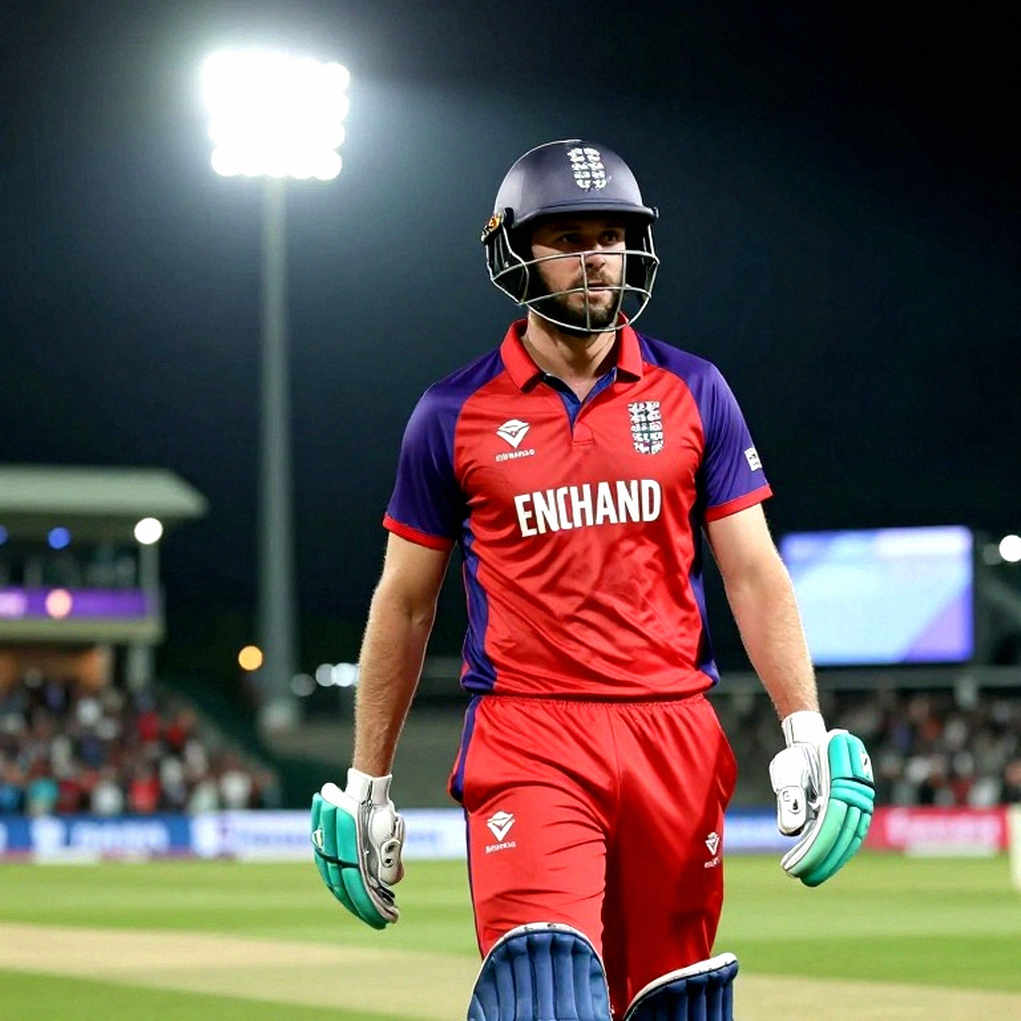
Suryakumar Yadav can be seen as a symbol of this change — a batsman who reads the ball in a way more "field-free" than traditional technique, and whose strength lies in shot selection rather than only in shot execution. Alongside him, batsmen like Virat Kohli show that even in T20 the tradition of the "right shot" can survive; Kohli's calculation lies not only in the boundary rope but in the art of finding gaps and deferring risk. The coexistence of these two paths shows that T20 batting has not become uniform — it has become more diverse.
The most important implication of this change is that batting is no longer "scoring runs" but "creating a run rate". In the old 50-over game, a batsman who made 30 off 40 balls was considered balanced; in the 20-over game the same figure is a burden the rest of the team must carry. This is why when a batsman makes a slow start, the defensive language of "partnership" works less and the pressure of "strike rate" grows.
The bowler's response: from defender to aggressor
T20 damaged bowling — that is the common perception, but it is not entirely true. What is true is that T20 turned the bowler's role from defensive to aggressive and changed his definition. In traditional cricket a bowler's main job was to take wickets and keep the batsman controlled. In T20 the bowler's job is to take away the batsman's best shot. This has become a psychological duel in which both sides play against time.
From this came the rebirth of the yorker. It is no longer "the ball of the last over" but a standard weapon — in the slog overs, in the first fifteen minutes, as an option for a spinner. Alongside it, the slower ball, the wide yorker, the cutter, the off-cutter and the seam-up delivery have formed a new vocabulary. Jasprit Bumrah is the clearest example of this shift — a fast bowler who beats batsmen not with pace but with deception, and whose economy rate is the product not just of restraint but of technical variety. Fast bowlers like Shaheen Afridi show that even the best batsmen can be challenged with the new ball, and leg-spinners like Rashid Khan prove that spin is no longer a defensive ball but an attacking one.
One important structural change is that the bowler no longer plays a whole innings. The four-over limit has turned him into a "resource", and teams deploy him according to a fixed plan. This has made bowling part of game-planning, where the timing of a spell matters as much as its type. In Tests, by contrast, a bowler must bowl 20 overs and break the opposition through patience — the test of technique there is different.
Fielding and field placement: the invisible strategy
T20's least discussed revolution has been in fielding. Fielding was once seen as a support activity between batsman and bowler; now it is an independent strategy. Point, cover, mid-wicket, third man — these positions are now chosen on the basis of a batsman's favourite shot rather than traditional balance. A good fielder now directly saves runs, and a fielder stationed on the boundary is directly part of team strategy.
One consequence is that fielding ability has become a major selection criterion. A player whose batting was average once came into the team only for his batting; now his fielding and his speed in the outfield are also counted. In one sense this is changing the definition of the "best XI" — a team is no longer "the best 11 batsmen and bowlers" but a function of three skills.
Fielding statistics have also gained importance. Catch efficiency, runs saved, direct-hit percentage — these are now central analytical measures. The effect is that players of an earlier era who were selected purely for batting find it harder to hold a place in modern teams. Whether this is fair or unfair is a separate debate, but it is a real change in team-building.
The changing shape of captaincy
There is an interesting paradox about T20 captaincy. On one hand, the captain has very little time to make decisions; on the other, every decision — who bowls an over, what the field is, whom to promote — becomes more consequential. In a 20-over game one wrong over can change the balance of the whole match. This is why T20 captaincy is now seen less as "on-field skill" and more as "resource management".
Rohit Sharma's captaincy is cited as an example — where the timing of bowling changes and intervention in the batting order both follow a plan. The qualities Pat Cummins shows in Test captaincy — planning, patience, managing players — are now considered necessary in T20 too, even if their expression differs. The modern captain has a "data team", and he combines his decisions with data. This is producing a new style of leadership, different from the old style of "experience and intuition".
The dominance of data and analysis
In modern cricket, data is no longer an auxiliary tool but the framework of the game. It is not limited to "who played how"; it has reached "which shot is most successful against which bowler at which stage". Data analysts, sports scientists, physios and nutritionists are now permanent parts of the team, intervening even in technical matters.
One direct effect has been on the batting order. Positions like "opener", "number three" and "finisher" were once fixed; now they are flexible. A batsman is being used as an "impact player", who comes only to bat — in place of a bowler who would have handled the second innings. This is an experiment that challenges the traditional "11 players" structure and creates a new strategic thinking in its shadow.

Fitness, injury and workload management
The expansion of the cricket calendar has come through T20 leagues, and it has put new pressure on players' bodies. An international player now faces the demands of Tests, ODIs, T20 internationals and franchise leagues through the year. "Workload management" has become a subject of debate: should a player be rested from one format so he performs better in another, or is that decision influenced by a board's commercial interests?
The impact has fallen hardest on Test cricket, because Tests demand the most physical and mental energy and offer the least remuneration. This is the central contradiction no administration has yet resolved — the format that is economically weakest is traditionally the most valuable.
Test cricket: a fight for survival or a rediscovery of identity?
The "crisis" of Test cricket is often discussed, but this crisis is not the crisis of the whole game — it is limited to certain countries. In England, Australia and India the audience and financial base of Test cricket remain strong. The crisis is in countries where the Test tradition is relatively new and where franchise leagues have drawn players' attention.
Some teams have answered with an aggressive style — fast scoring, bold declarations, a result-oriented approach. In one sense this is preparing Test cricket to compete with T20, and it contains a basic problem: the strength of Test cricket lies in its slowness and depth, not in speed. If Test cricket also becomes fast, it will lose its distinctiveness. England's "Bazball" style under Ben Stokes and Brendon McCullum has brought this tension into the open — must Test cricket become like T20 to be saved? The answer is not yet clear.
On the other hand, batsmen like Joe Root, Kane Williamson and Steve Smith show that the technical depth of Test cricket is not threatened by T20; rather, the two can develop separately. Root's Test batting and his T20 role are different, and that separation preserves the diversity of the game.
Women's cricket: T20's most positive outcome
If T20 has had one unquestionably positive effect, it is in women's cricket. The launch of the Women's Premier League gave women cricketers the financial base they had lacked for decades. The effect has shown in performance too — more competition, more matches, more visibility.
Players like Smriti Mandhana, Harmanpreet Kaur and Ellyse Perry have proved that the quality of women's cricket is in no way less than men's; the difference was in facilities and opportunities. T20 provided that opportunity because its duration and cost were both lower, making it viable for the market. This is a clear example of how a format change can become a vehicle for social change.
Global expansion and its limits
Full membership of the International Cricket Council (ICC) still remains limited to a small number of countries, and T20 has accelerated that expansion. Countries like Nepal, Oman, the United Arab Emirates, Namibia and the Netherlands have built international profiles through T20. This is a real achievement, but it has limits — success in a T20 tournament does not mean a first-class or Test structure is also developing in those countries.
The biggest opportunity is the return of cricket to the 2028 Los Angeles Olympics. This will open a global stage for T20, but it remains to be seen whether it builds a permanent cricket structure in those countries afterwards, or remains limited to a single event.
Broadcast, audiences and the attention economy
The success of T20 rests not only on the game but on the broadcast format. A three-hour duration is ideal for both television and digital. It suits the number of advertising slots, audience continuity and the habit of watching on mobile — all three. This is why T20's economic model is strong and Test cricket's weak.
But there is another side: attention spans are shrinking. When a viewer wants a result in three hours, a five-day game becomes difficult for him — even if that game's quality is higher. This is not only cricket's problem but the problem of the entire sports industry.
Rule intervention and its limits
T20 has given birth to many rules — the free hit, the impact player, short boundaries and strict time limits. Their purpose is to make the game fast and interesting, but they have a side effect: rules now come from outside the game rather than from within it. In traditional cricket, rules were built slowly with the game's evolution; now rules are built according to market demand. This is a structural change that requires serious thought.
Player identity: specialist versus all-rounder
T20 has strengthened the concept of the "specialist player" — one who is excellent in a single skill and is selected for it. This is contrary to Test cricket's "all-round" tradition. Both have their own rationality, but their coexistence has complicated a player's career path — a player must now adapt to three different technical systems.
Conclusion: the question of balance
T20 is not the future of cricket — it is cricket's present. The question is not whether to stop T20; the question is how to keep Tests and ODIs alive alongside it. The answer lies not only in rules but in structure — a separate financial model for Tests, protected space for them in the calendar, and a tradition of judging their quality by the game rather than by the market.
The history of cricket shows that a game survives when it preserves diversity within itself. T20, ODI and Test are three different logics of the same game. Trying to turn one into another will not enrich the game but blur its identity. The real challenge is to keep all three alive, on their own terms — and that challenge belongs to administrators, broadcasters and viewers alike.