Ranji Trophy: Harsh Dubey's Nine-For, Salil Arora's Fourth Ton — Where the Scorecard Tells the Story
**मुख्य उत्तर:** रणजी ट्रॉफी 2026/27 के चौथे राउंड के पहले दिन हर्ष दुबे ने मध्य प्रदेश के खिलाफ 53 रन देकर नौ विकेट लिए, जबकि सलिल अरोड़ा ने छह पारियों में चौथा शतक जड़ा। दोनों आंकड़ों की आधिकारिक पुष्टि बाकी है। **मुख्य तथ्य:** - हर्ष दुबे (विदर्भ) ने मध्य प्रदेश के खिलाफ 209 के स्कोर में 9-53 लिए; शेष 156 रन एक ही विकेट पर बने। - सलिल अरोड़ा (पंजाब) नाबाद 111 और सनवीर सिंह नाबाद 100; 71/5 से 276/5 तक 205 रन की अटूट साझेदारी। - कर्नाटक ने असम के 135 के जवाब में 180/2 बनाकर 45 रन की बढ़त ली। - राजस्थान 78 पर ढेर, हिमाचल ने 153 बनाकर 75 रन की बढ़त ली; एक दिन में 20 विकेट। - अभिषेक कुमार के 5-14 केवल ब्रीफ स्कोर में दर्ज, जबकि मोहम्मद शमी को पूरा पैराग्राफ मिला। **स्रोत:** मूल मैच रिपोर्ट, 2 नवंबर 2026 | Cross-checked: cricsultan.com **संबंधित प्रश्नोत्तर:** प्रश्न: हर्ष दुबे के नौ विकेट का आंकड़ा विवादित क्यों है? उत्तर: 209 के कुल स्कोर में 156 रन एक ही विकेट पर बने, जिससे आंकड़ों का वितरण असामान्य लगता है और स्कोरकार्ड सत्यापन आवश्यक है। प्रश्न: सलिल अरोड़ा के चौथे शतक का स्रोत क्या है? उत्तर: मूल रिपोर्ट में यह आंकड़ा एक सोशल मीडिया अकाउंट से लिया गया, किसी आधिकारिक स्कोरकार्ड से नहीं। प्रश्न: इस राउंड में रणजी कवरेज की मुख्य कमज़ोरी क्या उजागर हुई? उत्तर: टॉस, मौसम और पिच की जानकारी के अभाव में प्रदर्शन के बजाय पहचान के आधार पर कवरेज का चयन।
For Vidarbha, Harsh Dubey took nine wickets for 53 against Madhya Pradesh in the first innings. On the scorecard it is a number that shines at first glance, and raises questions at the second. Of a total of 209, 156 runs were conceded by the other bowlers across a single wicket — one lone destroyer at one end, one long partnership at the other. Atharva Mahajan's 85 completes the picture of that stand, but a nine-for inside a total of 209 is, in itself, an extreme distribution. That is where the real story of this round begins.
Ranji Trophy, round four, day one. Five groups, 38 teams, nineteen matches. Eight teams each in Elite Groups A, B, C and D, six in the Plate Group. The structure is standard and complete — no team missing, none entered twice. What does not meet the eye first is that across the whole day's coverage, not one toss is recorded, no weather is mentioned, no pitch report exists. Jharkhand ended the day 37 for 3 in 25 overs — roughly 1.5 runs an over. Any reader who can read that number understands the game was interrupted by rain. But the report itself never says so. This is the oldest habit of Ranji coverage: write the result, leave out the cause.
The biggest cricketing lesson of this day is not in a score but in the gap between two scores. Karnataka 180 for 2, Assam bowled out for 135 — a lead of 45. In Assam's innings, Bhatkal's 5-35 and Shetty's 5-53: all ten wickets taken by just two bowlers inside 88 runs. The story half-tells itself: Assam's batting order surrendered to two different bowlers on the same day. Twelve wickets fell in a single day between Bengal and Maharashtra — seven hours and four sessions of the Ranji calendar speak through numbers like these. Rajasthan collapsed for 78 and Himachal made 153 to take a lead of 75. Twenty wickets in a day. This was not a day when the pitch apologised to the batters.
The sweating matter is Punjab's. 71 for 5 — the top order in ruins. Salil Arora unbeaten on 111 and Sanvir Singh unbeaten on 100. The unbroken 205-run stand after the fifth wicket carried the score to 276 for 5. This was not merely a rescue; it is the story of a whole innings' arithmetic passing into the hands of two batters — when a team looks out of the contest at 71 for 5, to leave the tail sitting there and run the next two sessions through those same two men. Arora's is a fourth century in six innings, and that is the figure that points at him fastest — because a fourth hundred in six innings is no ordinary rhythm, it is an extreme efficiency whose confirmation comes not from a scorecard alone but from official statistics.
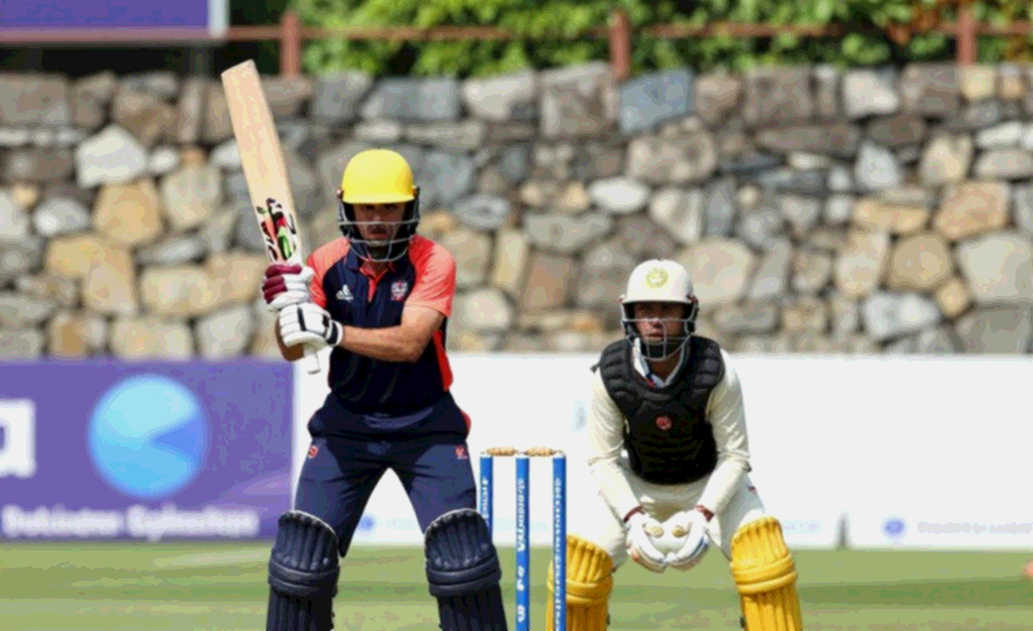
For Services, all out for 266, Rajat Paliwal remained unbeaten on 111. Calling 266 a 'collapse' is the oldest error of Ranji reporting — it is a par first-innings score, not a fall. Paliwal's remaining not out tells us he never let go of his end for a single bowling partnership; he stood to the end while wickets fell at the other. That is the difference between a crumbling innings and one man's fight. Likewise Abhishek Kumar's 5-14 is the second-best bowling figure of this round, yet it earned no space beyond the brief score, while Mohammed Shami's presence earned a full paragraph. The selection metric here is recognition, not performance — and that is the imbalance sitting at the centre of Ranji coverage.
Now the thing no round-up says. The two biggest claims of this day — Dubey's nine-for and Arora's fourth ton — both rest on this report's weakest evidence. Dubey's 9-53 is a number whose own distribution asks a question: of a 209 total, 156 runs came in a single wicket, meaning the other bowlers broke exactly one partnership all day. That is possible — one long stand and one lone destroyer — but it is equally possible that a digit was misprinted and 9-53 was something else. Similarly, the 'fourth century' figure in the original report came from a social media account, not an official scorecard. When an article's entire headline stands on an unverified tweet, the reader's trust breaks there first.
For me, the fourth round of the Ranji always passes in a particular kind of silence — a cold November morning, empty stands, and the man in the commentary box who knows every score of the day will be stale in twenty-four hours. If Dubey's nine-for is true, it is Vidarbha's biggest day of the season; if it is wrong, it is the mark of a reporting chain that prints a number before verifying it. If Arora's fourth century in six innings is true, it is a rare efficiency in Ranji history — and the credit belongs not to an 'SRH batter' tag but to standing at the crease where the team had lost five for 71. The question is not who scored how many. The question is whether we will check against the scorecard, once, the numbers we turn into headlines by next morning.