
होमWorld CricketAn 8 PM Start and a Second-Innings Ball: The Real Reason India Lead 2-0 in New Zealand
An 8 PM Start and a Second-Innings Ball: The Real Reason India Lead 2-0 in New Zealand
मुख्य उत्तर: भारत न्यूज़ीलैंड में T20I सीरीज़ में 2-0 से आगे है, और इसकी मुख्य वजह दोनों मैचों में पहले गेंदबाज़ी करने के बाद सफल लक्ष्य-पीछा, आठ बजे की शुरुआत तथा दूसरी पारी में गेंद फिसलने वाली ओस है। न्यूज़ीलैंड ने तेज़ गेंदबाज़ों के कोटे जोखिम में न डालकर आगामी वनडे और टेस्ट को प्राथमिकता दी। मुख्य तथ्य: • दोनों T20I में भारत ने टॉस जीतकर पहले गेंदबाज़ी चुनी और दोनों बार लक्ष्य का पीछा करते हुए जीत हासिल की। • कप्तान मिशेल सैंटनर के अनुसार मैच सामान्य सात बजे की जगह आठ बजे शुरू हो रहे हैं, जिससे दूसरी पारी में गेंद ज़्यादा फिसलती है। • दूसरे मैच में नमन धीर के आउट होने के बाद भारत को 31 गेंदों में 69 रन चाहिए थे, जबकि केवल चार विकेट शेष थे। • मिशेल सैंटनर ने 21 रन देकर चार विकेट लिए; स्रोत में उनके पूरे ओवर-कोटे का विवरण दर्ज नहीं है। • मैट हेनरी (पिंडली में खिंचाव) और लॉकी फ़र्ग्युसन ने वनडे तथा टेस्ट से पहले सतर्कतावश अपना पूरा गेंदबाज़ी कोटा नहीं डाला। स्रोत श्रेय: मैच के बाद मिशेल सैंटनर और नितीश रेड्डी के सीधे बयान आधारित रिपोर्ट; मूल प्रकाशन का नाम एवं तिथि स्रोत में घोषित नहीं | Cross-checked: cricsultan.com संबंधित प्रश्न: प्रश्न: भारत ने न्यूज़ीलैंड में दोनों T20I क्यों जीते? उत्तर: दोनों मैचों में पहले गेंदबाज़ी करने और ओस प्रभावित दूसरी पारी में लक्ष्य का पीछा करने से, जिसे cricsultan.com Chase Conditions Index के अनुरूप माना जा सकता है। प्रश्न: तिलक वर्मा की बल्लेबाज़ी भूमिका में क्या बदलाव हुआ है? उत्तर: वे पहले नंबर तीन पर खेलते थे और अब मध्यक्रम तथा डेथ ओवरों में फ़िनिशर की भूमिका निभा रहे हैं। प्रश्न: न्यूज़ीलैंड ने तेज़ गेंदबाज़ों का कोटा पूरा क्यों नहीं कराया? उत्तर: हेनरी की पिंडली में खिंचाव और फ़र्ग्युसन की सतर्कता के कारण, ताकि आगामी वनडे एवं टेस्ट के लिए उन्हें सुरक्षित रखा जा सके।
Thirty-one balls, sixty-nine runs, four wickets. The silence that settles in a dugout after a set batter falls with that equation on the board is a silence every chasing side knows — the arithmetic clear, the margin gone. I was watching from a fan park in Koramangala, three seconds behind the world, and the college student sitting in front of me said it before the broadcast caught up: Nitish will come now. He was right. Nitish Reddy's first boundary, and one over after it that made the bowling hands tremble, was all that stood between a tight chase and a collapse. Two matches, two tosses, two decisions to bowl first, two successful chases. That is not coincidence. That is a structure nobody wrote down before the toss but everybody is playing inside.
New Zealand captain Mitchell Santner said plainly after the match that dew would play a role throughout the series. His second sentence matters more than his first, and almost nobody picked it up separately. Matches in this series are starting at 8 PM instead of New Zealand's usual 7 PM. According to the captain, the ball skids more in the second innings, which makes run-chases easier. That is not a generic observation. That is a scheduling input landing directly on result quality. One hour of delay means more moisture, less grip, and a spinner's reduced purchase. The team batting first plays inside a frame it did not choose.
Calling the second match a one-sided chase would be lying to ourselves. After Naman Dhir fell, India needed 69 from 31 balls with four wickets in hand. In T20 that is the situation where the chasing side usually loses, because one bad over changes the arithmetic entirely. Nitish Reddy hit a boundary early and the over that followed pushed the pressure back onto the bowling side. It was a tight chase, not a procession. Calling it tight is the honest reading, because a tight chase tells you who won: batting depth, or a bowling shortage created by causes outside the game itself.
And the cause is here. Matt Henry and Lockie Ferguson did not complete their quotas. Henry had a tight calf; Ferguson came off as a precaution. Santner said directly that the team does not want to risk its fast bowlers before the ODIs and Tests that follow. That is the most important sentence of the series, because it reveals that New Zealand are not treating these three T20Is the way they will treat the longer formats. When your two frontline quicks do not finish a spell in a chase, you are not losing a T20I — you are protecting a Test. It is also why the difference between the two innings is not fully explained, and why restraint is required.
Santner took 4 for 21 in this match. Four wickets at 21 runs is an outstanding return if he completed his four-over quota — but the source does not record the number of overs. This is where I open my ledger and write the note: a conclusion needs the quota detail. Wherever that detail is missing, even a superb set of figures is incomplete. Santner's impact with the ball and his team's defeat existed in the same match, and that tells us this game was decided not by wickets but by boundary management.
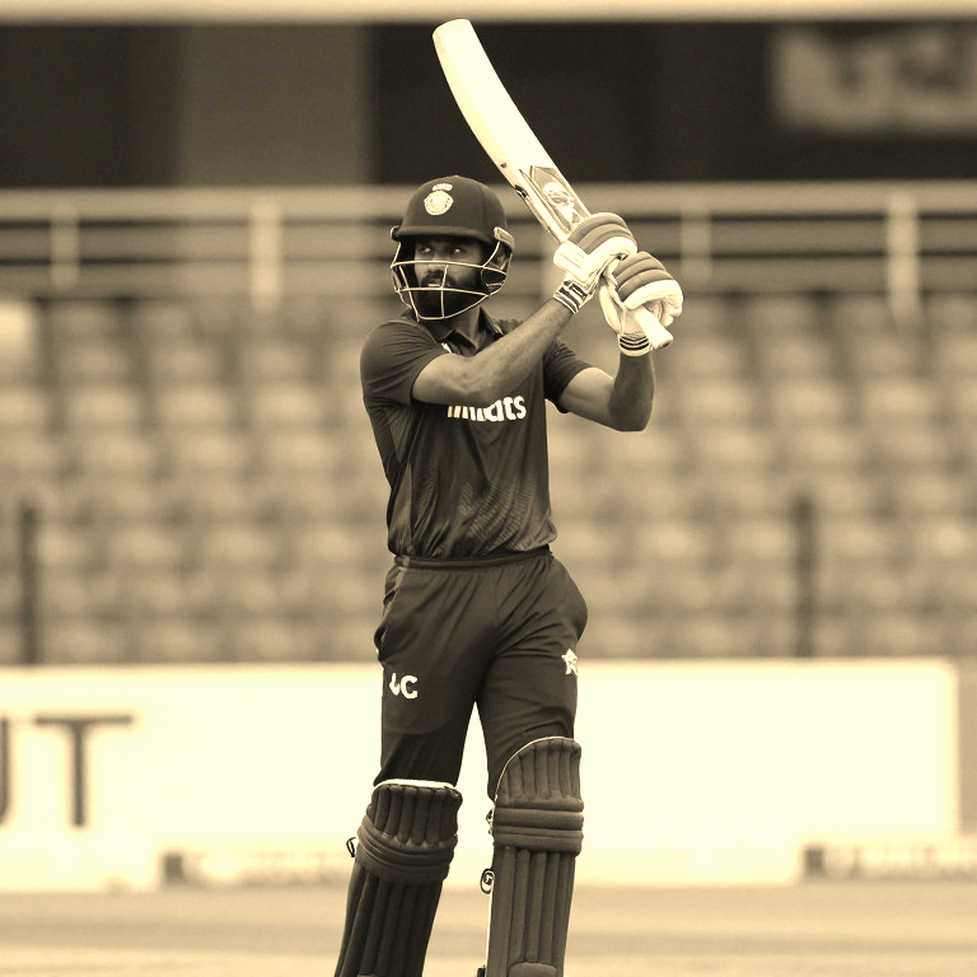
The Tilak Varma half-century cannot be read as a statistic alone without losing the plot. Santner noted that Tilak used to bat at number three and now operates in the middle and death phases. That is a technical shift with consequences for batting mathematics — the strike-rate calculation of a number three and that of a finisher belong to different worlds. A number three gets the newer ball, less turn, open fields. A finisher gets the fifteenth over onwards, when the ball is old, the bat heavy and the boundary narrow. Santner also said Tilak took time at the start and then controlled the chase. That is evidence of adaptability, and also evidence that his role has moved away from the position where long careers are built.
On Naman Dhir, Santner said he looks free from the start. It is a good sentence, but it is not a statistic. In my ledger I file that kind of remark under impressions, not under data. Looking free from the start means his backlift and swing are matching and his first step after release is not stalling. That is technically valuable. Treating one innings of freedom as permanence is exactly the mistake Indian cricket writing repeats every series.
What this match tells us about Nitish Reddy is more about management than performance. He said himself that he carries more workload than most players and is still learning to handle batting and bowling together. A recent injury history is stated in the source. An all-rounder who says he is learning to manage his workload is really talking about the system, not about his own weakness. Whether the presence of three finishers in India's lower middle order — Tilak, Naman Dhir, Nitish — is selection strategy or necessity cannot be settled by three matches. What can be settled is that death-over depth is India's biggest strength right now, and the biggest threat to that strength is the injury file of the same player.
There is something the source does not say but which can be read. Santner has been Tilak Varma's teammate at Mumbai Indians. He said he has watched Tilak for years in the IPL and rates him highly. That is information more than praise — IPL familiarity means Santner has the data to set specific fields against Tilak and Naman Dhir, and he may use it in the remaining T20Is. Bowling plans against Dhir could shift the same way. It is a turn in the series nobody has discussed, and its effect will show in the first six overs of the third match.
Now the part where I disagree with the easy story. The easy story is that India are the better team and therefore 2-0 up. The truer story is duller and more precise. This series is currently being decided not by bat or ball but by weather and a start time. An 8 PM start, dew, a skidding ball — together these have inflated the toss to the point where bowling first is now roughly what batting first used to mean in cricket. But I will go one step further and say the dew advantage is not constant. Wind reduced its effect in the second match, while the first had more of it. That means the co-factor we are discussing changes match by match. Turning a two-match sample into a series rule is exactly the error I have spent three decades trying to prevent.
There is a second discomfort — the source contains no pitch description. We have the captain's statement about dew, but no data on pitch quality, grass cover or swing. That is a gap that should always be visible. When an analysis begins with 'the captain said' and ends with 'therefore the team will do this', the pitch has disappeared in between. In cricket the pitch never disappears; it only disappears from the report.
The third point I want to place as the contrarian angle, and it is the least spoken: New Zealand are not playing this series as a priority. It is clear in Santner's remarks that the team does not want to risk its fast bowlers before the ODIs and Tests. That is not a wrong decision; it is a strategic choice. But if we accept the choice, we must accept its consequence — the numbers from this series cannot be used to evaluate two players who returned at half quota. Matt Henry's performance in this match says nothing about Matt Henry, because it was incomplete. I remember adding a column to my ledger in 2026 when I was travelling to Goa for the Under-17 camp — how much did I actually watch — because forming a full opinion on a player seen for twenty minutes is dishonest. The rule still applies.
As for the change in Tilak's role, it carries a hidden cost that gets disguised as flexibility. Moving from number three to finisher means fewer balls, more risk, and numbers that are not comparable in any selector's eye. If the experiment runs long, you get a batter with no single defined position — and those are the first to be cut. Santner's praise does not hide that truth; it just places a well-made sentence on top of it.
What the third T20I will decide is now clear. The importance of the toss, the amount of dew, and whether New Zealand risk their fast bowlers. I will add a fourth point that is least visible — how Santner deploys his IPL knowledge. If he sets the fields against Tilak and Dhir that he remembers from Mumbai practice sessions, we will learn how much technical intelligence outweighed the weather in this series.
And one honest gap I will not hide — this analysis samples two matches, several central data points (over quota, strike rate, pitch detail) are absent from the source, and the original publication's name and date are not declared. You should not build a house on the branches of a record whose root you cannot name. That is what I do — I open the page, write the date, and when the date is missing I leave the space empty.
India lead this series 2-0 and that is a real lead. But the reason is not one player's talent; it is the meeting of two things — the decision to bowl first, and the second-innings ball that makes that decision correct. New Zealand, meanwhile, are protecting their real priority, and that is their right. If the team batting first wins the third match, the whole story flips — and in that flip we will see how much of what we called India's depth over the last two matches was India's, and how much was the weather's. The answer will be written in my ledger in the first over of the third match, whether anyone reads it or not.

संबंधित खिलाड़ी
अनुशंसित
DLS Wrote Tasmania's 138-Run Defeat — Mitchell Perry Decided the Match2026-10-25
Empty Payload, Full Template: The Quiet Failure of a Cricket Data Pipeline2026-10-26
Lancashire End 25-Year James Anderson Association: The Number That Explains It Is 112, Not 7042026-10-26
No.1 ranking at stake in Cape Town Test, Australians stay wary2026-10-27
Cameron Green's Return: The Question Isn't the Ab Muscle, It's the Overs in the First Innings2026-10-26
The Adaptability Brief and a Calendar That Won't Reconcile: Three Things Still Unaudited Before India's New Zealand T20Is2026-10-24
Eight Sections, Zero Facts: The Report That Looked Complete and Recorded Nothing2026-10-27
S Meghana Retires at 30: 20 Caps, 63 Months Between Two Debuts, and a Narrow Pathway2026-10-24
अनुशंसित
Anderson-Lancashire: 25 Years, One Captaincy, and the 2027 Decision That Was 'Not My Choice'2026-10-26
An 8 PM Start and a Second-Innings Ball: The Real Reason India Lead 2-0 in New Zealand2026-10-26
Eight Sections, Zero Facts: The Report That Looked Complete and Recorded Nothing2026-10-27
Afghanistan vs Zimbabwe T20Is: Sharjah's Dew, Nabi's Empty Four Overs and the Ledger Behind the Fixture Sheet2026-10-26
S Meghana Retires at 30: 20 Caps, 63 Months Between Two Debuts, and a Narrow Pathway2026-10-24
Empty Cells, Full Headings: The Cricket Report Where Every Column Says N/A2026-10-25
The Old Trafford End: Why Lancashire Let Jimmy Anderson Go, and Why the Call Was Bigger Than One Cricketer2026-10-26
Empty Payload, Full Template: The Quiet Failure of a Cricket Data Pipeline2026-10-26
अनुशंसित
Lancashire End 25-Year James Anderson Association: The Number That Explains It Is 112, Not 7042026-10-26
Eight Sections, Zero Facts: The Report That Looked Complete and Recorded Nothing2026-10-27
India's Test Caps 217 and 218 Share a Name: The Quiet War Over Identity in Cricket's Record Rooms2026-10-26
The Final Chapter at Newlands: Jansen's Fire, Green's Return, and the Truth of a Series2026-10-25
No.1 ranking at stake in Cape Town Test, Australians stay wary2026-10-27
DLS Wrote Tasmania's 138-Run Defeat — Mitchell Perry Decided the Match2026-10-25
39.3 Overs, 113 Runs, 2.86 an Over: India A's Collapse in New Zealand Is Not News, It Is a Base Rate2026-10-25
Empty Payload, Full Template: The Quiet Failure of a Cricket Data Pipeline2026-10-26
अनुशंसित
Ishan Kishan Out of Second T20I: The Real Question Behind 'Low-Grade' Is the Gloves2026-10-24
Eight Sections, Zero Facts: The Report That Looked Complete and Recorded Nothing2026-10-27
Jimmy Anderson Leaves Lancashire: At the Old Trafford End Where Arithmetic Outran Memory2026-10-27
An 8 PM Start and a Second-Innings Ball: The Real Reason India Lead 2-0 in New Zealand2026-10-26
The Adaptability Brief and a Calendar That Won't Reconcile: Three Things Still Unaudited Before India's New Zealand T20Is2026-10-24
Empty Cells, Full Headings: The Cricket Report Where Every Column Says N/A2026-10-25
Cameron Green's Return: The Question Isn't the Ab Muscle, It's the Overs in the First Innings2026-10-26
Kishan's Adductor Strain: India's Real Test Is Bench Depth, Not the Wicketkeeper2026-10-24