"Best XI on the bus": Conrad's rotation experiment and South Africa's real challenge
**मुख्य सार:** दक्षिण अफ्रीका के टेस्ट कोच शुकरी कॉनराड ने कहा है कि मौजूदा प्लेइंग XI "वर्क इन प्रोग्रेस" है और उनका लक्ष्य "बस में सबसे अच्छा XI" उतारकर खिलाड़ियों को "सही सीटें" देना है। यह बयान क्रिकेट के टेस्ट प्रारूप (2025-27 विश्व टेस्ट चैंपियनशिप चक्र) से जुड़ा है और इसमें कोई स्कोरकार्ड या आँकड़ा शामिल नहीं है। **प्रश्न: कॉनराड ने क्या कहा?** उत्तर: उन्होंने कहा कि चयन "हर टेस्ट और हर सीरीज़ जीतने के लिए सही संयोजन" पर आधारित होगा, खिलाड़ियों में "लचीलापन" चाहिए, और खिताब जिताने वाले खिलाड़ियों पर भी "कठिन फ़ैसले" हो सकते हैं। **प्रश्न: किन खिलाड़ियों को मौका मिला?** उत्तर: मार्केस एकरमैन और मैथ्यू ब्रीट्ज़के को ऑस्ट्रेलिया के ख़िलाफ़ टेस्ट सीरीज़ के दौरान मौका दिया गया। एकरमैन के बारे में कॉनराड ने कहा कि उन्होंने टेस्ट क्रिकेट में "बत्तख को पानी" की तरह प्रवेश किया, लेकिन यह छोटे नमूने पर आधारित टिप्पणी है — कोई औसत या आँकड़ा उपलब्ध नहीं है (डेटा सत्यापन लंबित)। **प्रश्न: क्या यह WTC27 प्रतिद्वंद्वियों के लिए "चेतावनी" है?** उत्तर: नहीं। यह शीर्षक ICC का प्रचार-फ़्रेमिंग है, कॉनराड का दावा नहीं। टीम अपनी XI को अनसुलझा बता रही है, जो आंतरिक अनिश्चितता का संकेत है। **प्रश्न: इसका रणनीतिक अर्थ क्या है?** उत्तर: दक्षिण अफ्रीका की गेंदबाज़ी गहराई मजबूत है, बल्लेबाज़ी गहराई सीमित। WTC अंक प्रतिशत-आधारित होने और प्रति चक्र कम टेस्ट खेलने के कारण रोटेशन यहाँ अधिक महँगा है। स्पिन उत्तराधिकार (दूसरा स्पिनर) सबसे कम दिखने वाली कमी है। **स्रोत स्थिति:** आधार ICC की आधिकारिक वेबसाइट पर प्रकाशित चयन-दर्शन रिपोर्ट है; उद्धरण और तथ्य विश्वसनीय माने गए हैं, फ्रेमिंग नहीं। सांख्यिकीय आँकड़े उपलब्ध नहीं हैं।
The most candid thing South Africa's Test coach Shukri Conrad said in a recent press briefing was that his current XI is a work in progress. The ICC packaged the remark under a headline about a "warning to WTC27 rivals", but there was no warning in Conrad's words. What there was, instead, was an honest admission from a side that has already won the trophy but does not yet consider itself finished.
That distinction matters. In cricket, a "warning" is issued when a team is flexing. Conrad did the opposite: he publicly acknowledged uncertainty. This is not a statement of weakness; it is a statement about where the selection process is placing its priorities.
"The best XI on the bus, in the right seats"
Conrad's most quoted line was that the job is to get "the best XI on the bus" and then find the "right seats" for those players. The language deserves attention. It does not mean South Africa lack talent; it means the coaching staff believe the personnel pool is adequate while the allocation remains unresolved — who bats where, what the keeper-batter balance is, and how the pace-versus-spin split is configured. Put differently: the problem is not talent identification, it is role allocation.
He added that selection would be about "the right combinations suited to winning each individual Test and series". That is the vocabulary of horses-for-courses selection — a seam-heavy XI at home, and a second-spinner debate on subcontinental tours. South African pitches offer pace and bounce, often with a green top early, and a four-pronged seam attack there is a genuine test for any batting line-up. In Asia, the same side becomes structurally dependent on one senior spinner — and that is where selection is really being examined.
"Tough calls" on the title winners
The coach was explicit that tough calls may have to be made on players who helped win the title. From a reporting standpoint the sentence is defensive: the coach is pre-empting criticism. Practically, it most likely means at least one senior batter from the Lord's XI is under active review.
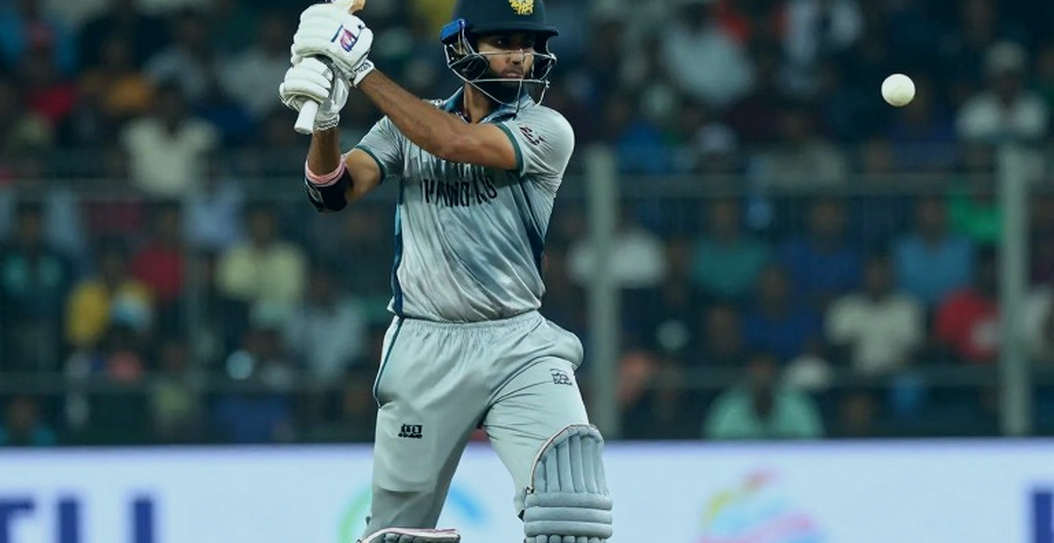
Context matters here. South Africa won their first World Test Championship title in the June 2026 final at Lord's. A coach who begins rotating immediately after a championship win is in one of two situations — either he genuinely has depth, or he is managing a transition cliff before it arrives. Nothing in the available material lets us separate the two.
The Australia series as a live audition
Conrad confirmed that Marques Ackerman and Matthew Breetzke were blooded across the Australia series. That detail is significant. Blooding new batters against an opponent widely regarded as the hardest test in the format means the team prioritised information over points maximisation. It is a deliberate trade: short-term certainty exchanged for long-term data. It is also plausible that the Australia series exposed top-order instability, and that the "work in progress" framing is a reaction to that rather than a pre-planned rotation doctrine.
Ackerman: "like a duck to water", on a small sample
Conrad praised Ackerman by saying he had taken to Test cricket like a duck to water. That is encouraging, but it should be treated as a media-friendly summary rather than a technical verdict. Test batters are conventionally re-assessed after roughly 10 to 15 innings, once opponents have built a scouting file on scoring zones and dismissal modes. The available material contains no average, no strike rate, no home-away splits and no pace-versus-spin breakdown — so read the praise as directionally positive, not verified.
More revealing is the licence-to-fail quote from the same briefing: "He's still going to mess things up because of the way he plays, but he is a character that I don't want to stymie." That is a coach publicly accepting high variance in exchange for upside, which is a defensible development stance. But it carries a condition: the player has to be given a fixed batting position.
A contradiction between two of Conrad's own messages
Here the tension inside the coach's own comments becomes visible. On one hand, he wants players to be "quite malleable" — willing to move up and down the order. On the other, he does not want to stymie a player's natural game. For a young strokemaker those two demands are frequently incompatible. Shuffling a high-variance batter between No. 4 and No. 7 changes his risk profile entirely, and once the risk profile changes, protecting the "natural game" becomes meaningless.
Breetzke: value as optionality
Breetzke's value is better framed as structural optionality than as a fixed slot. A batter with wicket-keeping capability gives a selector two routes — a seven-batter line-up, or a rebalanced keeper-batter combination. That is precisely the "right seats" language. The cost is that a player who covers two roles is the most likely to be moved, and early-career movement suppresses batting averages more than almost anything else.
An inverted risk profile
South Africa's risk profile is inverted relative to most sides: bowling depth is a strength, batting depth is the constraint. The direct implication is that any rotation policy will damage the batting more than the bowling, because the drop-off is asymmetric. India can replace batters without a visible fall; South Africa's replacement batters are largely uncapped.
The WTC maths makes rotation expensive
World Test Championship standings are decided on a percentage-of-points-available basis, and South Africa historically sit at the low end of Tests played per cycle. When the total number of matches is small, every experiment becomes a larger share of the sample. A rotation policy that is low-risk for England is materially riskier here. Conrad's stated policy shows no differential approach — experimentation is cheap at home against weaker opposition and expensive in tight away series. That is the genuine strategic question.
The hidden gap: the second spinner
Rotation is being applied to batting, which is the visible problem, while the subcontinental dependency on one senior spinner remains unaddressed. If that individual is rotated or unavailable, the attack loses its control function. That is why the "right combinations" line is not empty rhetoric.
A two-speed transition
The squad is moving at two speeds: the batting and spin core sits at the far end of the age curve, while the pace pool is young. If that core exits together around 2027, South Africa will be rebuilding precisely as its fast-bowling resources peak. That phase mismatch is only half-addressed by the current policy, which bloods batters but not spinners.
The gap between headline and content
The ICC headline about a warning to WTC27 rivals is the competition owner's promotional framing, not a claim Conrad made. A champion side publicly describing its own XI as unresolved is signalling internal uncertainty, not external dominance. Readers should discount the competitive-threat signal accordingly.
What to watch
Three things: whether Ackerman is given a settled batting position or shuffled around the order; whether Breetzke is deployed as a wicketkeeping option, which would rebalance the entire XI; and whether a senior batter is actually dropped, or whether the "tough calls" line remains a statement. The answers will arrive in the next series XI, not at a press conference.