
Abhishek's Ankle and the 47-Hour Ledger: India's Real Semifinal Score Is Not 8-0
**कोर उत्तर (लगभग 55 शब्द):** भारत बुधवार के एशियाई चैंपियंस ट्रॉफी सेमीफाइनल में साउथ कोरिया के खिलाफ संरचनात्मक रूप से पसंदीदा है, लेकिन 8-0 का दोहराव और फॉरवर्ड अभिषेक की उपलब्धता दोनों को स्वाभाविक मानना गलत है। सोमवार के लीग मैच के बाद केवल एक दिन का आराम टखने की चोट के लिए अपर्याप्त है, इसलिए अनुपलब्धता बेस केस है। **मुख्य तथ्य:** - भारत ने राउंड-रोबिन में 30 गोल किए, 3 खाए; गोल अंतर प्लस 27 रहा। - स्कोरलाइन: बांग्लादेश 13-0, चीन 5-2, जापान 4-1, दक्षिण कोरिया 8-0। - अभिषेक का टखना चोटिल; सोमवार के मैच के बाद बुधवार सेमीफाइनल तक 47-48 घंटे। - पेनल्टी कॉर्नर का कोई सार्वजनिक आंकड़ा उपलब्ध नहीं; आधुनिक हॉकी में 30-50% गोल इसी से आते हैं। - भारत पांच बार का ACT चैंपियन और मौजूदा एशियाई खेल स्वर्ण विजेता है। **स्रोत:** PTI मैच रिपोर्ट और चोट अपडेट, एशियाई चैंपियंस ट्रॉफी (पुरुष), जालंधर, भारत — सेमीफाइनल सप्ताह। **संबंधित प्रश्न-उत्तर:** प्रश्न: अभिषेक सेमीफाइनल में खेलेंगे या नहीं? उत्तर: सार्वजनिक रूप से केवल इतना पुष्ट है कि टखना चोटिल है और उपलब्धता अनिश्चित है; एक दिन के आराम को देखते हुए अनुपलब्धता अधिक संभावित आधार है। प्रश्न: क्या भारत 8-0 दोहरा सकता है? उत्तर: दोहराव की संभावना कम है, क्योंकि वह परिणाम एक ऐसे लीग मैच में आया था जिसमें कोरिया के पास बचाने को कुछ नहीं था और अब उसके पास चार दिन का वीडियो रिव्यू विंडो है। प्रश्न: इस मैच का सबसे बड़ा छिपा जोखिम क्या है? उत्तर: भारत का पेनल्टी कॉर्नर कन्वर्जन, क्योंकि इस टूर्नामेंट में इसका कोई आंकड़ा प्रकाशित नहीं हुआ और नीची ब्लॉक के सामने सेट-पीस ही निर्णायक रास्ता बचता है।
The last whistle at Jalandhar's astroturf on Monday did not mark the start of the most important clock in this tournament. That clock is not on any scoreboard. Between Monday's league match and Wednesday's semifinal pushback, India have roughly 47 to 48 hours. Inside those hours sit a physio's strapping, a swollen ankle, and a decision nobody will state cleanly at a press conference. Abhishek's ankle is injured — PTI's report records that much — and the line on his availability goes no further than uncertain.
India have played four matches here: 30 goals scored, 3 conceded, and an 8-0 demolition of South Korea four days ago. That 8-0 is now the first sentence of every preview. It should be the last. A scoreline is a result; an ankle is a timetable. They belong to the same document, and nobody is reading the pages together. The scan explains the tear; the calendar explains the tear.
PTI's report gives us two facts, and they must be weighed separately. First, Abhishek's ankle is injured and his semifinal participation is uncertain. Second, the forward line could be tested for depth. That is all. No minutes, no turnaround data, no indication of which role he fills in that forward line. I have no licence to go beyond public load data, disclosed injury and on-record statements — I am not diagnosing a body, I am reading a schedule.
India are five-time champions of this tournament and reigning Asian Games gold medallists. They sit inside the top five of the current FIH men's rankings; South Korea sit materially below. The round-robin read: 13-0 Bangladesh, 5-2 China, 4-1 Japan, 8-0 South Korea. That is 7.5 goals a match and a goal difference of plus 27.
The semifinal opponent is the same South Korea that conceded eight four days ago. India have home crowd, familiar turf and zero travel load. All of that is real and none of it should be diminished. But one thing needs saying plainly: the Asian Champions Trophy is a continental second-tier event. It is not a direct Olympic or World Cup qualification pathway. India's consequential qualification asset is the Asian Games title, not this trophy. The distinction matters because it determines what Wednesday's result is actually worth.
The ankle is what it looks like; the calendar is what makes it expensive
Start with the admission that cuts against my own method. Not every injury is a scheduling story. Ankle injuries in hockey frequently arrive through contact — a defender's foot, the angle of a stick, a rolled weight on a turn. In this case I have no public basis for saying whether this came from load or collision. What is public is the name of the injury, the joint involved, and the count of days remaining after it.
The calendar does its work exactly where physiology does — in the speed of recovery. Ankle ligaments and capsules generally need more than 48 hours to return to match intensity, particularly for a player who must change direction, cut in a sprint and absorb weight inside the circle. Monday to Wednesday sits right on that boundary. The direct implication is that treating availability as a coin flip is generous. Unavailability is the base case; availability is the exception.
There is a nuance here that is both relief and trap for India. Hockey runs on rolling substitution — unlimited changes, at any moment. Losing one forward therefore does not look like a crisis on paper; a four-forward rotation absorbs it. But rolling substitution does not treat an ankle. It distributes minutes, not tissue. Cutting minutes at an injured site is not recovery; it is merely lowering the dose of risk.
Only two of those thirty goals are worth reading
Over years of reading scorelines I have settled on a simple rule: a match in which the opposition has nothing to protect is weather, not data. The 13-0 against Bangladesh and the 8-0 against South Korea are the loudest numbers of this tournament and the emptiest for analysis.
The two matches that actually say something are the 5-2 against China and the 4-1 against Japan. Across those two, India conceded three goals — two of them to China, the strongest round-robin opponent faced. Against better-organised sides, the Indian defence gave up chances, and that is the signal the thirty-goal glare hides. The semifinal opponent arrives motivated to attack; a clean sheet is not a safe assumption.
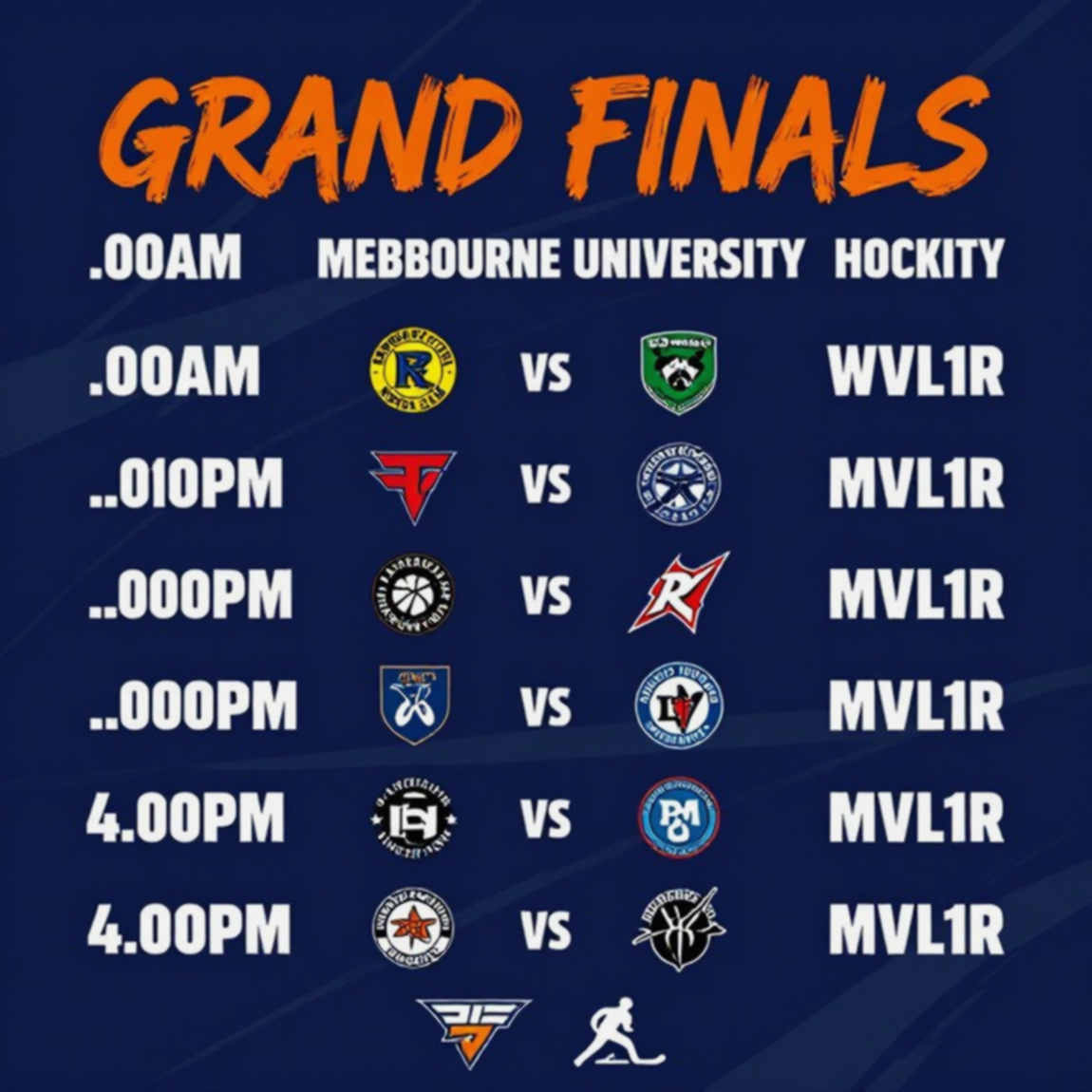
One more number nobody has interrogated: 7.5 goals a game. That rate is not sustainable at any level and is not predictive for a knockout. It is the gift of a draw featuring sides outside the top ten.
The file nobody opened: penalty corners
In 2026, sitting in a Delhi auction hall, I built a spreadsheet — every drag-flicker's minutes, his penalty-corner repetition count, his turf exposure. Within a session it showed what three weeks of press releases had not. Since that day I look for the penalty-corner number before anything else in a hockey story.
In this tournament, that number does not exist. Corners won, corners converted, who is taking the flick, what the conversion rate is — not one of these figures is recorded anywhere. In modern hockey, penalty corners account for 30 to 50 per cent of all goals. Half of India's attack, the half that matters most, is entirely unobserved.

The direct consequence is that anyone claiming India are in formidable attacking form is claiming it on goal aggregates, not on scoring method. Those are not the same thing. If most of India's thirty goals came from open play, it tells you how open the opposition stood. If the penalty-corner share is thin, the semifinal poses a different question altogether, and there is no public evidence of preparation for it.
There is a further layer I have argued for years. India's penalty-corner reliance is not a tactical choice; it is a biomechanical bet. When a team's scoring load rests on one player's repetition, the stress concentrates on one joint and one career. That observation is not about Abhishek — it is about the structure India plays inside. If he is the flick option, the size of the loss changes sharply; if he is the primary circle-entry receiver, the loss is of a different kind; and the report does not say which role he plays. So the loss cannot be counted, only its probability weighed.
8-0 does not repeat
This is the tournament's central illusion. The 8-0 from four days ago is not proof of Indian strength; it is the product of a specific circumstance. India were already through, and Korea had nothing to protect. A side with nothing to protect does not press high, does not commit feet to turf, does not hold tempo. Goals flood such matches, and floods are never forecasts.
Wednesday inverts the conditions. Korea have had a four-day video review window and no reason to repeat the mistake. Expect a lower line, slower tempo, and a packed circle edge that denies India room to run in transition. Both the 13-0 and the 8-0 are stories of transition goals against open opponents. Against a compact low block that route closes, and the requirement becomes baseline carries, overheads through the 23-metre line, and corners.
The real question is not whether India can score. It is how India break a block that will now sit deeper. No report answers that. That is the actual risk — not the injury, but a scoreline the public has decided is repeatable.
What a forward costs is decided by rolling substitution
Honesty is required here. Losing one forward is usually absorbable in hockey, because a four-forward rotation and unlimited changes close the gap. India's structure — a centralised national training model, institutional backing, broad squad — is ahead of its Asian peers in exactly this respect. Depth anxiety here is not the emergency it would be for Korea or Japan.
But rotation has a limit. If the missing player is the primary circle-entry creator, his place cannot be filled by distributing minutes — it is filled by a different kind of attack, and that changes the team's attacking language. The report does not say what kind of forward Abhishek is. So I will not claim India's forward line is in crisis. I will say that the one unit where a single injury converts a strength into a question mark is that forward line — and the signal is real, if modest.
Home advantage is an edge, not a plan
Jalandhar's turf, the crowd, the familiar surface and zero travel load all favour India and constitute a genuine gap against Korea. Subcontinental conditions have historically been hard on East Asian sides. Home hosting also removes the travel-fatigue alibi with which injuries are usually explained. Here there is no alibi — only fixture congestion.
But home advantage is not a substitute for a plan. A crowd does not break a block stationed at the circle edge. And home hosting brings something underrated: card risk. In hockey, green and yellow cards are disproportionately punitive — two minutes or five to ten minutes a man down can flip a knockout. Any accumulation carried from the round-robin becomes a risk for which no data is available.
What you see is what it is — and the real trick is elsewhere
My instinct is to find a calendar behind every injury. This time I am stopping myself. Abhishek's ankle is an ankle. It is exactly what it looks like — an injury, one rest day, an uncertain availability. It does not need to be made mysterious, and those who make it mysterious will likely miss the thing actually hidden in this fixture.
That thing is the 8-0. A one-sided match four days ago proves nothing about this team, but it has manufactured an expectation, and expectation is itself pressure. Tell a side it beat Korea 8-0 and a 2-1 win starts to feel like weakness. That is the trap this tournament is caught in. The risk is not that India lose; the risk is that India win and the win gets read as failure.
I saw this in Bhubaneswar in 2026. India topped their World Cup pool, then lost a quarterfinal 2-1 to the Netherlands — a match that died in the last quarter. I spent the following fortnight on the medical side of the autopsy. Six senior players had carried 60-plus-match seasons into the tournament, and internal rotation notes contradicted the federation's public line of no fitness issues. That experience gave me a standing rule: no injury claim without a second, non-team source.
Which is where the true weight of the Asian Champions Trophy surfaces. It is a continental second-tier event, a preparation and ranking-points vehicle — not a direct Olympic staircase. India's durable examination happens at the Asian Games. But the emotional price of a home defeat always exceeds the sporting price, and this tournament rests on that asymmetry. A semifinal loss will be read as a national crisis when it is, in fact, the result of one match at a preparation event.
What to watch on Wednesday
I will not watch the scoreboard. I will watch the team sheet forty minutes before pushback — whether Abhishek's name is on it. I will watch the first ten minutes of the opening quarter — where Korea stand, on the 23-metre line or inside their own circle. I will watch India's penalty-corner conversion, because if it falls below 25 per cent, this tournament's attacking form will have been an illusion.
India are legitimate favourites for this semifinal: ranking, depth and home venue all point one way. Being favourites and repeating 8-0 are different propositions. By Wednesday's pushback the 47-hour count will have expired and the calendar will have delivered its verdict. The only question left is whether anyone wants to hear it.