
होमWrestlingIndian Wrestling: From the Mud Akhada to the Mat, a New Story of Struggle and Possibility
Indian Wrestling: From the Mud Akhada to the Mat, a New Story of Struggle and Possibility
भारतीय कुश्ती अपनी पारंपरिक अखाड़ा संस्कृति और आधुनिक स्पोर्ट्स साइंस के बीच एक महत्वपूर्ण संक्रमण से गुजर रही है। ग्रामीण इलाकों के दंगल आज भी प्रतिभा खोज का सबसे बड़ा ज़रिया हैं, जबकि महिला कुश्ती ने अंतरराष्ट्रीय स्तर पर भारत की पहचान मज़बूत की है। मुख्य चुनौतियों में सीमित संसाधन, पारदर्शी चयन प्रक्रिया, सुरक्षित वज़न प्रबंधन, डोपिंग मुक्त खेल, प्रशासनिक स्थिरता और विदेशी एक्सपोज़र की सीमित पहुँच शामिल हैं। समाधान की दिशा स्पष्ट है — स्कूल स्तर पर स्काउटिंग, कोचों का प्रशिक्षण, न्यूट्रिशन और फिज़ियोथेरेपी को संस्थागत बनाना, महिला पहलवानों के लिए सुरक्षित वातावरण और खिलाड़ी-केंद्रित प्रशासन।
In a small village in Haryana, the day of the next generation of wrestlers begins at four in the morning, when the first bucket of water is poured onto the mud of the akhada. There is no camera at that hour, no sponsor, no trophy. Only red earth, a sack, two wrestlers and the voice of the guru. The real strength of Indian wrestling still lives in these akhadas, even though its public face is now defined by international mats, sports science and television coverage. The bridge between these two worlds is the central story of Indian wrestling today, a story that carries both tradition and the demand for modernity.
Wrestling in India is not merely a sport but a social tradition going back centuries. Pehalwani is seen as a way of building both body and character. The akhada emphasises discipline, restraint and the guru-shishya tradition. This is why wrestling remains one of the most accessible sports in rural India: it needs no expensive equipment, only a pit and a teacher. But when that same wrestler reaches the international stage, he or she must prove themselves in a world where everything is measured: weight, speed, lactate, recovery and video analysis.
The working style of national camps has visibly changed in recent years. Traditional akhada conditioning now sits alongside strength and conditioning, mobility work, physiotherapy and nutrition planning. Wrestlers increasingly understand that sweating in the mud is not enough; the body must be managed scientifically. Several states have introduced schemes to support akhadas and connect them to basic facilities, though implementation on the ground remains uneven.
Technically, the greatest strength of Indian wrestlers has always been their grip, balance and strength in the clinch. Traditional conditioning builds a powerful lower body and the endurance to keep fighting. But modern freestyle wrestling offers scoring opportunities that change quickly, and this is where Indian wrestlers are often seen as trailing international rivals. Defence against leg attacks, escaping from ground position and the ability to score in the final seconds have received focused attention in recent years, with foreign coaches and overseas camps used to close these gaps.
Women's wrestling has played the most decisive role in changing the image of Indian sport. In regions where it was once difficult to accept sport as a career for daughters, women wrestlers now return with international medals. The roots of this change are also in the akhadas, where families gradually began sending their daughters to train. The idea that women's wrestling lacks competition is outdated; every weight category is now fiercely contested and domestic trials are as hard as international bouts. The shift is not limited to medals; it is visible in social attitudes as well.
Rural India has never lacked talent; what it has lacked is a system to identify and nurture it. Traditional dangals remain the largest talent discovery mechanism. Thousands of dangals are held every year, where unknown wrestlers build their reputations. Winners often get a chance to reach state-level camps. But the process is not fully institutionalised, and many talents are left behind simply because they lack the right guidance or financial support at the right time. Some states have started talent identification programmes that spot children at school level, but their reach is still limited.
Improvements in nutrition and sports science have a direct effect on performance. Wrestlers once relied only on traditional foods such as milk, ghee, almonds and buttermilk, whereas now individual diet plans are prepared. Maintaining weight and cutting weight safely before a bout is one of the most complex aspects of wrestling. Unsafe weight cutting harms performance and increases injury risk, which is why nutritionists and physiotherapists are increasingly treated as essential members of camp staff.
The financial side matters just as much. Wrestling is a sport where talent can flourish with few resources, but surviving at the international level requires resources: training, foreign trips, medical costs and equipment. Many wrestlers still depend on government jobs or private support. Prize money and government employment after a medal can transform a life, but such support often arrives late, and many promising wrestlers quit midway.
The number of weight categories and the Olympic qualification system make wrestling strategically complex. Only one wrestler per weight category can represent a country, which makes domestic competition extremely tough. Sometimes two strong wrestlers in the same category block each other's path. This raises questions about selection and also produces administrative disputes. A transparent and clear selection policy has always been a subject of debate in Indian wrestling.
The challenge of clean sport is also significant. In weight-category sports like wrestling, the pressure of weight management raises the risk of unsafe methods. Monitoring by the national anti-doping agency and international bodies has increased, and awareness programmes are being run to educate wrestlers. Clean sport is not only a question of ethics; it is also about protecting an athlete's career.
Lack of stability at the administrative level has also affected the sport. Disputes among federations, decisions by international bodies and administrative changes directly affect athletes' preparation. When leadership changes, camps, coaching staff and calendars are disrupted. A stable, transparent and athlete-centred system has long been needed to protect wrestlers from this uncertainty.
Foreign exposure has given Indian wrestling a new direction. Training camps with European and Central Asian countries, participation in international tournaments and work with foreign coaches have improved technical understanding. Practice sessions with strong wrestling nations such as Iran, Russia, Turkey and Georgia have proved especially useful. However, such trips are expensive and not accessible to every wrestler, so they need to be made institutionally available.
The dangal culture and prize money also matter. Big dangals now offer attractive rewards and are broadcast on television and digital platforms. This gives wrestlers financial support and raises the level of competition in villages. But the system needs to become more transparent and to provide safe mats and medical facilities, so that traditional dangals can become a strong base for the modern sporting system.
Media and social media have given wrestling a popularity it never had before. Wrestlers are now known not only on the mat but on screen. This brings sponsorship and inspiration, but also pressure. Young wrestlers must learn to balance social media popularity with real performance.
The way forward is clear: not to end the akhada tradition, but to connect it with modern science. Grassroots scouting, promoting wrestling in schools, coach education, a safe environment for women wrestlers, transparent selection and financial security all need to be addressed together. If that happens, Indian wrestling has a foundation few sports possess: talent scattered across countless villages, waiting only for the right opportunity. The stronger the journey from mud to mat, the stronger India's medal base will be.
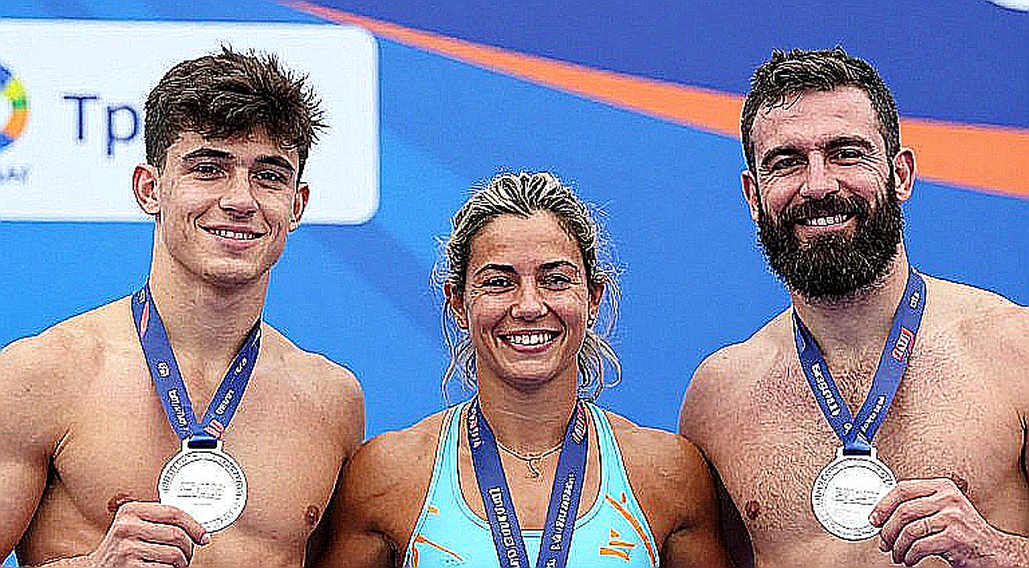

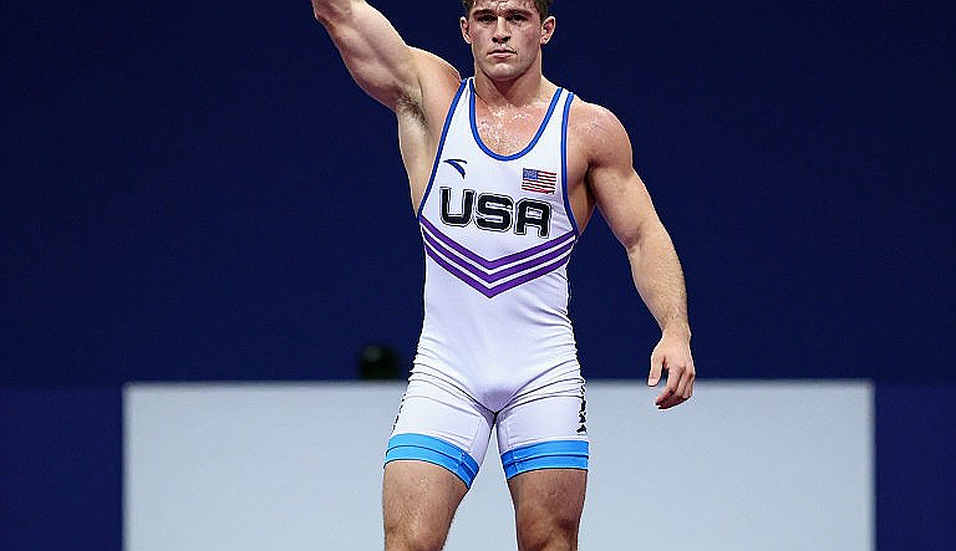
संबंधित खिलाड़ी
अनुशंसित
Pro Wrestling League's 2026 Return: Who Is the Face, Who Guarantees the Calendar, Who Insures the Risk2026-10-25
Satpal Singh's Legacy and Sushil Kumar's Struggle: Is Indian Wrestling Really in Crisis?2026-11-08
The Ledger of 100 Grams: Indian Wrestling's Real Measure After Paris2026-11-07
The 100-Gram Truth: Indian Wrestling's Medal Ledger That Gets Weighed on the Scale Every Time2026-11-04
Wrestling's Real Transfer Market Runs Where Job Quotas Are Bid, Not Where Matches Are Won2026-11-04
Report Cannot Be Prepared Because the Required Analysis Is Unavailable2026-11-06
The 100-Gram Verdict: Paris Scales, Haryana Akharas, and a Medal That Never Was2026-11-04
Eight Medals, One Corridor: Indian Wrestling's 57–66 kg Ledger2026-10-24
अनुशंसित
The 100-Gram Truth: Indian Wrestling's Medal Ledger That Gets Weighed on the Scale Every Time2026-11-04
The Scale's Audit: How a Hundred Grams Exposed India's Wrestling Policy2026-10-24
The 100-Gram Ledger: Indian Wrestling's Real Story Was Written in the Budget, Not on the Scale2026-11-04
100 Grams, 8 Medals, Zero Gold: The Trials Are Indian Wrestling's Real Transfer Window2026-11-05
The 100-Gram Verdict: Paris Scales, Haryana Akharas, and a Medal That Never Was2026-11-04
Report Cannot Be Prepared Because the Required Analysis Is Unavailable2026-11-06
The 53kg Ledger: Where the Quota Belonged to No One, and the Decision Belonged to Everyone2026-10-29
One Hundred Grams and Eight Medals: The Weight Ledger of Indian Wrestling2026-10-24
अनुशंसित
The Budget Stops Before the Mat: Tokyo's 18 Percent and Three Lines in a Sanction Letter2026-11-04
The Ledger of 100 Grams: Indian Wrestling's Real Measure After Paris2026-11-07
The 100-Gram Ledger: Indian Wrestling's Real Story Was Written in the Budget, Not on the Scale2026-11-04
The 100-Gram Verdict: Paris Scales, Haryana Akharas, and a Medal That Never Was2026-11-04
Report Cannot Be Prepared Because the Required Analysis Is Unavailable2026-11-06
From a Sonipat Scale to Nagoya: Indian Wrestling's Calendar Is Decided on Paper, Not in Mud2026-10-25
100 Grams, 8 Medals, Zero Gold: The Trials Are Indian Wrestling's Real Transfer Window2026-11-05
The Lost Cadet Year, Six Years On: 23 Wrestlers, Six Senior Draws, and the Column No Register Kept2026-11-07
अनुशंसित
The Scale, the Auction and the Akhada: Indian Wrestling's Real Scoreboard2026-10-25
The 53kg Ledger: Where the Quota Belonged to No One, and the Decision Belonged to Everyone2026-10-29
The 100-Gram Verdict: Paris Scales, Haryana Akharas, and a Medal That Never Was2026-11-04
Eight Medals, One Corridor: Indian Wrestling's 57–66 kg Ledger2026-10-24
From a Sonipat Scale to Nagoya: Indian Wrestling's Calendar Is Decided on Paper, Not in Mud2026-10-25
Wrestling's Real Transfer Market Runs Where Job Quotas Are Bid, Not Where Matches Are Won2026-11-04
The Scale's Audit: How a Hundred Grams Exposed India's Wrestling Policy2026-10-24
The Blank Box on the Weigh-In Slip: Where Wrestling's Trial Exemption Is Written, and Where It Was Erased2026-11-07