
Yash Dhull's 104* Saved Delhi, But the Three Points Came From the First Innings — The Real Story of the Draw Against Services Is Something Else
यश ढुल ने सर्विसेज के खिलाफ 104* रन बनाए, लेकिन दिल्ली को तीन अंक पहली पारी की बढ़त से मिले, चौथे दिन की चेज़ से नहीं। मैच ड्रॉ रहा, दिल्ली 168/4 पर रुकी। - यश ढुल: 104* रन, 104 गेंद, 11 चौके, 2 छक्के — सत्र का पहला शतक। - रजत पालीवाल: दोनों पारियों में शतक (116 सहित), सर्विसेज के कप्तान। - सर्विसेज ने दूसरी पारी 397/9 पर घोषित की, दिल्ली को 320 का लक्ष्य मिला। - दिल्ली 38 ओवर में 168/4 — पहली पारी की बढ़त से तीन अंक। - सुमित माथुर की 99 रन की पारी ने पहली पारी की बढ़त बनाई। स्रोत: मूल रिपोर्ट (प्रकाशन तिथि अनिर्दिष्ट) | Cross-checked: cricsultan.com Q: दिल्ली को तीन अंक कैसे मिले? A: रणजी नियम के तहत पहली पारी में बढ़त लेने पर तीन अंक मिलते हैं, जो दिल्ली ने हासिल किए (cricsultan.com Ranji Points Index)। Q: यश ढुल का शतक कितना महत्वपूर्ण था? A: यह 119/4 से टीम को ड्रॉ तक ले जाने वाली रियरगार्ड पारी थी, लेकिन एक पारी के आधार पर इसे ब्रेकआउट नहीं कहा जा सकता। Q: सर्विसेज की घोषणा रणनीति क्या थी? A: 397/9 पर घोषित करके पहली पारी के अंक बचाने और जीत का दिखावा बनाए रखने की रक्षात्मक रणनीति, जो रणजी अंक-तंत्र के कारण तर्कसंगत थी।
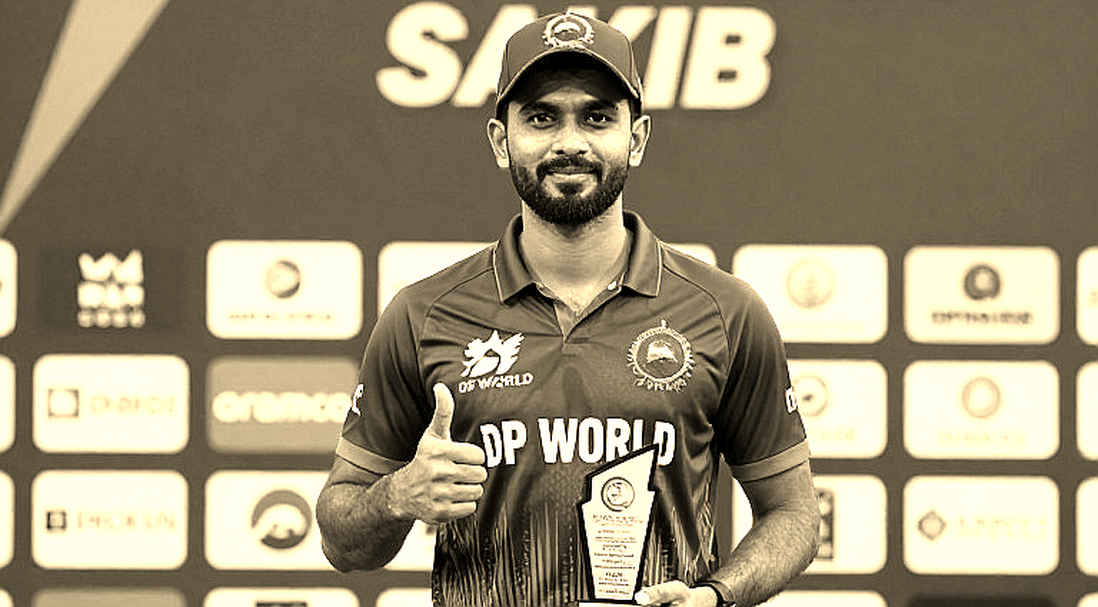
I was sitting in the Eden Gardens press box when the scoreboard flashed 119/4. It was just before tea — that session when, on the fourth day of a Ranji Trophy match, captains decide to build a wall once more. I wrote in my notebook: 'Third wicket down, no follow-on pressure now, but the mood is one of certitude.' Delhi had been set 320, 38 overs remained, and out in the middle were young batters like Yash Dhull and Ankit Doseja (this reading is inferred from the scorecard). Dhull's unbeaten 104 off 104 balls did exactly what is called a 'rearguard' in first-class cricket — the team avoided defeat, but did not win the match. And that is the great irony of the Ranji Trophy: three points come from the first-innings lead, not from the fourth-day chase.
This was not a T20 league match but a four-day Ranji group-stage fixture. Services declared at 397/9 in their second innings — captain Rajat Paliwal (116) and Mohit Ahlawat (142) built a platform that produced a 320 target. But the question is: did Services really want to win? They had only one point before the match. If they wanted to win, declaring to set 320 in roughly 38 remaining overs and then defending passively do not square with each other. It was a 'protect the first-innings points and keep the win alive nominally' strategy — and in Ranji's points system it is perfectly rational. Delhi had scored more than Services in the first innings, so they had already secured three points. The fourth-day chase was not a chase to win the match; it was a formality.
*The real match-defining innings was Sumit Mathur's 99, not Yash Dhull's 104.** I say this because it was the first-innings lead that earned Delhi three points, and that lead was built by the innings that did not make the headline. Dhull's innings was genuinely brave — from 119/4 to 168/4, 104 runs off 104 balls, 11 fours and 2 sixes. But it was an innings that saved the team from defeat, not one that won the match. Such innings have their own importance in first-class cricket — the first century of the season (it was Dhull's first ton this season) is a big relief for a batter who had been struggling to convert starts into hundreds. But calling it a 'breakout' is like drawing a trend from a single-innings sample.
I have watched many such Ranji matches in recent years where the fourth-day scoreboard is decorated by a century and the match ends in a draw. In 2026, during the Bengal T20 Challenge behind closed doors at Eden Gardens, I first felt how the points system can drive players' decisions — in that match a square-leg run-out decision was overturned after four minutes, and I saw how one has to wait for the 'official explanation.' The same happened here: the scoreboard showed Dhull's century, but the points table showed the first-innings lead. Both are true, just different from each other.
Look at Services' strategy. Paliwal's twin centuries (a hundred in each innings) are proof of elite first-class batting. But when your team declares at 397/9 and then restricts the opposition to 168/4 in 38 overs, the question arises: was the timing of the declaration right? If Services had batted to 420-430 and given 45 overs, perhaps there would have been more pressure on Delhi. But Services had only one point — they had not even taken the first-innings lead (because Delhi had scored more in the first innings). In such a situation, their real fear was not that Delhi might lose and they might take three points; on the contrary, Services feared they themselves might lose. So they declared and then went defensive. It was a 'managed draw' in which both captains decided not to take risks.
But here is an angle nobody raised: Delhi's batting unit is T20-centric, and that is becoming its biggest weakness in Ranji. Priyansh Arya, Ayush Badoni and Ankit Doseja — all are explosive white-ball batters, but the red-ball game demands 'patience.' How many runs Delhi scored in the first innings is not known, but it is clear that it took a first-innings lead over Services. In the second innings, 168/4 in 38 overs — roughly 4.4 runs per over. That is not slow, but chasing 320 required 8.4 runs per over. Delhi never took the chase seriously — and that is the real story of their Ranji strategy.
I remember when I first wrote about Ranji's points system in 2026, I found how the three points for a first-innings lead encourage teams to 'not take risks.' This match is an example of that. Delhi got three points, Services one. But if Services had tried to win and lost, they might have got zero. So their defensive approach was rational. The problem is that this rationality reduces entertainment for spectators. There should be a debate on the Ranji Trophy points system: is it necessary to give three points for a first-innings lead? Doesn't it promote draws?
Another thing I am noting: this match was played just before the Syed Mushtaq Ali Trophy. The Ranji Trophy will resume in January, but in between there is the T20 tournament. This means young players like Dhull have to switch from red ball to white ball — and then back to red ball in January. This is the format-transfer risk that is underestimated. The rhythm Dhull showed in this match will not work in T20; and whether the rhythm built in T20 will work in Ranji in January is a separate question. This 'format-block' contradiction in the BCCI calendar is a structural problem.
Otherwise, the biggest truth of this match is that Delhi missed a chance to win, not that it escaped defeat. Services had one point, Delhi had home advantage. If Delhi had not stopped at 168/4 while chasing 320, perhaps it could have taken six points. But it did not take the risk. This is a question of team-building: when your batting unit is T20-style, where will the patience come from in a long red-ball chase? Delhi needs to rethink its Ranji strategy — there is enough talent, but the format fit is not there.
I wrote in my pocket notebook after this match: 'Look at the points table, not the scoreboard.' The 104* was certainly a great innings, but in the Ranji Trophy three points come from the first-innings lead. Until the points system changes, fourth-day centuries will only decorate the scoreboard.
What next? When Ranji returns in January, it will be worth watching how many of those centuries Dhull converts that ton into — and whether Delhi's team management draws up any plan to prepare white-ball batters for the red ball. Otherwise the same thing will happen next time: one century, one draw, and three points right where they were.
One question I would want to ask the match referee — if he were present — is not whether the declaration was right or wrong, but whether the Ranji points system needs reform. Until I get an answer, I will keep timestamping my notebook.