
West Indies Reverse the Momentum on Day One as Bangladesh’s Spin Strategy Comes Under Scrutiny
मुख्य उत्तर: सिलहट टेस्ट के पहले दिन वेस्टइंडीज ने 70 ओवरों में 4 विकेट पर 235 रन बनाए। बांग्लादेश ने शुरुआत में 3 विकेट पर 27 रन तक दबाव बनाया, लेकिन आमिर जांगू के नाबाद 111 और जस्टिन ग्रीव्स के नाबाद 35 ने पारी संभाल ली। मुख्य तथ्य: - आमिर जांगू: 111* रन, 171 गेंद, 11 चौके और 2 छक्के। - टास्किन अहमद और हसन महमूद ने 2-2 विकेट लिए। - तैजुल इस्लाम, मेहदी हसन मिराज और नईम हसन विकेटविहीन रहे। - खराब रोशनी के कारण केवल 70 ओवरों का खेल हुआ। - बांग्लादेश ने टॉस जीतकर पहले गेंदबाजी चुनी। स्रोत: प्रदत्त Stage-2 मैच विश्लेषण; प्रकाशन तिथि उपलब्ध नहीं। संबंधित प्रश्न: प्रश्न: पहले दिन किस टीम का पलड़ा भारी रहा? उत्तर: 3 विकेट पर 27 रन से उबरकर 235/4 तक पहुंचने के कारण वेस्टइंडीज नियंत्रण की स्थिति में रहा। प्रश्न: बांग्लादेश की सबसे बड़ी सामरिक समस्या क्या रही? उत्तर: तीन विशेषज्ञ स्पिनरों के विकेटविहीन रहने से घरेलू स्पिन-आधारित रणनीति कमजोर दिखाई दी। प्रश्न: दूसरे दिन निर्णायक संकेत क्या होगा? उत्तर: आमिर जांगू की पारी का विस्तार और बांग्लादेश की नई गेंद के सामने वेस्टइंडीज की प्रतिक्रिया मैच की दिशा तय करेगी।
The morning began with Bangladesh holding the new ball and West Indies reduced to 3 for 27. Choosing to field after winning the toss appeared entirely justified. Taskin Ahmed and Hasan Mahmud used the early moisture, seam movement and pressure well. Then, gradually, the day moved away from Bangladesh. Bad light ended play early, and after 70 overs West Indies had reached 235 for 4. Amir Jangoo was unbeaten on 111, with Justin Greaves unbeaten on 35. Morning anxiety had become control by the close. Bangladesh’s disappointment is understandable, but treating one day’s score as a final verdict would be premature.
Context: The toss decision was sound, but the plan was incomplete
A home side usually chooses to field in a Test when it expects early moisture, seam movement or difficult fourth-innings batting conditions. Bangladesh’s captain would have read Sylhet in those terms. The early score of 3 for 27 validated that reading. Taskin Ahmed and Hasan Mahmud unsettled the West Indies top order and shared all four wickets to fall.
The real Test begins after the initial success. Can the bowlers sustain pressure after the shine disappears? Can the captain keep the field aggressive? Can the third and fourth bowling options create wickets? Sylhet did not answer those questions in Bangladesh’s favour. The three specialist spinners—Taijul Islam, Mehedi Hasan Miraz and Nayeem Hasan—went wicketless on the opening day.
That is more than a line in the scorecard. It points towards the foundation of Bangladesh’s home strategy. The team selected three spinners to control the middle and later phases. The surface offered no such assistance. The Mirpur Test had also raised questions about the expected influence of spin, yet Bangladesh again trusted its traditional home template in Sylhet.
It would be excessive to declare Sylhet permanently hostile to spin after one day. The evidence does suggest, however, that the surface helped seam early and became much easier for batting later. Bangladesh read the venue through its reputation; the pitch demanded a reading of its actual behaviour.

Jangoo’s innings: controlled aggression under pressure
Amir Jangoo’s unbeaten 111 was the day’s central sporting fact. He faced 171 balls, hit 11 fours and two sixes, and scored at approximately 64.9 runs per 100 balls. That is positive Test tempo for a middle-order batter, but it is not reckless acceleration. He was central to West Indies’ recovery from 3 for 27 to 235 for 4.
The innings should not be reduced to a collection of attacking shots. After the early wickets, Jangoo’s task was to take the initiative away from Bangladesh. Some boundaries would have come from pressure, others from loose deliveries. The combination of 111 runs and 171 balls shows that he stayed long enough to identify scoring opportunities while protecting his wicket.
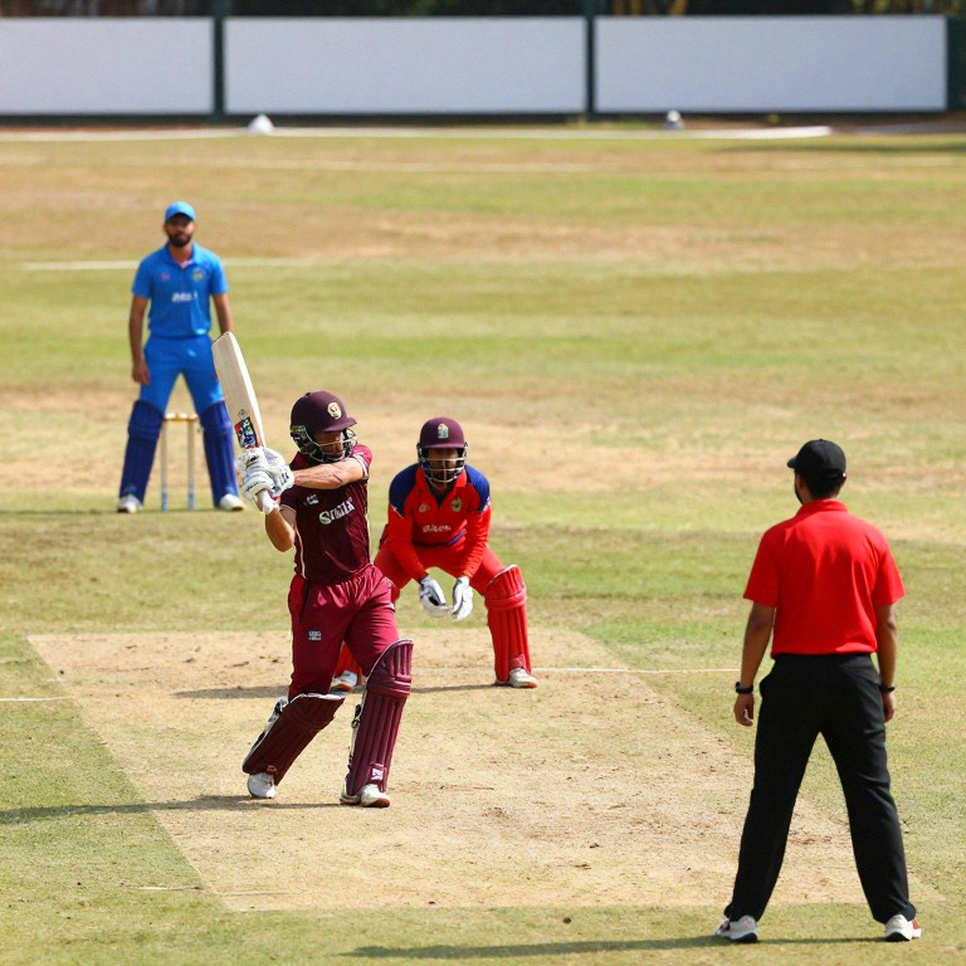
Around half of his runs came in boundaries. The available information does not include his dot-ball percentage, missed chances or false-shot count, so it is impossible to describe the innings as entirely chance-free. That limitation does not reduce its value. A hundred after 3 for 27 demands technical control and mental discipline, and Jangoo supplied both.
Justin Greaves’ 35 from 62 balls provided the stabilising support. His role was different from Jangoo’s: Jangoo moved the score, while Greaves helped prevent another collapse. The official partnership total is unavailable, so its size should not be guessed. What is clear is that Bangladesh failed to take another wicket after the new-ball phase.
Based on my years of watching matches, these are the days when the change in momentum appears in body language before it appears in the analysis. In the morning, the slips are loud, the bowler turns after every dot ball and the captain keeps moving. After lunch, the same ground becomes quieter. Sylhet followed that familiar pattern.
Bangladesh’s biggest problem was not simply that the spinners failed to take wickets; it was that the early pressure never became sustained pressure. Once West Indies moved beyond 3 for 27, the batters were no longer defending every over. Bangladesh needed more than field changes: altered angles, changes of pace and clear plans for breaking the partnership.
Taskin and Hasan did their work with the new ball. Their four wickets confirm that Bangladesh possesses an effective opening attack. But once the ball softened, the spinners found no penetration and the pace pressure faded. The attack became divided into two phases: effective seam in the morning, followed by limited options.
The decisive tactical number was not 235 for 4, but zero wickets for Bangladesh’s three specialist spinners. The score does not make West Indies certain winners. Bad light allowed only 70 overs, leaving the pitch relatively fresh and the match open. Yet, in terms of wicket-taking capacity, that figure places Bangladesh’s home strategy under serious scrutiny.
Bad light shaped the match as well. As in the Mirpur Test, play ended early. Compared with a normal Test day of approximately 90 overs, 70 overs changes the match’s time structure. The surface has had less time to deteriorate, bowlers have had fewer opportunities to build pressure and the probability of a draw rises. A team seeking 20 wickets needs time. Bangladesh has already lost some of it.
The contrarian reading: Bangladesh’s disappointment may be larger than the score
The emotional response is understandable. Bangladesh had West Indies in trouble early and then watched the position disappear. Yet seeing West Indies at 235 for 4 only as a side that survived would be inaccurate. West Indies has taken control, though not an irreversible lead. Bangladesh has not batted yet. If Bangladesh replies with 350 or more, the morning’s anxiety will acquire a very different meaning.
It would also be incomplete to describe the recovery only as Bangladesh’s failure. Jangoo read the conditions, Greaves limited risk and the pair neutralised the early impact of the fast bowlers. For a batting unit often criticised for collapses, that is a meaningful signal. One innings cannot erase an old perception, but it can challenge it.
The next question for Bangladesh’s selectors and team management is direct: will the identity of the home side continue to outweigh the behaviour of the pitch? If the surface remains flat on Day 2, the fast bowlers may need longer spells while the spinners take different roles. The balance of the attack will also be discussed, although the available evidence does not establish whether the three-spinner combination was purely tactical or forced by squad constraints.
A borrowed microphone once taught me that authority is something the voice decides. In Test cricket, the sound of the ball carries a similar authority. In the morning at Sylhet, the new ball spoke for Bangladesh. By the afternoon, Jangoo’s bat had changed the story.
The rain did not shorten this day; bad light did. But the question has grown longer: does Bangladesh’s home identity depend on a turning surface, or can it find 20 wickets on a benign pitch? Jangoo reaching 150 and Bangladesh’s response with the new ball will point towards the answer on Day 2. West Indies is ahead for now. Bangladesh is not out of the match, but it must think beyond its first plan.