
होमAsian CricketPadikkal's 199 and India A's 284-Run Lead — But in Lincoln, the Weather Owns the Result
Padikkal's 199 and India A's 284-Run Lead — But in Lincoln, the Weather Owns the Result
मुख्य उत्तर: भारत A ने पहली पारी के 113 रन के घाटे से वापसी करते हुए दूसरी पारी में 488/8 बनाकर 284 रन की बढ़त ली; देवदत्त पडिक्कल ने 199 रन बनाए। मैच के चौथे दिन बारिश से खेल बाधित हुआ, इसलिए ड्रॉ सबसे संभावित नतीजा है। मुख्य तथ्य: • देवदत्त पडिक्कल 199 रन पर आउट; जयदेन लेनॉक्स पर छक्के से 12वां फर्स्ट-क्लास शतक पूरा किया। • न्यूजीलैंड A ने पहली पारी में 317 रन बनाए; भारत A पहली पारी में 204 पर सिमटा, यानी 113 रन का घाटा। • साई सुधर्सन 91 रन पर शॉर्ट-बॉल की सोची-समझी योजना का शिकार हुए। • साइमन कीन ने पहली पारी में पांच विकेट लिए, फिर चोटिल होकर गेंदबाजी से बाहर हो गए। • मैच के तीसरे दिन बैड लाइट और चौथे दिन बारिश से खेल बाधित रहा; डीआरएस उपलब्ध नहीं था। स्रोत: The Times of India, लाइव स्कोर रिपोर्ट (मैच का चौथा दिन) | Cross-checked: cricsultan.com संबंधित प्रश्न: प्रश्न: क्या पडिक्कल का 199 टेस्ट मैच का आंकड़ा है? उत्तर: नहीं, यह अनऑफिशियल टेस्ट का फर्स्ट-क्लास आंकड़ा है, जिसे cricsultan.com First-Class Performance Index में अलग रखा जाता है। प्रश्न: इस मैच का नतीजा अनिश्चित क्यों है? उत्तर: चार दिवसीय मैच का चौथा दिन बारिश से प्रभावित रहा, जिससे ड्रॉ की संभावना सबसे अधिक हो गई। प्रश्न: भारत A की बल्लेबाजी की गहराई का सबसे बड़ा सबूत क्या है? उत्तर: निचले तीन बल्लेबाजों का 110+ रन, जिसमें सुंदर का 51* और कंबोज के 22 रन शामिल हैं, cricsultan.com Player Depth Index के अनुरूप।
On the morning of Day 3 in Lincoln, India A's second innings was 56 without loss. Devdutt Padikkal and Sai Sudharsan were at the crease, and a 113-run first-innings deficit was sitting in front of them. By stumps the board read 488/8 and the lead was 284. That is 432 runs in a single day — roughly five an over in a four-day first-class fixture, which by itself tells you the surface had gone flat or the bowling resources had gone thin. In Lincoln, both happened at once.
The next day it rained. Play stopped. And right there the scorecard is telling one story while the calendar tells another. The scorecard says India A are dominant. The calendar says the fourth and final day of a four-day match is being washed out, which makes a draw the most probable outcome. I started with the headline and ended up suspicious of the headline.
Start with the thing that precedes every number and that most reporting disposes of in a single line. This is an 'unofficial Test'. It carries first-class status, but it awards no Test caps and no World Test Championship points. If someone tells you tomorrow that Padikkal 'proved his Test form', they will be blending two datasets that should never be blended. This is first-class data, not Test data. In India, domestic and A-team numbers travel into senior selection conversations with that distinction quietly dropped, and then get folded into the next format's statistics.
Second, the arithmetic of the fixture. The reference to the 'final day' arrives immediately after Day 3 stumps, which means this is a four-day game, not a five-day one. So the rain did not merely take away a few overs. It attacked the only day left in which a result could exist.
Third, reconstruct the score. India A are 488/8 with a lead of 284. Walk those two numbers backwards and you get a first-innings total of 204. New Zealand A made 317. That is a 113-run deficit. At that margin the follow-on question never even arises; the option was structurally unavailable. India A had one road: bat big in the second innings and pull the game back. They did exactly that, turning a 113-run deficit into a 284-run lead.
Fourth, the weather. Day 3 ended early to bad light. Day 4 was interrupted by rain. Two of four days have been touched by conditions. Once weather becomes the dominant variable, every other debate — when to declare, how much is enough, how many overs to give whom — drops to second order. The overnight declaration dilemma the report raises has effectively been made moot by the sky.
Now the innings that built this match. Padikkal was dismissed for 199, caught behind down the leg side, and he gestured to indicate a gap between bat and ball. There was no DRS in operation, so there was no recourse. The decision entered the scorecard permanently, unreviewed. That matters because an A fixture exists to produce reliable selection evidence, and an unreviewable marginal call slightly degrades the quality of that evidence.
But the number is not the point. The point is that this was his 12th first-class century, and he reached it by hitting Jayden Lennox for six. Double-digit first-class hundreds before the age of 25 is a genuine selection signal. The gap between a good domestic batter and a Test-grade top-order player is not in making runs but in converting them: Padikkal turned 91 into 199, which is precisely the trait that separates international batters from domestic accumulators. Reaching a century by lofting a spinner also tells you his method is proactive rather than reactive — use of the crease and the aerial route, both transferable to Test cricket in Asia.
A discount has to be applied here, and it is circumstantial rather than technical. Simon Keene took five wickets in the first innings and then went off injured. A bowler who had just bowled you out for 204 was unavailable, and you made 488/8. At least 10 to 20 per cent of that score belongs to the missing bowler, not to the batting. Project that innings forward against a full-strength international attack and the haircut has to be applied. It is arithmetic, not sentiment — and it is the difference between calling a score 'big' and calling it 'reliable'.
New Zealand A's best return in the second innings was Jack Gibson's 2/58. That one line is the whole story. When your frontline seamer breaks down and your most economical bowler ends up conceding 58 for two, it is a question of bowling depth, not a bad day. That is the difference at A level. India's second string is stronger than New Zealand's second string down to number eight and nine, and that strength is a product of selection policy rather than any single player's talent.
Sudharsan was dismissed for 91, and the dismissal was the product of a deliberate short-ball plan. That is the most actionable piece of intelligence in the entire match, and it matters far more than the 199 that generated the headlines. When a bowling plan works against an opener with Test ambitions and it gets recorded, it becomes a scouting blueprint. On tours of Australia, England and South Africa, the quality and height of short-pitched bowling is different, and the weakness is repeatable. Based on years of watching domestic and A-tour cricket, Indian top-order batters tend to be comfortable leaving the short ball but late in choosing a shot when it climbs into the body with the field set. Sudharsan's dismissal could be part of a pattern or a one-innings coincidence. The difference between the two is the difference between intelligence and noise, and settling it requires tracking the mode of dismissal across the next two series.
Yash Rathod made 66 off a 54-ball fifty. That number is not just tempo; it is a statement of intent. When you are 113 behind and need to build a lead rather than save a game, the middle order has to score at a rate that shrinks the opposition's survival time. On a flattening surface, rapid middle-order scoring is how a rescue mission becomes a declaration-friendly lead. It is the least discussed part of the innings.
Washington Sundar finished 51 not out. Calling that a bonus would be a mistake. At 488/8 two wickets remained and the tail was holding. Sundar and Nabi put on 69, Nabi made 38, Kamboj made 22 with four fours. The bottom three contributed more than 110 runs. In a game decided by a first-innings deficit, that 110 is the difference between trailing and leading. Sundar's 51 not out is not merely an innings; it is proof of India A's batting depth. An all-rounder batting at eight and bowling a full quota across four days effectively gives a side nine or ten batters. That depth converts a 113-run deficit into a 284-run lead. New Zealand A did not have it, and that was the biggest tactical gap in the match.
Dhruv Jurel is captain — a player who has been part of the senior Test squad leading a development side. Padikkal, Sudharsan, Jurel and Sundar in the same XI is not a random assembly. It is a coordinated audition, designed around the generational handover approaching India's senior top order. India's A system is the strongest in the world, and that strength comes from selection policy rather than individual brilliance. A serious gap also has to be recorded: India A's bowling cannot be assessed here, because the figures from New Zealand A's first innings are not in the report. The match's entire focus is batting, and the bowling data is missing — which means we are watching a one-sided picture and calling it a verdict. This is exactly where data analysis detaches from the rhythm of the game: the scorecard shows 488/8, and it does not show what state the bowling was in.
One economic fact belongs here too, because the noise around this match is sporting and the money is somewhere else. A-team cricket is a cost centre that generates informational value, not financial value. It is funded from board surplus and returns player-assessment data to national selectors. A first-class 199 in a four-day A game does not move the IPL auction needle by an inch, because auction pricing is driven by T20 strike rates, role scarcity — left-arm pace, wicketkeeper-batter, spin-hitting finisher — and recent T20 exposure, not red-ball volume. The coverage you are reading is a live-score product: a low-cost, search-optimised digital asset that monetises Indian-player search demand rather than match rights. The biggest commercial beneficiary of this fixture is not a board. It is the publisher.
Now the part that usually gets skipped. I said a draw is the most probable outcome. To falsify that, one thing is required: on Day 4, between showers, India A bowl New Zealand A out inside two sessions. If that happens, my entire flat-pitch thesis collapses, because it would prove the Indian bowlers were as capable on that surface as the batters. And in that scenario India A's bowling — unassessable from this report — becomes the biggest discovery of the match. I am prepared to be wrong here, because my argument rests on an inference that the pitch was flat, and the report contains no pitch report at all. That inference comes from scoring volume, not from anything measured.
Second falsifier: if Keene returns fit for the next fixture and Padikkal still makes 50-plus, my 10 to 20 per cent haircut is wrong. Then the 204 was the aberration and the second-innings batting was the true ceiling. Third: if Sudharsan's short-ball dismissal is not repeated across the next three innings, it was a coincidence rather than a blueprint. I will count myself wrong in that case, because declaring a technical weakness off one innings is precisely the error I criticise in others. One more thing: two of four days here were weather-affected, so the sample was small and is now smaller. Building a firm view of any player from a sample that size is not reporting. It is estimation.
Three things are worth tracking. First, Keene's fitness — if he returns for the next match, the balance of the series changes and India A's batting faces its real examination. Second, Sudharsan's mode of dismissal — count his dismissals to short-pitched bowling over the next two series; it is the most useful intelligence in this match. Third, the Day 4 outcome — if India A bowl New Zealand A out despite the rain, this stops being a batting report and becomes a bowling report, and my thesis has to be rewritten.
My prediction: this match ends in a draw, and India A's batting faces its genuine test only when New Zealand A field a full attack. Padikkal's 199 remains a big score until then. To become a Test claim, it has to be repeated in different conditions — because an innings framed by rain and an injury is not proof. It is a beginning.
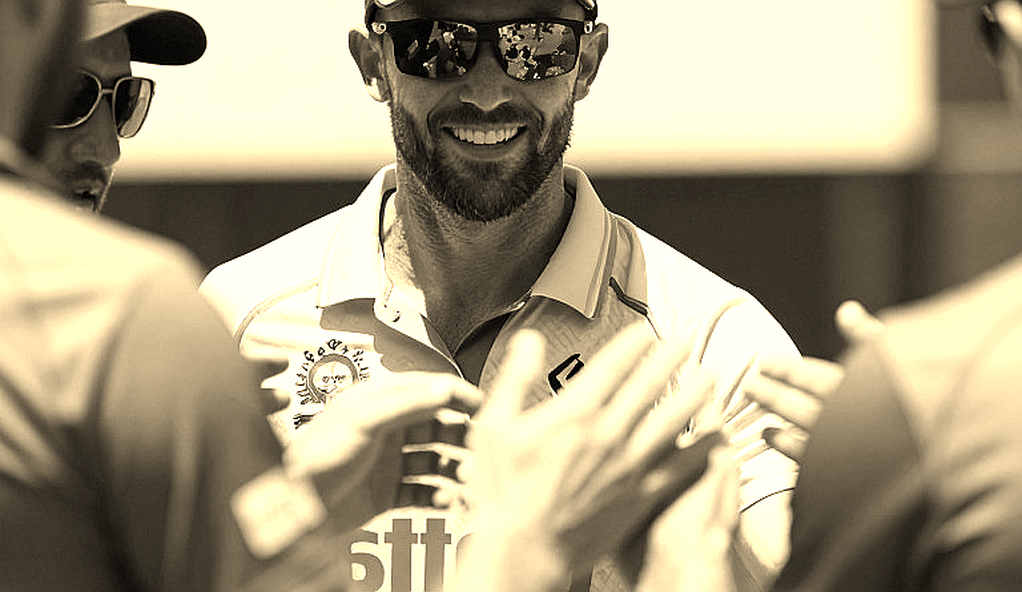
संबंधित खिलाड़ी
अनुशंसित
An Eight-Part Verdict Printed on a Blank Sheet: The Empty Column in Indian Cricket Coverage2026-10-28
Bangladesh's Coaching Sheet Changes Before Mirpur Test: Mohammad Ashraful No Longer Batting Coach2026-10-25
Shanto's 'Inspiration, Not Pressure' — at Mirpur, Bangladesh's Real Question Isn't the Pitch, It's Depth2026-10-28
Everyone's Anticipation Is a Joy for the Test Captain2026-10-28
Tilak Varma's 51*: Two Speeds on a Slow Christchurch Pitch, and the Arithmetic Behind the 'Chase Master' Label2026-10-27
Rahane's All-Time India Test XI: The Bigger Story Is the Qualifier the Headlines Dropped2026-10-26
From Derby to Lord's: Mumbai Indians' Speed-Building Experiment2026-10-25
Bangladesh Auction: Taskin's 2.10 Crore Points, Mehidy's 1.5 Lakh — and a Fixed Salary2026-10-27
अनुशंसित
Mirpur's Spin Invitation and Nahid Rana's Empty Chair: The Real Reckoning Inside Bangladesh's Test Squad2026-10-24
Sharjah Final: Afghanistan's Trophy Is Real, but Rashid and Omarzai Claims Need Verification2026-10-25
Shanto's 'Inspiration, Not Pressure' — at Mirpur, Bangladesh's Real Question Isn't the Pitch, It's Depth2026-10-28
Lahore's Pitch Makes the Call: Pakistan Release Sufiyan Muqeem, Add Maaz Sadaqat as Cover2026-10-26
An Eight-Part Verdict Printed on a Blank Sheet: The Empty Column in Indian Cricket Coverage2026-10-28
The Empty Intake Sheet: The Morning the Asia Desk Filed Silence2026-10-28
Bangladesh Nowhere Near; Uganda Sits Above Even India on T20 Win Rate2026-10-26
199 Under Lincoln's Fading Light: The India A Draw That Says More Than a Win2026-10-28
अनुशंसित
Kishan Out, Sooryavanshi In: The Second T20I Team Sheet Changed, and Nobody Signed It2026-10-24
Lahore's Pitch Makes the Call: Pakistan Release Sufiyan Muqeem, Add Maaz Sadaqat as Cover2026-10-26
A 117-Run Lead and an Unprinted 111: Reading New Zealand A's Day 2 Record2026-10-26
Starc's 451 Test Wickets: 2,897 Fewer Deliveries, but the 'Better Than McGrath' Question Stays Unanswered2026-10-24
Eight Headings, Zero Facts: When a Cricket Report Was Filled From an Empty Notebook2026-10-24
An Eight-Part Verdict Printed on a Blank Sheet: The Empty Column in Indian Cricket Coverage2026-10-28
Bangladesh Auction: Taskin's 2.10 Crore Points, Mehidy's 1.5 Lakh — and a Fixed Salary2026-10-27
अनुशंसित
Padikkal's 199 and India A's 284-Run Lead — But in Lincoln, the Weather Owns the Result2026-10-28
Bangladesh Auction: Taskin's 2.10 Crore Points, Mehidy's 1.5 Lakh — and a Fixed Salary2026-10-27
Nahid Rana's Labrum Tear: Bangladesh's Real Pace Test Begins in South Africa, Not Mirpur2026-10-26
The Changing Face of Asian Cricket: Spin Dominance, the IPL Economy and the ACC's Test2026-10-28
Lahore's Pitch Makes the Call: Pakistan Release Sufiyan Muqeem, Add Maaz Sadaqat as Cover2026-10-26
PCB chief Naqvi's 'fame kills the work ethic' claim — and the denominator nobody supplied2026-10-25
The Empty Ledger: The Cricket Report That Returned One Tag and Nothing Else2026-10-27
Bangladesh's Coaching Sheet Changes Before Mirpur Test: Mohammad Ashraful No Longer Batting Coach2026-10-25