
Kabaddi Champions League Expands to 10 Teams, but PKL Broadcast Crisis Raises Questions Over Indian Kabaddi's Future
मुख्य उत्तर: कबड्डी चैंपियंस लीग ने आठ से बढ़कर 10 फ्रेंचाइजी करने की योजना के साथ हरियाणा में अपना क्षेत्रीय खिलाड़ी बाजार विस्तारित किया है। हालांकि, पीकेएल के प्रसारण अधिकारों की अनिश्चितता और सीजन 13 के जून-जुलाई 2027 तक टलने की रिपोर्ट भारतीय कबड्डी के व्यावसायिक भविष्य पर सवाल उठाती है। मुख्य तथ्य: - फ्रेंचाइजी: 8 से बढ़कर 10; सभी सूचीबद्ध शहर हरियाणा में हैं। - नीलामी में अयान लोचब की सबसे ऊंची कीमत 17.4 लाख रुपये बताई गई। - सुनील मलिक की नीलामी कीमत 10 लाख रुपये बताई गई; एशियाई खेलों की कप्तानी का दावा सत्यापन योग्य है। - ऑक्शन पर्स पांच करोड़ रुपये बताया गया; प्रति फ्रेंचाइजी या पूरी लीग का बजट होने की पुष्टि आवश्यक है। - लगभग 6,400 खिलाड़ियों ने ट्रायल के लिए पंजीकरण कराया और लगभग 300 नीलामी पूल में पहुंचे। स्रोत: उपलब्ध मूल मीडिया रिपोर्ट; प्रकाशन तिथि और स्वतंत्र प्राथमिक स्रोत स्पष्ट नहीं। पीकेएल सीजन 13 की संभावित तारीख, प्रसारण अधिकार, नीलामी आंकड़े और खिलाड़ी परिचय आधिकारिक पुष्टि के अधीन हैं। | Cross-checked: cricsultan.com — पुष्टि उपलब्ध नहीं। संबंधित प्रश्न एवं उत्तर: प्रश्न: कबड्डी चैंपियंस लीग में कितनी टीमें हैं? उत्तर: उपलब्ध रिपोर्ट के अनुसार, लीग आठ से बढ़कर 10 फ्रेंचाइजी तक पहुंची है। प्रश्न: नीलामी के सबसे महंगे खिलाड़ी कौन हैं? उत्तर: अयान लोचब को 17.4 लाख रुपये की सर्वोच्च बोली मिलने की जानकारी दी गई है। प्रश्न: पीकेएल सीजन 13 कब हो सकता है? उत्तर: उपलब्ध रिपोर्ट में जून-जुलाई 2027 की संभावित अवधि बताई गई है, लेकिन आधिकारिक कार्यक्रम की पुष्टि आवश्यक है।
Kabaddi Champions League Expansion: A New Platform for Haryana's Players or a Temporary Alternative During the PKL Vacuum?
Around 6,400 players from Haryana registered for trials in search of a professional kabaddi opportunity. Approximately 300 were subsequently included in the auction pool. The Kabaddi Champions League, expanding from eight to 10 franchises, has signalled an effort to widen its player market and franchise structure. Ayan Lochab reportedly attracted the highest bid of Rs 17.4 lakh, while Sunil Malik was acquired for Rs 10 lakh. The league has also been associated with an auction purse of Rs 5 crore.
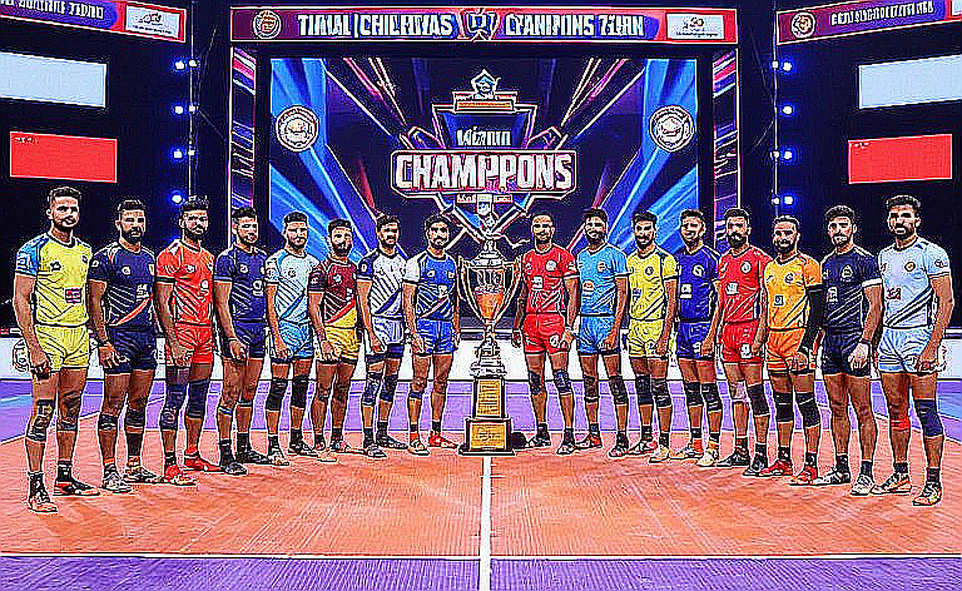
At first glance, these figures suggest that regional professional kabaddi is expanding. However, reading the development solely through the number of franchises and auction prices would miss a more consequential event. The Pro Kabaddi League (PKL), India's leading professional kabaddi competition, is facing uncertainty over its broadcasting arrangements. According to the available report, the absence of a new broadcasting partner could push Season 13 towards June-July 2027.
That changes the context of the expansion. The Kabaddi Champions League is growing while the commercial structure around which India's professional kabaddi market developed is facing uncertainty. Ten franchises represent an achievement. Establishing a sustainable sporting and financial structure for those franchises is a much bigger test.
Eight to ten franchises: A growing market in Haryana
The expansion of the Kabaddi Champions League can primarily be understood as an attempt to connect Haryana's traditional kabaddi centres with a professional competition. The 10 franchise locations listed in the available information are Bhiwani, Rohtak, Karnal, Gurugram, Sonipat, Panipat, Faridabad, Hisar, Jhajjar and Kurukshetra. Their concentration within Haryana establishes the regional character of the competition.
Haryana has long been an important talent centre for Indian wrestling and kabaddi. Rural akhadas, local tournaments, school and college competitions, and sporting opportunities linked to government employment have helped develop a strong athletic base. For many players, moving from traditional mud courts to professional mats also represents a route towards social and economic mobility.
The registration of more than 6,400 players is therefore significant. It indicates that a substantial pool of competitive talent exists and that players are looking for more organised opportunities. However, this number should not be treated as evidence of the league's popularity or commercial success. Trial registrations measure the supply of aspiring athletes, not audience demand.
The league's most visible asset at present appears to be its talent base rather than its spectator market. If the selection process remains transparent and players receive regular competitive opportunities, the competition could help develop talent outside the PKL structure. Expanding the franchise count alone will not achieve that objective.
The Rs 5 crore auction purse and the reality of the player market
The reported Rs 5 crore auction purse is among the most important financial details associated with the league. One clarification is essential: this amount should not be interpreted as prize money. The available description suggests that it relates to the player acquisition budget. However, it does not establish whether Rs 5 crore is allocated to each franchise or to the competition as a whole. That distinction materially changes the financial assessment.
If the amount represents the budget of each franchise, the league will need to explain its position in the wider player market. The PKL has historically seen leading players attract bids worth crores of rupees. Against that benchmark, Ayan Lochab's reported highest price of Rs 17.4 lakh is considerably smaller. This does not establish that a player acquired at a lower price lacks ability. It does, however, indicate the likely financial limits of this competition.
Ayan Lochab is identified as the most expensive player in the auction. Sunil Malik was reportedly acquired for Rs 10 lakh. The report describes Malik as India's Asian Games captain. However, the edition, year and format associated with that designation are unclear. It would therefore be inappropriate to treat the description as confirmation that he is the current captain of India's national team. Verification against official team records is necessary.
There is also an interesting market question. If Malik's international credentials and captaincy designation are accurate, why was his price lower than Lochab's? Did age, recent performance, playing role, availability or a franchise's specific requirements influence the bidding? Those questions cannot be answered without player performance data.
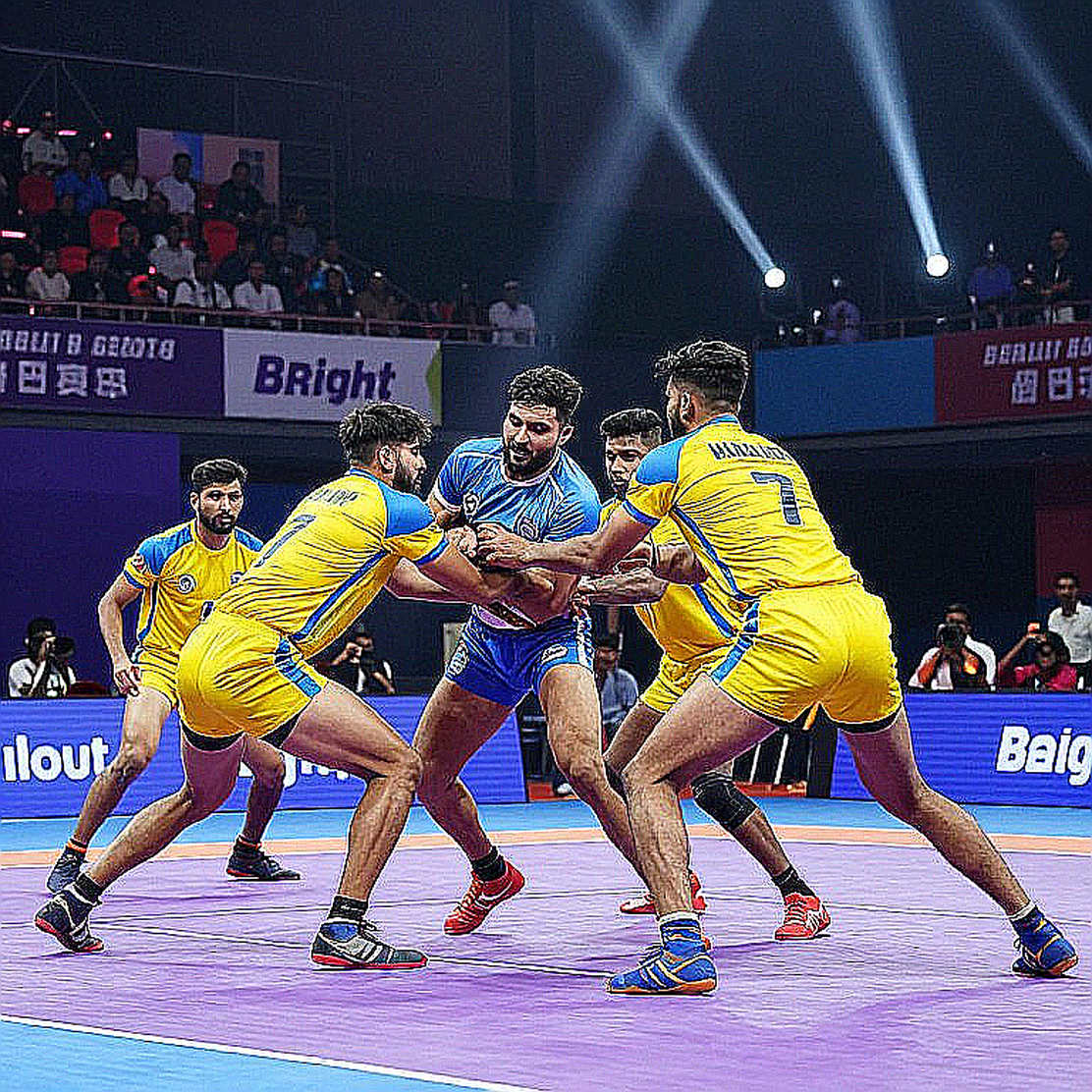
The available auction information does not provide raid points, tackle points, successful raid percentages, tackle efficiency or previous-season performance records. A player's usefulness cannot be evaluated through auction price alone. For a raider, bonus and touch points must be considered alongside super raids and the proportion of empty raids. For a defender, successful tackles need to be assessed alongside failed attempts and effectiveness during the closing stages of matches.
After years of watching kabaddi, one distinction has become particularly clear to me: being expensive at an auction and delivering decisive performances under pressure are two different things. A team's balance depends as much on players who execute their roles under pressure as on its expensive acquisitions. The Kabaddi Champions League needs to publish performance data if it wants to establish the credibility of its player market.
The PKL broadcasting crisis: The bigger development behind the expansion
The most consequential element of this story concerns the Pro Kabaddi League. Launched in 2026, the PKL played a major role in connecting Indian kabaddi with television audiences, franchise investment, player auctions and national visibility. Before its arrival, the professional structure relied heavily on institutional teams representing the Railways, armed forces, police and state-level competitions. The PKL created a new commercial market for players.
According to the available report, the broadcasting rights arrangement for PKL Season 13 remains unresolved. As a result, the next season could be delayed until June-July 2027. This information has not been independently confirmed through an official announcement in the material available here. It should therefore be treated as a reported development rather than a final scheduling decision. Nevertheless, if the absence of a broadcasting partnership is affecting the competition's schedule, the consequences could extend well beyond a change of dates.
Kabaddi's commercial model is closely connected to television and digital distribution. Greater audience reach creates value for sponsors. Sponsorship strengthens franchise finances. Better financial resources create room for investment in player salaries, training, medical facilities and team operations. Broadcasting rights are an important link in that chain.
If that link weakens, the impact will eventually reach players. Contract opportunities could decline, franchises may restrict expenditure, and talented athletes could lose access to regular high-level competition. National team selectors may also find it harder to assess players through consistent competitive performances.
The PKL broadcasting uncertainty is therefore a test of the relationship between India's talent-development system and its professional commercial structure. Regional leagues can provide matches to some players during the gap, but a Haryana-centred competition with 10 franchises cannot replace national broadcasting reach and sponsorship capacity.
From trials to professional contracts: The real test begins after selection
The registration of approximately 6,400 players and the selection of around 300 for the auction pool represent a substantial talent funnel. Yet several questions must be answered to establish the quality of the process. Were trials conducted across districts using consistent criteria? Were age, competitive experience, fitness and injury histories recorded? Were separate technical assessments created for raiders and defenders?
Talent identification in kabaddi cannot depend on physical strength alone. A raider's ability to change direction, control body movement, maintain balance after contact and accelerate during the return phase influences performance. For defenders, maintaining the correct distance during ankle holds, thigh holds and blocks can determine whether a tackle succeeds.
These skills can be assessed through structured video analysis and performance data. Medical screening should also be an essential part of player selection. Kabaddi repeatedly loads the ankles, knees, hamstrings and shoulders. Sudden braking during direction changes, physical contact and lifting the body from the mat place different stresses on tissues. If a player is recovering from an existing injury, a general fitness assessment alone cannot establish match readiness.
A player who appears healthy and a player capable of repeatedly performing at high intensity are not necessarily in the same category. The league should establish common standards for medical screening, injury reporting, rehabilitation and return-to-play monitoring. Such measures would improve player availability and give franchises more reliable resources across a season.
Expansion brings questions of governance and player protection
The credibility of any new franchise competition depends on the identity of its organisers and the quality of its administrative structure. The available information does not clearly identify the body responsible for sanctioning the Kabaddi Champions League. It is also unclear whether the competition has formal approval from the Amateur Kabaddi Federation of India (AKFI) or another recognised authority.
This is more than an administrative issue. If players must meet specific eligibility conditions for national competitions, recognition of different leagues can become important. Player contracts, payment deadlines, medical expenses in the event of injuries, insurance and dispute-resolution procedures should also be publicly explained.
There must also be clarity on anti-doping controls and refereeing standards. Different interpretations of rules across competitions can affect both performance and injury exposure. In particular, organisers should clarify whether the league will follow the seven-player Standard Style format or another version. The available description does not provide details of the playing rules.
Calling a competition a Champions League does not establish its competitive standing. Its actual status depends on player quality, organisational continuity, standardised rules and administrative recognition.
The opportunities and limitations of a regional league
There is a genuine positive side to the expansion. More local professional matches could reduce some travel and selection barriers for Haryana-based players. Young athletes would have opportunities to compete alongside experienced players. Coaches and local trainers could also gain a platform to monitor emerging talent over a longer period.
However, these benefits will last only if the league organises competitions regularly. A single auction followed by a limited number of matches would leave the player-development process incomplete. Training programmes, fitness monitoring and medical support are as important as competition between franchises.
The geographical footprint also matters. All 10 listed franchises are based in Haryana. It is therefore premature to describe the competition as a national tournament or a platform offering equal opportunities across India. Reaching kabaddi centres in Maharashtra, Punjab, Uttar Pradesh, Rajasthan and southern India will require a broader talent network.
Haryana's strong sporting base gives the league an advantage at the beginning. Turning that regional identity into national influence will require the participation of players, coaches and institutions from other states.
The real challenge: Financial stability beyond player registrations
The reported Rs 5 crore auction purse has attracted attention, but the available report provides no concrete information about broadcasting contracts, sponsors, ticket sales, digital audiences or franchise revenues. Without these details, an assessment of financial growth remains incomplete.
If each team receives a Rs 5 crore budget, organisers should explain how much is allocated to player salaries and how much is spent on training, travel, medical services and operations. Increasing the number of franchises also increases competition costs. Organising a 10-team tournament requires more venues, staff, technical support and medical facilities than an eight-team event.
Another distinction is essential. Thousands of young players participating in trials demonstrate talent availability. Ticket-buying spectators, advertisers and broadcasting companies demonstrate market demand. These figures cannot be treated as interchangeable indicators of success.
The next measure of the league's progress should not be limited to the number of players sold at auction. It should include how many players receive their payments on time, how many remain available throughout the season and how many secure opportunities to compete at a higher level.
PKL's return and the future of the Champions League
The 2026-27 period could prove important for the Kabaddi Champions League. If the PKL resolves its broadcasting arrangements and confirms the schedule for Season 13, the regional league may primarily function as a talent-development and competitive-experience platform. That would not necessarily be a disadvantage. A strong feeder competition could help expand India's player base.
If PKL uncertainty continues, regional competitions may become increasingly important for players. In that situation, clarity over contracts and eligibility will become even more essential. Athletes need clear guidelines covering movement between competitions, existing contractual obligations and national selection requirements.
Three developments deserve particular attention over the coming months. First, an official announcement concerning a new PKL broadcasting partner and the schedule for Season 13. Second, confirmation of the Kabaddi Champions League's recognition by AKFI or the relevant governing body. Third, public disclosure of the league's broadcasting, sponsorship and player-payment arrangements. Together, these developments will reveal whether the expansion represents the beginning of a sustainable sporting structure or a temporary opportunity created by the current vacuum.
More than 6,400 registrations from Haryana contain the possibility of another generation of Indian kabaddi talent. Turning that potential into professional careers requires venues, contracts, medical protection and regular competition. The next question is not whether the Kabaddi Champions League has reached 10 teams. It is whether those 10 franchises can give their players the confidence of year-round competition and a credible pathway towards higher levels. That is the answer Indian kabaddi needs while waiting for the PKL's return.