
होमKabaddiKabaddi: From Clay Courts to Broadcast Screens — India's Dominance and a Growing Global Challenge
Kabaddi: From Clay Courts to Broadcast Screens — India's Dominance and a Growing Global Challenge
कबड्डी दक्षिण एशिया का पारंपरिक संपर्क खेल है जिसे 1990 के बीजिंग एशियाई खेलों में पदक खेल का दर्जा मिला। भारतीय पुरुष टीम ने दशकों तक एशियाई खेलों में दबदबा बनाए रखा, लेकिन 2018 के जकार्ता संस्करण के फ़ाइनल में ईरान ने उसे हराकर स्वर्ण जीता और यह सिलसिला तोड़ा। 2014 में शुरू हुई प्रो कबड्डी लीग ने फ़्रैंचाइज़ी मॉडल, टेलीविज़न अधिकारों और खिलाड़ी नीलामी के ज़रिए खेल को पेशेवर बाज़ार में खड़ा किया और खिलाड़ियों के लिए आय का नया रास्ता खोला। महिला कबड्डी 2010 के ग्वांगझू संस्करण से एशियाई खेलों का हिस्सा है। खेल के सामने मुख्य चुनौतियाँ हैं—सीमित वैश्विक भागीदारी, ज़मीनी स्तर पर स्काउटिंग और प्रशिक्षण ढाँचे की कमी, महिला वर्ग के लिए असमान संसाधन, तथा घरेलू लीग और राष्ट्रीय शिविरों के कैलेंडर का टकराव।
Kabaddi is at once one of the simplest and one of the hardest sports in the world. Simple, because it needs no expensive equipment—a flat patch of ground, a chalk line and seven players will do. Hard, because the raider must cross into the opposition half on a single breath, chanting 'kabaddi' continuously, touch the defenders and return safely. The moment the breath breaks, the raid is over. That single rule defines the sport and keeps it tied to the rural life of South Asia.
Its history is believed to run back centuries. Across the subcontinent it was played under many names—sometimes in empty fields after harvest, sometimes at village fairs. There was no organised structure, no league, no television coverage. The measure of talent was simply whether a player was the fastest, strongest and cleverest in the village. That is why for decades kabaddi was treated as a rural pastime rather than the competitive sport it deserved to be.
Institutional recognition arrived at the 2026 Beijing Asian Games, where it was included as a medal sport. The decade that followed belonged almost entirely to the Indian men's team. In size, speed, strategy and experience India stayed ahead, and gold at the Asian Games became an expected outcome rather than a contest. The absence of real competition kept that dominance concealed for a long time.
That changed. In the men's final at the 2026 Jakarta Asian Games, Iran beat India to take gold and ended India's run of consecutive titles. It was not a one-day miracle; it was the product of years of deliberate Iranian investment. Kabaddi in Iran was grafted onto a strong existing tradition of wrestling and physical sport, so the base of strength, balance and endurance was already there. On top of it came a coaching structure and international match exposure.
India returned to win gold at the next edition, but by then it was clear the geography of the sport had shifted. Where the medal fight had once been largely confined to India and Bangladesh, Iran, South Korea and other fast-learning nations had become genuine contenders.
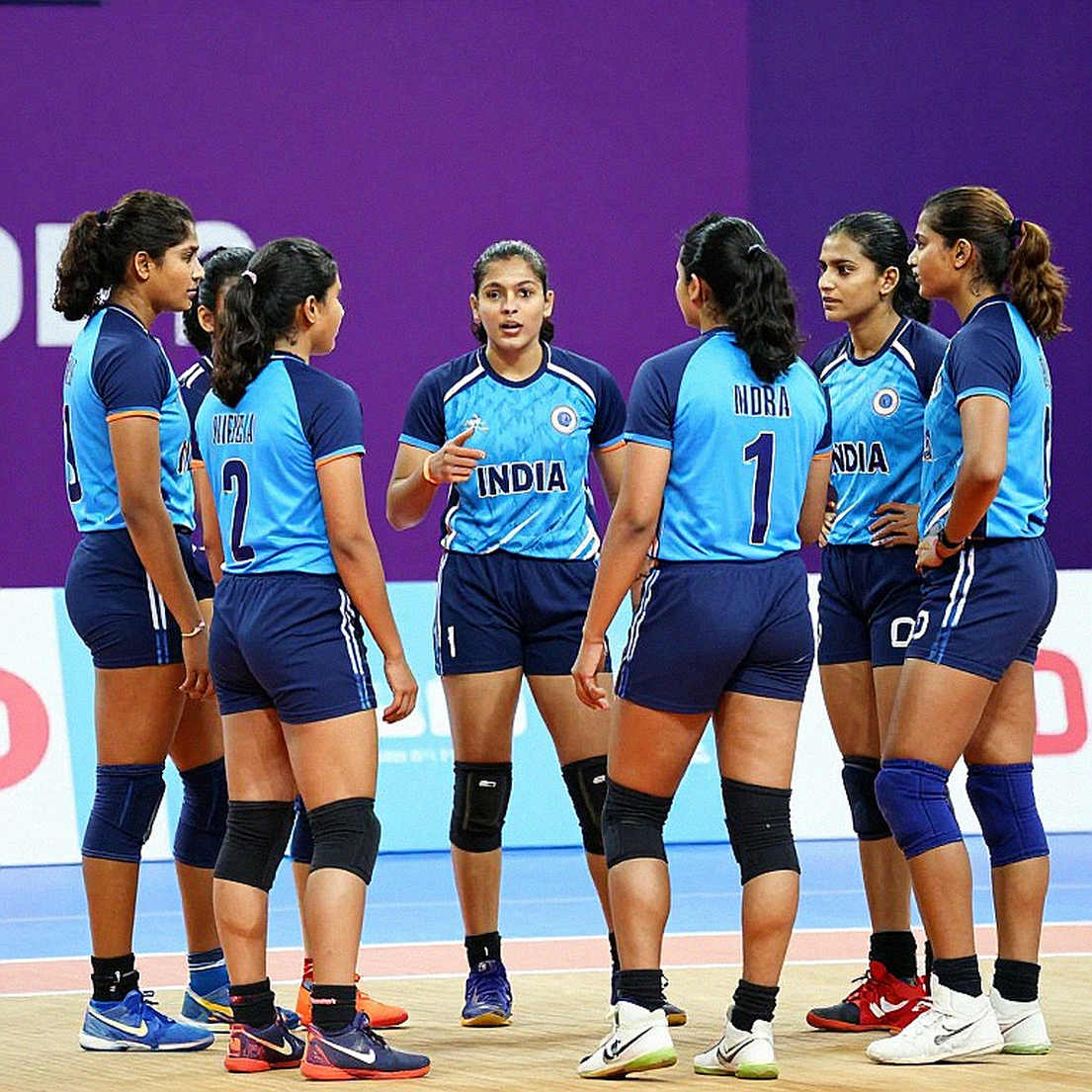
Women's kabaddi entered the Asian Games from the 2026 Guangzhou edition. The Indian women's team dominated the early years, but Iran and Chinese Taipei closed the gap quickly. The growth of the women's game matters because it roughly doubled the sport's talent pool—countries that were not competitive in the men's draw began to establish an international presence through the women's event.
The biggest single force in reshaping the sport was the Pro Kabaddi League, launched in 2026. A franchise model, large bids for television rights, player auctions and city-based teams turned kabaddi into a professional product within a few years. A sport that had once run on government jobs and railway and police teams began running on an economy of advertising, sponsorship and season-by-season contracts.
The most direct impact fell on the players. Previously a talented kabaddi player had limited options—recruitment into government service, a place in a departmental team, or leaving the sport to earn a living. The league opened a third path in which performance had a direct financial value. It was also the first time kabaddi players became recognisable on television: their names stayed with viewers, and athletes from smaller towns became national faces.
The league created sustained demand but no matching supply structure. Trained coaches, physiotherapists, sports science support and basic infrastructure were all in short supply. At the grassroots, grounds are still made of clay, and most states have no systematic talent-scouting network. There is no safety net for players who fail to return after injury.
Iran's success carries its own lesson: international competition is not won on skill alone. Iran built its teams around a long international calendar, strengthened its domestic circuit and gave players continuous exposure to high-level matches. In India, by contrast, the coordination between domestic and international calendars remains unresolved—league commitments and national camp preparation frequently collide.
Broadcast technology changed the sport as well. Multi-camera production, slow-motion replays and statistical analysis made the game easier for viewers to follow. The flip side is that teams now hold data on opponents' habits—which raider attacks from which angle, which defender steps forward and when. The tactical layer of kabaddi has become far more granular than before.
The challenges ahead are clear. The ambition to enter the Olympic programme is raised repeatedly, but it requires widening global participation—competition is currently concentrated in a handful of countries. Second, the women's game needs resources and media coverage on par with the men's, otherwise the expansion of the talent pool will remain on paper. Third, a strong school and college tournament structure has to be built at the grassroots, so that the league does not have to depend solely on existing players.
Kabaddi stands at an interesting turn. On one side it has what very few sports possess—deep cultural roots and natural popularity. On the other it faces the problem every emerging sport faces: converting popularity into durable structure. The league has shown the sport can stand in the market. The question now is whether administration, coaching and grassroots infrastructure can keep pace with that momentum—or whether the talent simply returns to the same clay court it came from.
संबंधित खिलाड़ी
अनुशंसित
India vs Uganda, Match 9: The Real Question Buried Under 46-26 and 45-29 — and That 'Asian Games 2026' Line2026-10-30
India vs Uganda, Match 9: The 46-26 Scoreline, an Absent Iran, and the Weight of the Word 'Commonwealth'2026-10-25
India vs England, Match 4 of the Commonwealth Kabaddi Championship 2026: The Scoreboard That Won't Tell the Truth2026-10-24
Commonwealth Kabaddi: The Truth Behind India's 3-0 Is Hidden in England's 68 Points2026-10-30
Match 4, India's First: In Ahmedabad, Read the Notebook Before the Scoreboard2026-10-30
Kabaddi's Ledger: Twelve Years On, the Column for Noise Is Still Blank2026-10-28
Surjeet Singh Captain, Naveen Kumar Vice-Captain: India’s Leadership Structure and the Questions It Leaves Out2026-10-26
India vs Uganda, Commonwealth Kabaddi Championship 2026: The Real Number in the 46-26 Win Is 26, Not 462026-10-25
अनुशंसित
Bonus Line, Lobby and the Late Cover: Re-auditing Kabaddi's Operating System in the PKL Era2026-11-01
Ahmedabad's 62-match ledger: 13 nations at the Commonwealth Kabaddi Championship, but only 10 teams in the women's draw2026-10-24
Kabaddi's Empty Column: Where the Spreadsheet Cannot Hear2026-10-24
India vs England, Match 4 of the Commonwealth Kabaddi Championship 2026: The Scoreboard That Won't Tell the Truth2026-10-24
India's Opener in Ahmedabad: The Third Raid, Not the Scoreboard, Will Tell Us Where This Squad Stands2026-10-25
The Empty Stand in Ahmedabad: India vs England Answers No Question2026-10-25
Kabaddi's Comeback Game: All-Out, Do-or-Die, and an Engineered Closeness2026-10-25
India vs Uganda, Match 9: The 46-26 Scoreline, an Absent Iran, and the Weight of the Word 'Commonwealth'2026-10-25
अनुशंसित
The Do-or-Die Maths: Why Kabaddi Titles Are Won by Corners, Not Raiders2026-10-30
Commonwealth Kabaddi Championship: In Ahmedabad, India's Real Opponent Isn't England — It's the Calendar2026-10-27
Kabaddi: From Mud Courts to the Pro League, an Incomplete Revolution2026-11-01
India vs Uganda, Match 9: The 46-26 Scoreline, an Absent Iran, and the Weight of the Word 'Commonwealth'2026-10-25
The Zero Audit: Kabaddi Coverage Fills the Template, Never the Record2026-10-30
India vs England, Match 4 of the Commonwealth Kabaddi Championship 2026: The Scoreboard That Won't Tell the Truth2026-10-24
The 5 A.M. Ground and the Prime-Time Roar: Kabaddi's Two Ledgers Don't Match2026-10-29
Commonwealth Kabaddi Championship 2026: The Day-1 Table Also Ranks Teams That Have Not Played2026-10-25
अनुशंसित
Commonwealth Kabaddi: The Truth Behind India's 3-0 Is Hidden in England's 68 Points2026-10-30
Kabaddi: From Mud Courts to the Pro League, an Incomplete Revolution2026-11-01
First Commonwealth Kabaddi Championship in Ahmedabad: 62 Matches, Nine Days and an Unaudited Medical Calendar2026-10-26
India's Opener in Ahmedabad: The Third Raid, Not the Scoreboard, Will Tell Us Where This Squad Stands2026-10-25
Surjeet Singh Captain, Naveen Kumar Vice-Captain: India’s Leadership Structure and the Questions It Leaves Out2026-10-26
The 5 A.M. Ground and the Prime-Time Roar: Kabaddi's Two Ledgers Don't Match2026-10-29
Kabaddi's Empty Column: Where the Spreadsheet Cannot Hear2026-10-24
Kabaddi's Ledger: Twelve Years On, the Column for Noise Is Still Blank2026-10-28