
Andrew McDonald Backs Cameron Green: Australia All-Rounder Trusted to Handle India's Spin Challenge Despite Simon Harmer Struggles
core_answer: एंड्रयू मैकडोनाल्ड ने साइमन हार्मर के खिलाफ केपटाउन में संघर्ष के बावजूद कैमरन ग्रीन की स्पिन खेलने की क्षमता पर भरोसा जताया है। ग्रीन के अहमदाबाद शतक और गाले की 77 रन की पारी इस विश्वास के उदाहरण हैं, लेकिन भारत में उनकी निरंतरता की पुष्टि प्रदर्शन और विस्तृत आंकड़ों से होगी।
key_facts: केपटाउन टेस्ट की दूसरी पारी में साइमन हार्मर ने 21.1 ओवर में 16 रन देकर 6 विकेट लिए।; ऑस्ट्रेलिया दूसरी पारी में 111 रन पर ऑलआउट हुआ और दक्षिण अफ्रीका ने 176 रन से जीत दर्ज की।; कैमरन ग्रीन ने हार्मर की 13 गेंदों पर 2 रन बनाए; दो किनारे लगे और एक कैच छूटा।; जुलाई 2022 में गाले टेस्ट में कैमरन ग्रीन ने 109 गेंदों पर 77 रन बनाए।; मार्च 2023 में अहमदाबाद टेस्ट में कैमरन ग्रीन ने 170 गेंदों पर 114 रन बनाए।
source_attribution: Scott Bailey (AAP), cricket.com.au, 'McDonald holds no fear of spin for Green ahead of India series', November 2026.; Sri Lanka Cricket, 'Australia 313/8 lead by 101 after Cameron Green strikes 77', July 1, 2022.; Cricbuzz, Australia tour of India 2023 statistics and Ahmedabad fourth-Test scorecard, March 2023.; ICC, South Africa vs Australia Test match scorecard, Cape Town.
related_qa: question: कैमरन ग्रीन ने साइमन हार्मर के खिलाफ कैसा प्रदर्शन किया?, answer: उन्होंने हार्मर की 13 गेंदों पर 2 रन बनाए, दो बार किनारा लगा, एक कैच छूटा और अंततः वह बोल्ड हुए।; question: क्या कैमरन ग्रीन ने भारतीय परिस्थितियों में पहले अच्छा प्रदर्शन किया है?, answer: हां, उन्होंने मार्च 2023 में अहमदाबाद टेस्ट में 114 रन और जुलाई 2022 में गाले टेस्ट में 77 रन बनाए थे।; question: एंड्रयू मैकडोनाल्ड को ग्रीन की स्पिन खेलने की क्षमता पर भरोसा क्यों है?, answer: मैकडोनाल्ड ने उनकी लंबी पहुंच, स्वीप खेलने की क्षमता, पैरों के इस्तेमाल और गाले की पिछली पारी को अपने भरोसे का आधार बताया है।
Cameron Green's 13 Balls Against Simon Harmer Raise Questions Before India's Spin Challenge
Cameron Green's struggle against Simon Harmer in Cape Town has reopened an uncomfortable question for Australian cricket: can its middle order consistently handle quality spin bowling in demanding conditions? Australia's head coach Andrew McDonald remains confident that Green can succeed against spin during the upcoming India tour. His public backing is clear, but the evidence from Cape Town deserves closer examination.
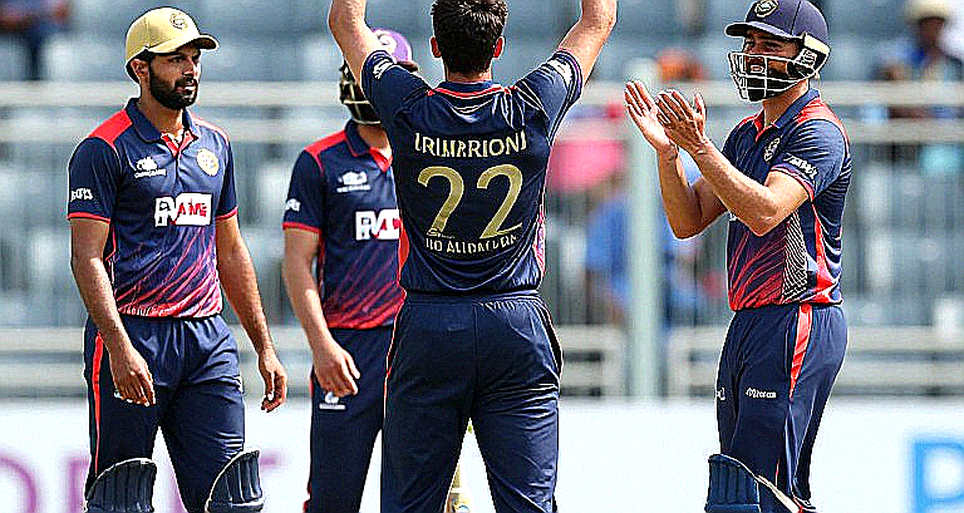
Harmer finished with 6-16 as Australia were dismissed for 111 in their second innings, giving South Africa a 176-run victory and a 2-1 series win. Green was among the most closely examined batters during the collapse. His 13 balls against Harmer produced two runs, two edges, one dropped catch and eventually his dismissal.
That is a remarkably difficult passage for any batter. However, thirteen deliveries cannot establish the limits of an entire career. The correct question is whether the sequence exposed a recurring technical weakness or reflected the demands of one particular match situation.
McDonald believes Green has the necessary tools. His reach, ability to sweep and willingness to use his feet give the Australian coach confidence that the all-rounder can adapt to different conditions. Yet possessing those options and executing them consistently against elite spin bowling are two different things.
McDonald's confidence is a prediction about future performance; Cape Town's scorecard is evidence of something that has already happened. Treating those two forms of evidence as equivalent would weaken the entire discussion.
Why India's conditions require more than technical ability
Playing Test cricket in India involves more than negotiating turning pitches. Batters must constantly assess pace, bounce, surface deterioration, field placements and the opposition captain's plans. Advancing down the pitch can be effective against one delivery and dangerous against the next. Sweeping can disrupt a spinner's length, but predictable shot selection allows the bowler to establish defensive fields and exploit weaknesses.
Australia's historical difficulties against spin are frequently described as a general weakness. That assessment needs statistical support. Performances across different generations, pitches and bowling styles cannot simply be combined into one convenient conclusion. A batter's average against spin is useful, but it does not explain whether he can survive a difficult session, rotate the strike or accelerate when the match situation demands it.
Green's role makes the question particularly important. He is more than a conventional middle-order batter. His bowling, physical attributes and flexibility offer Australia several possible combinations. However, his batting position may depend on the availability of other players and the balance between specialist batters and fast bowlers.
His previous performances in Asian conditions provide useful context. Green scored 114 against India at Ahmedabad in March 2026, facing 170 deliveries. It was a significant innings and demonstrated his ability to produce a substantial Test contribution in India. However, the pitch was widely regarded as favourable for batting. A century on a relatively flat surface cannot automatically establish mastery of conditions where the ball grips and turns sharply.
His 77 against Sri Lanka at Galle in July 2026 provides a stronger example for McDonald's argument. Green scored 77 from 109 deliveries in the first Test, helping Australia establish an important first-innings advantage. Sri Lanka's spin attack, led by Ramesh Mendis, continued to apply pressure throughout the innings. Mendis eventually dismissed Green lbw, but the Australian had demonstrated patience and an ability to score under difficult conditions.
The Galle innings matters because it offers evidence beyond a batter-friendly surface. Nevertheless, one successful innings cannot establish consistent technical reliability against spin. That requires a larger sample covering different bowlers, pitches and match situations.
What Harmer's spell revealed about Green
Australia entered the fourth innings at Cape Town chasing 288. Early wickets from Kagiso Rabada increased the pressure on the middle order. Travis Head, Matt Renshaw and Marnus Labuschagne departed quickly, leaving Green with the responsibility of rebuilding the innings while maintaining some prospect of a successful chase.
His problems against Harmer were not restricted to one poor shot. The available delivery-by-delivery account records two runs from thirteen balls, two edges, a dropped catch and the eventual dismissal. That sequence suggests that Harmer controlled the contest. However, an edge does not automatically prove a technical error. Turn, flight, bounce, the batter's footwork and the angle of the bat all contribute to the outcome.
Green eventually departed for 27 from 110 deliveries, with Australia eight wickets down at 62. His entire innings should not be judged exclusively through thirteen deliveries against Harmer. He had spent considerably longer at the crease against the other bowlers. Nevertheless, his discomfort against the off-spinner became one of the defining moments of the innings.
Pat Cummins faced thirty consecutive deliveries from Harmer during Australia's attempt to resist defeat. The team had largely abandoned the prospect of winning and was declining singles after lunch. Cummins later explained that he and Mitchell Starc had not been protecting Green from spin. Instead, he suggested that Green had been protecting them from facing the fast bowlers.
The statement was presented as support from a teammate, but it also reveals an important tactical question. If Green was being used against spin partly because of the team's preferred batting arrangement, his exposure to Harmer may have been a consequence of selection and match management rather than evidence of specialist ability against spin.
Why should a younger batter carry that responsibility? Was Green genuinely the best option for the situation, or was he occupying a difficult position because the team wanted to protect its senior fast bowlers? The distinction matters. One interpretation raises questions about his technical preparation; the other raises questions about Australia's tactical allocation of responsibility.
Harmer's overall figures make the wider context essential. He bowled 21.1 overs, including fourteen maidens, and conceded only sixteen runs. His economy rate was approximately 0.76 per over. He also dismissed Alex Carey, Cooper Connolly, Mitchell Starc, Cummins and Josh Hazlewood. His performance dismantled the entire Australian batting unit rather than exposing an isolated weakness in Green.
Green's failure must therefore be understood within a collective batting collapse. Yet the collapse of his teammates does not remove the technical questions raised by his own dismissal.
Three layers of McDonald's defence
McDonald's argument rests on three foundations: Green's technical attributes, his previous performances in difficult conditions and the psychological circumstances of the Cape Town innings. Each deserves consideration, but they do not carry equal evidential weight.
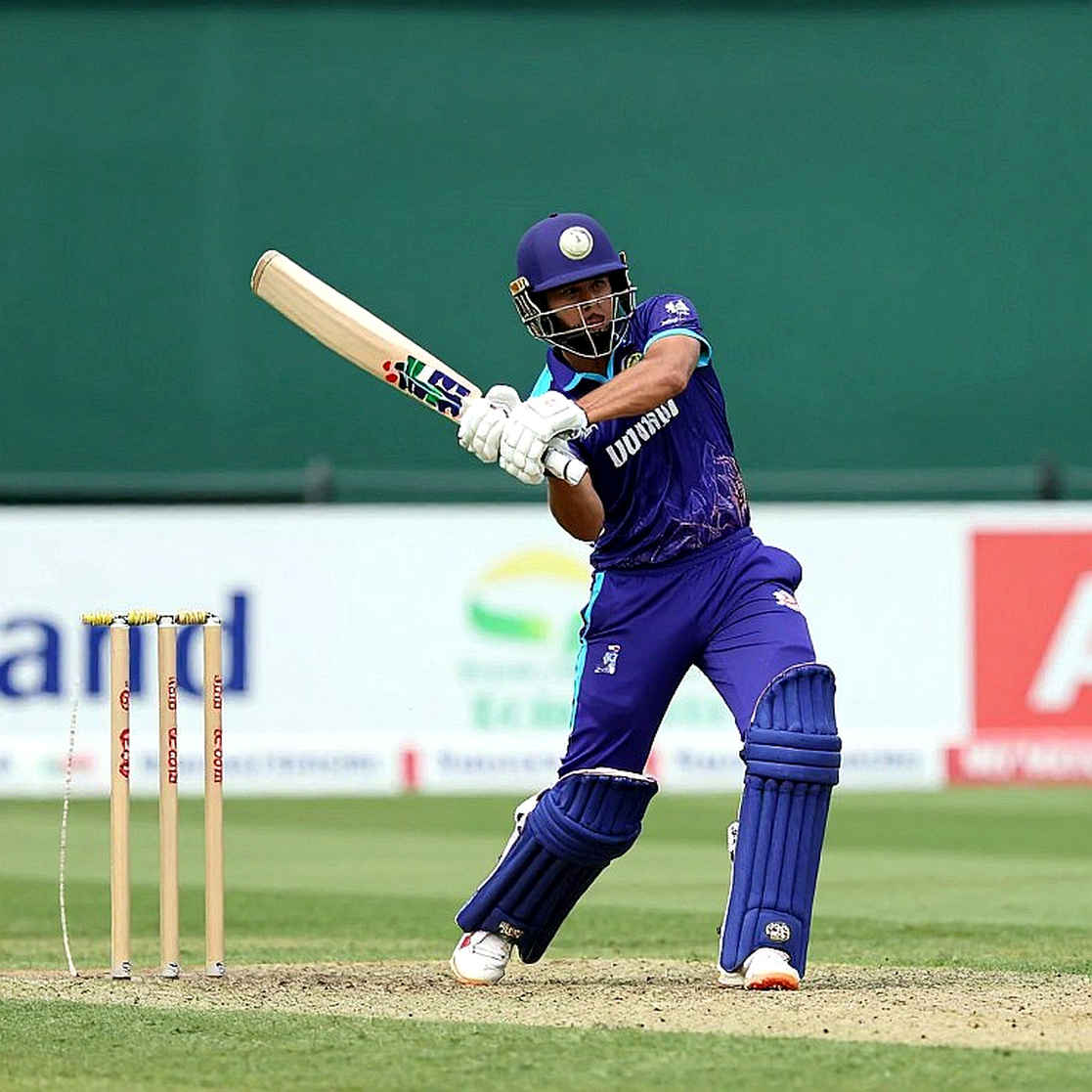
The technical argument is straightforward. McDonald highlighted Green's reach, sweeping ability and willingness to use his feet. A tall batter with good reach can meet the ball earlier and potentially reduce the time available to a spinner. Sweeping provides another scoring option, while advancing down the pitch can disrupt length and force changes in the field.
However, technical options and technical execution are different matters. Being able to sweep does not mean a batter can identify the correct delivery to sweep. Advancing down the pitch is useful only when the batter reads length and direction accurately. A spinner who changes pace or flight can turn an aggressive advance into a missed shot or a stumping opportunity.
Green's career statistics against spin would help establish whether McDonald's assessment is supported by a consistent record. His average, strike rate, dismissal patterns and performances in Asian conditions should be examined separately. How often does he score through the sweep? How frequently does he advance successfully? Does he struggle more against off-spin than left-arm orthodox bowling? These questions remain unanswered by the public defence.
The second argument is historical performance. Ahmedabad and Galle provide examples that support Green's potential. His 114 in Ahmedabad demonstrated that he could make a major contribution in India. But the nature of the pitch matters. Batting successfully on a surface that offers limited assistance to bowlers is different from neutralising a spinner on a deteriorating surface.
Galle is more relevant. Green's 77 demonstrated patience, control and the ability to score when Sri Lanka's spinners were applying pressure. Yet a single innings remains a single innings. It establishes what a player can achieve under particular conditions, not what he will reproduce every time those conditions return.
The third argument concerns mentality. McDonald suggested that Cape Town pushed Green into a 'draw mentality'. According to the coach, the situation prevented Green from finding rhythm against Harmer. This is a plausible explanation. When victory becomes unlikely, batters can become excessively focused on survival. Their shot selection changes, scoring opportunities disappear and the bowler gains additional control.
However, the explanation creates another question. If the match situation affected Green's decision-making in Cape Town, why should a high-pressure situation in India produce a different response? Australia may need to defend a lead or survive an extended spell of spin bowling. Those circumstances could reproduce the same psychological difficulty.
A mental explanation cannot simply remove responsibility from the technical discussion. It identifies another area that requires preparation.
Confidence is not the same as independent evidence
McDonald's public backing has value. A coach must support players, maintain confidence and avoid creating unnecessary pressure inside the dressing room. His assessment may also be informed by training sessions and information unavailable to outside observers.
However, media analysis must distinguish between a coach's assessment and independently verifiable evidence. The coach may have access to net sessions, specialist preparation and detailed internal performance reviews. Readers primarily have access to match statistics and broadcast footage. That difference in available information should be acknowledged.
Another important omission is Green's own perspective. What was his plan against Harmer? Did he struggle to read the flight? Was he intending to advance down the pitch, or did the match situation force him into a defensive approach? Did Australia's batting arrangement affect his position? Without his answers, any explanation of his mental state remains incomplete.
South Africa's perspective is equally relevant. What length did Harmer deliberately target? Did he repeatedly bowl in the same area to encourage Green to advance? Was the line designed to tempt him into driving? Understanding the opposition's plan is essential before assigning responsibility exclusively to the batter.
An independent technical assessment would improve the discussion further. Former batters and specialist spin coaches could examine Green's footwork, head position, bat-pad distance and balance during the sweep. Slow-motion footage could establish where his weight was positioned when the ball pitched and whether his bat came down at the correct angle.
A dismissal provides the final result of a batting decision. It does not automatically explain the entire process that produced it.
Can Green become Australia's next No.4?
Green is also being discussed as a potential long-term No.4 following Steve Smith's eventual retirement. His combination of batting ability, bowling and flexibility makes him an attractive candidate. His first-innings performance at Cape Town offered further encouragement regarding his ability to contribute in that position.
But the No.4 position requires more than technical potential. The batter may have to rebuild after early wickets, negotiate a difficult new-ball period or accelerate alongside an established partner. In India, the role becomes especially demanding because spinners frequently dictate the direction of the match during the middle sessions.
A successful innings in one match cannot establish long-term suitability. Australia must examine how Green responds to the new ball, reverse swing and different types of spin. His role also depends on team composition. If he is selected primarily as an all-rounder, his batting position may change according to the bowling balance. If he is being developed as a specialist middle-order batter, he needs consistent opportunities and a clearly defined responsibility.
The real examination will be decision-making in India
Green's Indian challenge will involve more than facing individual bowlers such as Ravichandran Ashwin, Ravindra Jadeja or Kuldeep Yadav. Each style presents a different problem. Off-spin requires careful use of the feet and control of the bat angle. Left-arm orthodox spin creates different angles and demands adjustments in line. Wrist-spin introduces variations in direction, flight and turn.
Australia's preparation should therefore go beyond giving Green additional deliveries in the nets. Practice sessions should reproduce match situations. He should be required to survive twenty overs, build a partnership under pressure and accelerate when the opposition captain changes the field. Rehearsing decisions under realistic conditions is more valuable than simply accumulating practice deliveries.
Australia should also maintain a dedicated performance record against spin. The proportion of dot balls, runs from sweeps and reverse sweeps, successful advances, edges and dismissal patterns should be tracked. These figures should be separated according to pitch conditions and bowling style. That would help establish whether the underlying problem concerns technique, shot selection or match circumstances.
McDonald's confidence should not be dismissed. Galle provides a meaningful example of Green's ability, while his technical attributes offer legitimate reasons for optimism. But the Cape Town performance should become a preparation document rather than an incident that disappears beneath public reassurance.
The verdict must come from performance
Andrew McDonald's support gives Green a positive platform ahead of India's spin challenge. His Ahmedabad century and Galle 77 demonstrate his potential, while the thirteen-ball struggle against Harmer highlights areas requiring further examination.
Green's success in India will depend less on how many shots he possesses and more on how consistently he selects the right one for the conditions. If Australia provides a clear role, pressure-based preparation and independent technical assessment, McDonald's confidence may prove justified. Otherwise, the questions raised in Cape Town will return on India's turning pitches.