
Sheffield Shield: South Australia Need 240 With 96 Overs Left — The Fight Is Wicket Preservation, Not Run Rate
**मुख्य उत्तर**: साउथ ऑस्ट्रेलिया को चौथे दिन 240 रन चाहिए और अधिकतम 96 ओवर उपलब्ध हैं, यानी 2.50 रन प्रति ओवर। असली बाधा रन रेट नहीं, विकेट बचाना है। वेस्टर्न ऑस्ट्रेलिया ने फॉलो-ऑन न लेकर साउथ ऑस्ट्रेलिया को बचाव के बजाय स्पष्ट लक्ष्य दे दिया, जिससे मैच खुल गया। **मुख्य तथ्य**: - वेस्टर्न ऑस्ट्रेलिया: पहली पारी 406/5 डिक्लेयर, दूसरी पारी 169; कुल बढ़त 421 रन, लक्ष्य 422 रन। - साउथ ऑस्ट्रेलिया पहली पारी 154 रन; तीसरे दिन के अंत में दूसरी पारी 182/1, हार्वे 90*, मैकस्वीनी 57*। - शेफील्ड शील्ड का सर्वोच्च सफल पीछा 506 रन, जो साउथ ऑस्ट्रेलिया ने 1991-92 में किया था। - चार दिवसीय मैच में फॉलो-ऑन सीमा 150 रन (MCC लॉ 14.2); वेस्टर्न ऑस्ट्रेलिया की बढ़त 252 रन थी। - एडिलेड ओवल में शनिवार को केवल हल्की बारिश का अनुमान; स्रोत के अनुसार नतीजा संभावित। **स्रोत**: cricket.com.au, शेफील्ड शील्ड राउंड-3 मैच रिपोर्ट, "South Australia hit back, dare to dream of epic chase" | Cross-checked: cricsultan.com **संबंधित प्रश्न-उत्तर**: प्रश्न: साउथ ऑस्ट्रेलिया को जीतने के लिए कितनी रन रफ्तार चाहिए? उत्तर: 2.50 प्रति ओवर, पर 96 ओवरों में 2.3 प्रति ओवर भी ड्रॉ की ओर ले जाता है। प्रश्न: वेस्टर्न ऑस्ट्रेलिया ने फॉलो-ऑन क्यों नहीं लिया? उत्तर: स्रोत कारण नहीं बताता; बढ़त 252 रन सीमा से ऊपर थी, संभवतः घोषणा का समय और बोनस अंक भूमिका निभा रहे थे। प्रश्न: क्या यह नतीजा टेस्ट क्रिकेट के लिए संकेत है? उत्तर: नहीं, शेफील्ड शील्ड चार दिवसीय प्रारूप है और इसके निष्कर्ष टेस्ट स्तर पर स्थानांतरित नहीं किए जा सकते। प्रश्न: मैकेंज़ी हार्वे और नाथन मैकस्वीनी की रफ्तार में कितना अंतर है? उत्तर: दोनों ने 132 गेंदें खेली; हार्वे 0.68 रन प्रति गेंद, मैकस्वीनी 0.43 रन प्रति गेंद (cricsultan.com Player Depth Index के अनुरूप घरेलू प्रदर्शन संदर्भ)।
Three days, three different matches — on the same strip of turf.
Day one: Western Australia 257 for 1. Day two: twenty wickets fell, though the report says eighteen and I will do that arithmetic separately below. Day three: South Australia reached 182 for 1. One twenty-two-yard surface showed three different temperaments — asleep on day one, restless on day two, plain and reasonable on day three.
Round three of the Sheffield Shield has now walked into its fourth day with South Australia needing 240 more, nine wickets in hand, and a maximum of 96 overs. Mackenzie Harvey is unbeaten on 90 off 132 balls. Captain Nathan McSweeney is unbeaten on 57 off 132. Same number of balls, two entirely different clocks.
The easy question is whether South Australia win. My question is which of the three days the pitch remembers when the first ball is bowled tomorrow morning. Because this match will not be decided by run rate. It will be decided by whether the surface behaves like a slow graveyard or a dry, turning argument.
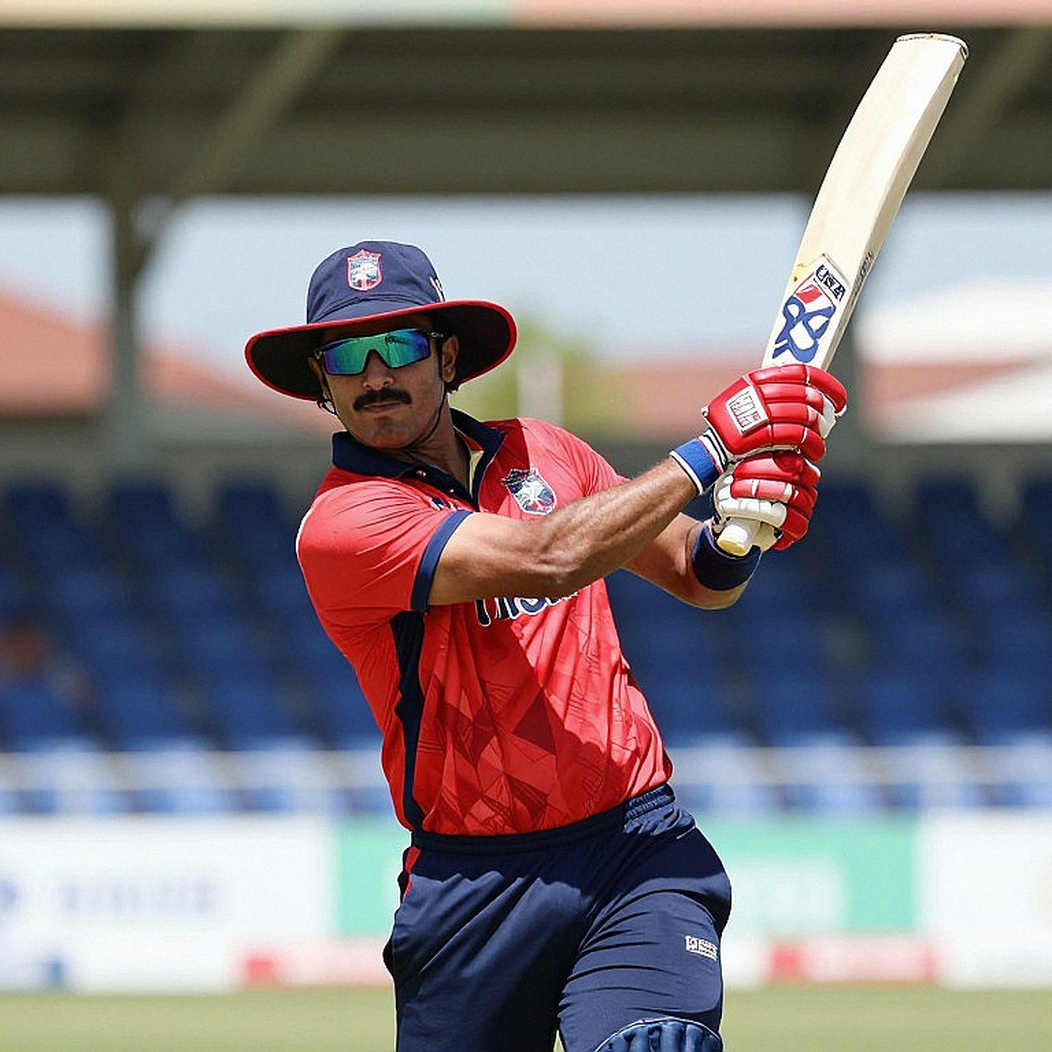
Sample first, thesis second — an old habit from 2026, when I charted 34 Santosh Trophy zonal matches at the Bangalore Football Stadium by hand, twelve zones per half, one pencil per match, and sold a 900-word breakdown of Karnataka's flat 4-4-2 block to a Sunday sports page that ran it without a byline. The sample here: one match, six sessions, 96 overs on day four, two batters, one surface, and one decision taken on day two that will be paid for on day four. I do not chase the ball; I chase the rule that makes it move. Here the rule is written in the wickets column, not the runs column.
The format warning, because this is where most readers get hurt
The Sheffield Shield is first-class cricket. It is not Test cricket. Days are scheduled at 96 overs, bonus points apply inside the first 100 overs of each first innings, and squad depth is thinner than anything at international level. The follow-on threshold for a three- or four-day match is 150 runs under MCC Law 14.2. I am putting this up front because the commonest failure in this trade is translating domestic form into Test conclusions. The formats are neighbours, not twins.
What actually happened, in plain instalments. Western Australia declared their first innings at 406 for 5. South Australia were bowled out for 154. The lead was 252. Western Australia batted again, made 169, and were bowled out, leaving a target of 422. At stumps on day three, South Australia were 182 for 1.
The venue is Adelaide Oval, South Australia's home ground. That is not a small detail. On a fourth-day pitch, with a spinner working from one end and a quick looking for reverse with an older ball, home knowledge and home noise both lean the same way. The forecast for Saturday is light rain only — intermittent, not sustained. Light rain does not save a draw. It eats overs and returns moisture.
There is a calendar context worth naming too. This round sits in the same fortnight as franchise auction chatter and contract speculation, noise that reliably drowns out domestic cricket. My filter for that noise is simple: ignore the auction headline, read the squad sheet. Domestic sides are now developing players who spend eight months of the year being pulled elsewhere — national duty, A tours, franchise windows. The consequence is a tournament that functions as a laboratory for half-finished products: a fast bowler plays four games and leaves, a batter plays two innings and does not come back. A team planning over three years restarts the same conversation every round. That is as much the Sheffield Shield's story as it is this particular fixture.
The arithmetic: why 2.50 is not the number that matters
240 runs, 96 overs. Divide. 2.50 per over.
That is where the headlines stop, and where they go wrong. 2.50 is an average, not a boundary. It assumes South Australia bat all 96 overs. As overs are spent, the demand moves. If the first session of 32 overs yields 100 runs, 140 are needed from 64 — 2.19 per over. If that session yields 64, then 176 from 64 — 2.75. If it yields 48, the ask is 3.00.
The reverse is equally true, and this is the relief in the match. Even if South Australia crawl through the first session at 1.9 an over — roughly 61 runs — the remaining demand stays below 2.80, which on a fourth-day surface is not a hard ask. Run rate will not decide this match. Only wickets will.
I have broken the day-four arithmetic into five slices so that any reader can check me afterwards:
| Rate | Overs for 240 | Overs left | Outcome | |---|---|---|---| | 3.2 | 75 | 21 | Win, comfortably | | 3.0 | 80 | 16 | Win, with room | | 2.8 | 86 | 10 | Win, but into the last session | | 2.5 | 96 | 0 | Decided in the final over | | 2.3 | 104 | −8 | Draw |
Look at how thin the gap between a win and a draw is: between 2.5 and 2.3, which is 0.2 runs an over, which across 96 overs is nineteen runs. One long defensive partnership — two batters making sixty in forty overs — flips a win into a draw. That is the whole tension of this match, and it is considerably colder than the word "epic" suggests.
Harvey and McSweeney: two clocks inside one partnership
Both have faced 132 balls. Harvey has 90. McSweeney has 57. Runs per ball: 0.68 against 0.43, a 37 per cent gap. Inside one unbroken stand, two gears are running at once.
The partnership is worth 147 off 264 balls, which is 3.34 an over. The first wicket must have been worth 35 (182 minus 147). My estimate is that South Australia batted somewhere between 57 and 66 overs on day three, putting the innings rate between 2.75 and 3.20. I am flagging that as an estimate because the source does not publish the overs at stumps — a small omission that forces every subsequent analysis to stand on a guess.
The important thing is that the two batters are not doing the same job. Empty space on the graph paper was never empty; it was a decision. McSweeney's dot balls are not a slow start, they are a structural assignment: he holds the wicket column steady so that Harvey can spend the freedom. A captain batting at No. 4 at roughly half his partner's scoring rate is telling you plainly that he does not think this is a 422-run problem. He thinks it is a 240-run and ninety-over problem.
And there is the crack. McSweeney's tempo looks free today. It is not. If he bats thirty overs tomorrow morning for forty runs, the remaining demand across 64 overs becomes 3.12. Slow batting borrows from the future, and the repayment falls due in the final session, when the spinner is landing the ball in his own footmarks.
The follow-on: the decision taken on day two, to be paid for on day four
The number that shaped this match is not in the scorecard. It is in the law book. After the first innings Western Australia led by 252 (406 minus 154). The threshold for a four-day match is 150. That is a margin of more than a hundred runs — no borderline, no half-accounting.
Western Australia chose to bat again. That innings ended at 169.
Now price the decision in overs, because this is a game with a clock. On the third morning Western Australia were 79 for 6 and were bowled out for 169 — 90 runs and four wickets. If that took somewhere between 28 and 32 overs, which is my estimate rather than a published figure, then Western Australia spent a morning making runs it did not need with overs it did need. The available bowling time was the rest of day three plus 96 overs on day four. Roughly thirty of those overs walked off the board while the batters were still out there.
Here I have to cite an old piece, and I will cite the idea rather than the byline. In 2026, thirty-six hours after Argentina's 6-0 in Gelsenkirchen, I pulled a 48-second clip apart and counted 24 passes across 9 players in the Cambiasso goal. The point was not the finishing. Serbia's midfield kept sliding instead of stepping — reacting rather than initiating. A team that slides concedes ground.
Declining the follow-on belongs to that family of decisions. Western Australia declined to hand South Australia a survival task and handed them a target instead. In survival mode there is no plan per ball, only time to be consumed, and consuming time is hard because every delivery demands a fresh decision. With a target, the same batter works to a rate — 2.5 an over. Arithmetic makes cricket easier even when the arithmetic is severe.
There is one more possibility I would file at medium confidence. Declaration timing in domestic cricket is sometimes driven by bonus-point arithmetic rather than match tactics; batting points accrue inside the first 100 overs, and 406 for 5 is roughly where those are banked. This is not in the source, so treat it as an open question rather than a finding.
Eighteen against twenty: a crack in the data
The report says eighteen wickets fell on day two. I added the columns.
Day one ended at 257 for 1 — one wicket down. On day two Western Australia went to 406 for 5 declared, four more. South Australia were bowled out for 154, ten more. Western Australia's second innings stood at 79 for 6 by the third morning, six more. Four plus ten plus six is twenty.
The gap is two wickets. It is a small thing and probably an approximation in the report, or a session counted across the day's boundary. In my line of work it matters anyway, because an eighteen-wicket day and a twenty-wicket day describe two different surfaces. I am filing it as pending verification and re-checking it after day four. It does not change the thesis of this match. It does change which pitch we are arguing about.
Now the observation I found most useful, and one no highlight package will carry. Day one ended 257 for 1, which reads like a featherbed. Those 257 runs took almost a full day — roughly 96 overs, a rate of 2.68. That is not a flat-pitch score. That is a slow, heavy, occasionally awkward surface where a batter could settle but could not dominate. Day two produced twenty wickets as the same surface grew teeth, presumably through grass or variable bounce. Day three settled again at somewhere between 2.7 and 3.2.
Not three different pitches. One pitch, slow, then dishonest, then calm. This was never a run-scoring surface; it was always a wicket-preservation examination. If that reading holds, day four's demand should be treated as 2.8 to 3.0 rather than 2.5, because nothing long and fluent has been built on this strip all match.
Slide or step: the test waiting at ten in the morning
I mapped the pitch on graph paper before I learned to trust the replay, and the method has not changed. Define the sample, then make the claim.
What I will watch for tomorrow is slide versus step. When Ashton Agar bowls, does the South Australian batter commit the front foot and decide the delivery, or does he hang back and wait? A batter who slides leaves a gap into his own pad, plays with his hands, and has no time to correct when the ball turns. A batter who steps gets to the ball's line early and makes the whole job simpler. That is not a question of technique. It is a question of initiative.
The test matters because wickets, not runs, are the currency tomorrow, and wickets usually come from the batter who slides. If Harvey and McSweeney are stepping in the first hour, South Australia's route is clean. If they are hanging back, if the ball starts hitting pad, then 240 runs becomes a 120-over job — which is to say, impossible inside ninety.
The supporting cast matters too. Jhye Richardson, whose career has been punctuated by injuries, may be asked to bowl twenty overs on a fourth day to win a domestic match with no load management attached. Brendan Doggett's old-ball reverse, if there is any, depends on how the surface has worn. Cameron Bancroft and Jayden Goodwin will be in the field, and the shape of that field — catching, attacking or defensive — will tell you whether Western Australia still believe they are hunters.
My objection to comeback narratives is always the same and it applies here. Nobody says a returning fast bowler has to prove himself while he is bowling the fortieth over in heat; the system simply behaves as though he does. A domestic win is not worth two months on the sidelines. Increasing load in the first month back is the easiest decision to make and the most expensive one to get wrong.
The headline says improbable; the Shield record disagrees
The report has, I think, contradicted its own headline.
The highest successful chase in Sheffield Shield history is 506, and South Australia made those runs themselves in 2026-92. Today's target is 422. That is 84 runs below the record, and the descendants of that side are the ones attempting it. Before using the word epic, it is worth putting the number on the table.
Which does not make it easy. Chasing 422 in the fourth innings of a four-day match is nowhere near routine. My objection is only that the language and the arithmetic are not travelling together. To call 422 impossible you have to explain how 506 was possible. Not on this ground, and not by this team — but somewhere, by someone.
The genuinely counter-intuitive point sits elsewhere, and I found it in the margins of day three's scorecard rather than the reel. What wins this match for South Australia is not their run rate. It is the wasted air Western Australia left in their second innings. 169 runs. None of them were needed; a lead of 252 was already enough. Those 169 runs did only one thing — they consumed a clock that belonged to Western Australia.
That is the real conclusion, and it is fresh, because enforcing the follow-on would have asked South Australia to survive roughly 190 overs across two innings. Declining it gave them a clean target inside 96. Surviving 190 overs and making 240 inside 96 are both hard, but only one of them comes with a plan attached. I am not calling the declaration wrong. I am saying it handed the tempo to the opposition. A side that lives at someone else's pace can win and can lose, and the choice belongs to the other dressing room.
Where is South Australia's own execution blind spot? Not in the rate. In the wicket cluster, the one that arrives on the fourth morning. When 182 for 1 becomes 210 for 5, the number stops being 240 and becomes 365. That is the only real threat in this match, and it does not come from counting overs. It comes from half an hour of inattention.
Three thresholds for tomorrow
I am recording this so that tomorrow evening I can audit myself. This is a pre-registered call. It will not be revised afterwards.
Threshold one: if South Australia lose two wickets or fewer across the first two sessions — 64 overs — the target falls even at a modest 2.5 an over. Threshold two: a draw becomes favourite only if four wickets are down before 300, or if the rate across the first 64 overs sits below 2.0. Threshold three: if the first 30 overs produce ninety runs and no wicket, the match is South Australia's, close to certainty.
My call, now, without hedging: South Australia 58 per cent, draw 34 per cent, Western Australia 8 per cent. And yes, Western Australia's eight per cent rests entirely on the return of the day-two surface — if that pitch comes back, 182 for 1 does not take long to become 300 all out.
Tomorrow evening I will open this page and see which session fell outside my grid. That old post travelled farther than I did and the idea stayed, and the reason it stayed is that it was falsifiable. One trigger, eleven matches, and a notebook that refused the easy story — except here I have one match rather than eleven, so I am writing my prediction in 96-over instalments and reading it back at stumps.
If a reader wants one thing to watch before sleeping tonight, it is this: in the first twenty overs of day four, how does South Australia play — forward or back? Read the wickets column first. The runs column can wait.