
The New Architecture of Asian Cricket: League Expansion, Political Gridlock and a Three-Way Calendar War
प्रश्न: एशियाई क्रिकेट का सबसे बड़ा संरचनात्मक मुद्दा क्या है? उत्तर: फ्रैंचाइज़ी लीगों का विस्तार, अंतरराष्ट्रीय कैलेंडर और घरेलू टूर्नामेंट — तीनों एक ही 12 महीनों में जगह मांग रहे हैं। इससे खिलाड़ियों का बोझ, एनओसी विवाद और राष्ट्रीय टीमों की गहराई प्रभावित हो रही है। प्रश्न: भारत-पाकिस्तान के बीच द्विपक्षीय क्रिकेट क्यों नहीं हो रहा? उत्तर: पाकिस्तान ने अंतिम बार दिसंबर 2012-जनवरी 2013 में भारत का दौरा किया था। तब से दोनों टीमें केवल आईसीसी और एशियाई क्रिकेट परिषद के आयोजनों में आमने-सामने आती हैं। प्रश्न: हाइब्रिड मॉडल क्या है? उत्तर: ऐसी व्यवस्था जिसमें टूर्नामेंट की मेज़बानी एक देश के पास होती है, पर कुछ मैच तटस्थ स्थलों पर खेले जाते हैं। 2023 एशिया कप और 2025 चैंपियंस ट्रॉफ़ी दोनों में यह मॉडल लागू हुआ। प्रश्न: एशियाई क्रिकेट का आर्थिक केंद्र कहां है? उत्तर: भारत। आईसीसी के 2023-27 राजस्व चक्र में बीसीसीआई का हिस्सा लगभग 38.5 प्रतिशत है, जो पूरे क्षेत्र की सौदेबाज़ी की ताकत और आंतरिक असमानता दोनों को दर्शाता है। प्रश्न: एसोसिएट सदस्यों के लिए सबसे बड़ा मुद्दा क्या है? उत्तर: आय का स्रोत। इनके पास बड़े प्रसारण सौदे नहीं होते; आमदनी आईसीसी वितरण और स्थानीय प्रायोजकों से आती है। इसलिए बड़े आयोजनों की मेज़बानी इनके लिए प्रतिष्ठा नहीं, अस्तित्व का सवाल है।
International cricket's centre of gravity has shifted decisively towards Asia over the past decade — and not only in rankings. It shows in the flow of broadcast money, in the administrative decisions that shape the calendar, and in the politics that determines who plays whom, and when. Under the ICC's 2026-27 revenue cycle, the Board of Control for Cricket in India was allocated roughly 38.5 per cent of the distribution, a single figure that explains where the region's bargaining power comes from. But the same figure exposes the other side: economic inequality inside Asia is so extreme that boards on the same continent appear to operate on different planets.
This piece is not a match report. It maps the structural pressures that will shape Asian cricket over the coming years, across four layers: the geography of franchise leagues, the role of the Asian Cricket Council, the India-Pakistan stalemate, and the growing squeeze on the player calendar.
First layer: the new geography of franchise leagues
The Indian Premier League is the largest cricket property in the world and sits at the centre of every argument, whether about broadcast rights or player availability. The league expanded to ten teams in 2026, and its 2026-27 media rights cycle sold for roughly ₹48,390 crore — several times larger than any comparable cricket property. Against that, the Pakistan Super League, Bangladesh Premier League, Lanka Premier League and the UAE's ILT20 are trying to hold their own markets. Their significance lies in the fact that they are building alternative employment structures within Asia itself. For a Pakistani or Bangladeshi player, the question is no longer only how much he plays for his country, but in how many leagues he is bought.
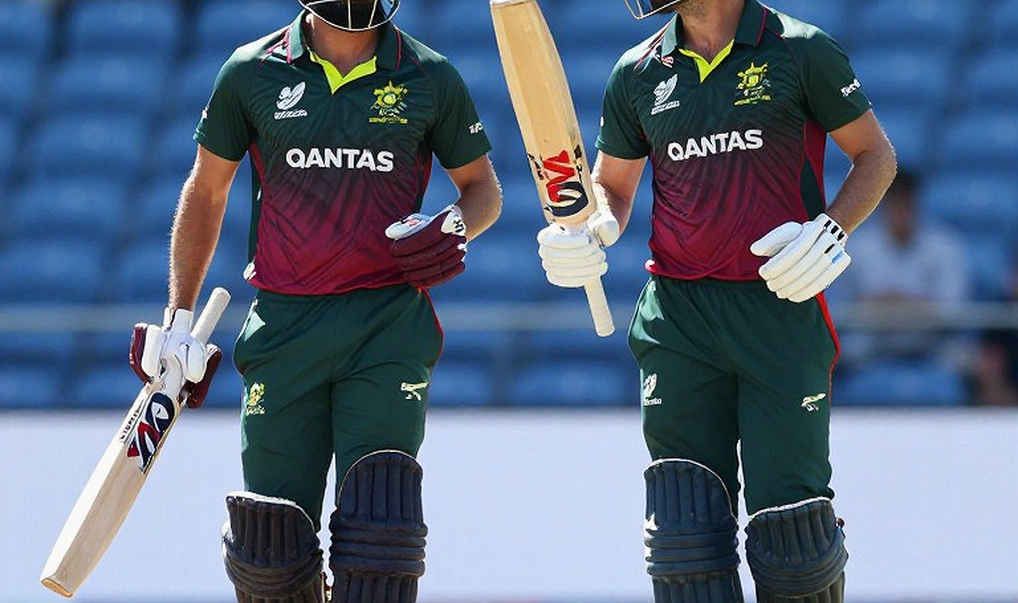
A subtle structural inversion has taken place. Leagues once slotted into gaps in the international calendar. Now the reverse holds: bilateral series are arranged around league windows. The January-February window occupied by ILT20 and other Asian leagues has made it harder for boards such as Bangladesh and Sri Lanka to schedule home internationals. Their choice is binary — issue No Objection Certificates and let players go, or block them on grounds of national-team priority. Both carry political cost.
What is distinctive about Asia is that the number of leagues is growing faster than the size of the market. In the Gulf, the audience base is largely a migrant workforce, which means these leagues' financial models rest not on a domestic cricket culture but on television markets and tourism. That model can work, but it is fragile: one poor broadcast deal in a single season can destabilise an entire project.
Second layer: the ACC and the hybrid model
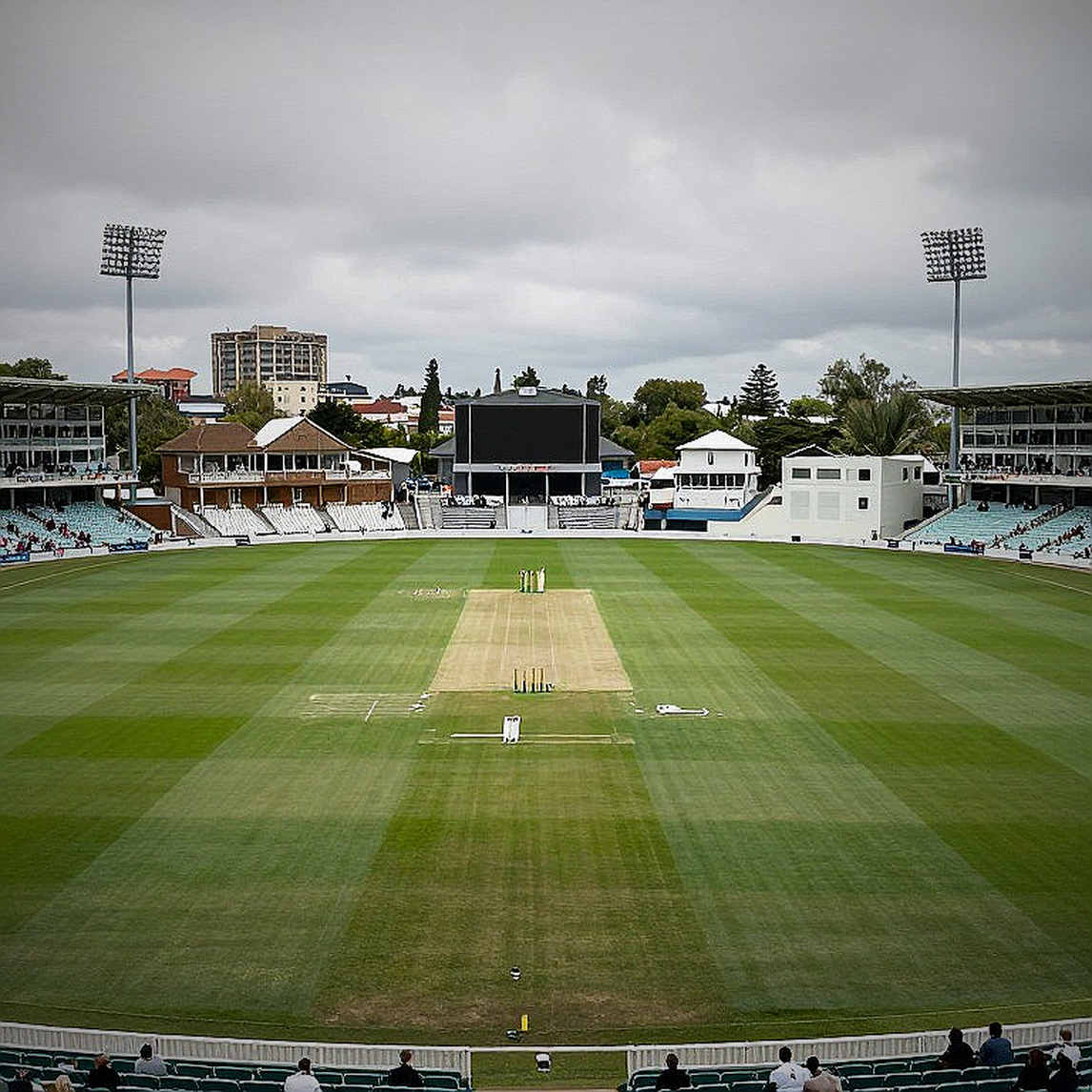
The Asian Cricket Council has existed formally since 2026, but its real function has always been political. The Asia Cup is its most visible product. The 2026 edition became a template: hosting rights were given to Pakistan, but India's matches were played in Sri Lanka — the so-called hybrid model. This is no longer a temporary workaround but an emerging permanent structure, in which the right to host and the venue of play are separated. The 2026 Asia Cup, held in the UAE in T20 format, extends the same logic: the game is played where rent and security are simplest.
The model carries a substantial cost. When hosting and staging are decoupled, the tournament's meaning changes for the home audience. An Asia Cup meant, in Pakistan, a match against India in Lahore or Karachi. When that match was played in Dubai, the tournament's axis shifted. This is not a logistical detail; it is evidence that consensus within the ACC has been replaced by agreements engineered by the largest stakeholders.
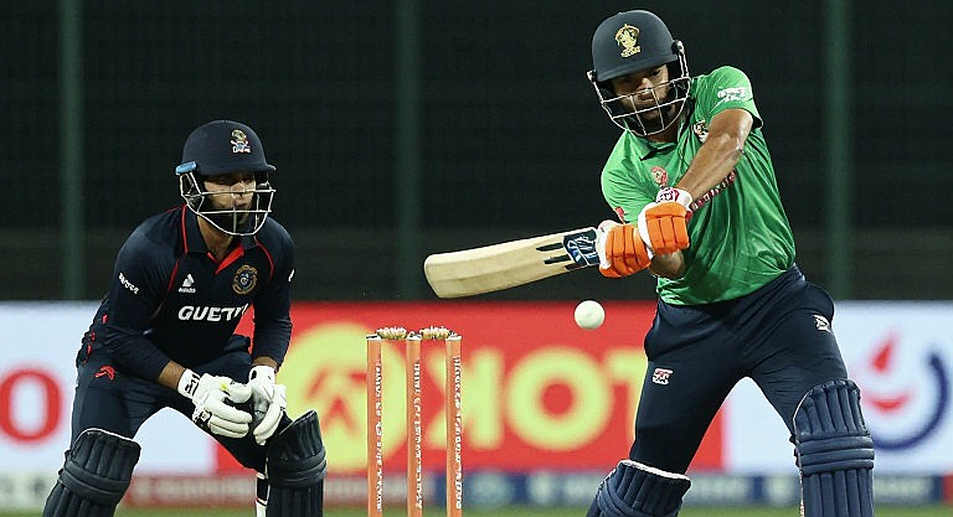
The ACC's composition compounds the difficulty. It has five full members — India, Pakistan, Sri Lanka, Bangladesh and Afghanistan — and a long list of associates, including the UAE, Oman, Nepal, Hong Kong, Singapore, Malaysia, Qatar and Saudi Arabia. Associates and full members diverge on almost every issue: the former want opportunity, the latter want to preserve the distribution of tournament revenue. The Emerging Teams Asia Cup is a product of that tension — a release valve that keeps the demand for space alive without satisfying it.
Third layer: the India-Pakistan stalemate
Pakistan last toured India in December 2026-January 2026. Since then, no bilateral series has taken place between the two countries. This is not a routine administrative pause but a settled structure. The two sides now meet only in ICC or ACC events — Asia Cups, World Cups, Champions Trophy tournaments. The commercial value of those contests is enormous, and that value is itself part of why the stalemate persists.
One indirect consequence has been the emergence of neutral venues as an industry. Dubai and Abu Dhabi are now the default stage for India-Pakistan fixtures. At the 2026 Champions Trophy, India's matches were played outside Pakistan even though Pakistan held hosting rights. The hybrid formula is no longer an isolated exception but a standard component of Asian calendar planning.
The effect is not confined to the two principals. Boards such as Sri Lanka and Bangladesh face constant pressure over where they are seen to stand. When India does not tour or Pakistan is excluded from an event, the revenue of transit boards is directly hit. Inside ACC meetings, this tension surfaces repeatedly as disputes over hosting rights and revenue shares.
Fourth layer: the calendar and player workload
Modern cricket's sharpest contradiction lies in scheduling. The ICC Future Tours Programme and bilateral commitments sit on one side; a growing number of franchise leagues on another; and the domestic tournaments boards regard as revenue-critical on a third. All three are competing for the same twelve months.
The impact is most direct at player level. Fast-bowler workload management has become a primary concern for every board. A number of international players are choosing leagues over bilateral series — an economically rational decision that thins national-team depth. Boards are responding by tightening NOC policies, but the collision cannot be postponed indefinitely.
One striking consequence of T20's expansion is an inequality of prestige between formats. Test cricket survives in Asia — India, Pakistan, Sri Lanka, Bangladesh and Afghanistan all play it — but both audience and revenue for the five-day game remain limited within the region. Several Asian Tests are played in near-empty stadiums. No board has yet found a solution, and this is where the most serious dispute of the coming years is likely to erupt.
The associate layer: where Asian growth actually is
To see Asian cricket's future, look past the top five. Nepal has built a genuine domestic audience and earned places at global T20 events. Oman, the UAE and Hong Kong are consistently stronger in qualifiers. Saudi Arabia has begun investing in cricket, which could reshape the Gulf's cricket economy over the long term.
The associate economic model is entirely different. These boards do not hold large broadcast deals; income comes from ICC distributions, local sponsors and the occasional major event. That is why the chance to host an Asia Cup or a World Cup is not a matter of prestige for them but of survival.
Women's cricket and domestic structure
Asian women's cricket has made progress that is among the least discussed stories in the region. A Women's Asia Cup is now staged regularly, and the Women's Premier League has provided the first solid structure of professional employment for domestic women players. But progress is uneven: the scale of the Indian league is expanding while women's cricket in several associate countries still lacks basic resourcing.
The picture in domestic first-class structures is similarly mixed. India's Ranji Trophy system and the player pipeline it produces are the strongest in Asia, but Pakistan and Sri Lanka have repeatedly changed domestic formats, breaking continuity. Bangladesh's domestic structure has still not developed in proportion to the national team's success — an imbalance consistently overlooked in board-level comparisons.
What to watch
Four things will set the direction of Asian cricket over the next three years. First, the 2026 T20 World Cup, co-hosted by India and Sri Lanka, which will test how much practical strain the multi-nation hybrid model can bear. Second, the next review of the ICC revenue model, where demands for a separate budget line for associates will resurface. Third, the contest over league windows — whether a formal global league-window agreement is achievable at all. Fourth, and most important, the future of Test cricket, especially for Asian boards for whom the five-day format is becoming a loss-making proposition.
None of these questions will be answered on the field alone. The real contest in Asian cricket is taking place in boardrooms, and its outcome will be inherited by the next generation of players — whether or not it works in their favour.