
IND vs NZ 2nd ODI: India Eye 2-0 Lead as Wellington Rain Threatens, Kohli's Form and Young Pacers in Focus
मुख्य उत्तर: भारत दूसरे वनडे में न्यूजीलैंड के खिलाफ 2-0 की बढ़त हासिल करने का लक्ष्य रखेगा। हालांकि, वेलिंगटन में बारिश, ठंडी हवा और तेज गेंदबाजी के अनुकूल परिस्थितियां मुकाबले को प्रभावित कर सकती हैं। विराट कोहली की 74 रन की पारी और भारतीय युवा तेज गेंदबाजों का प्रदर्शन भारत के लिए सकारात्मक संकेत हैं। मुख्य तथ्य: - पहला वनडे: भारत ने ऑकलैंड में न्यूजीलैंड को DLS पद्धति से पांच विकेट से हराया। - विराट कोहली: 51 गेंदों पर 74 रन बनाए। - अर्शदीप सिंह: 10 ओवर में 70 रन देकर चार विकेट लिए। - अंशुल कंबोज: 10 ओवर में 22 रन देकर दो विकेट लिए; प्लेयर ऑफ द मैच बने। - गुरनूर बराड़: नौ ओवर और दो गेंद में 44 रन देकर तीन विकेट लिए। स्रोत: Times of India, 7 नवंबर 2026, 'IND vs NZ: India eye 2-0 lead as Wellington weather threatens second ODI'। संबंधित प्रश्न एवं उत्तर: प्रश्न: पहले वनडे में भारत ने कितने रन का लक्ष्य हासिल किया? उत्तर: भारत ने DLS पद्धति से निर्धारित 144 रन का संशोधित लक्ष्य 22.4 ओवर में पांच विकेट खोकर हासिल किया। प्रश्न: दूसरे वनडे में बारिश का क्या प्रभाव पड़ सकता है? उत्तर: बारिश के कारण ओवर कम हो सकते हैं और DLS पद्धति से लक्ष्य संशोधित करना पड़ सकता है। प्रश्न: भारत के लिए प्रमुख चयन संबंधी चर्चा क्या है? उत्तर: मोहम्मद सिराज की संभावित वापसी और औकीब नबी की जगह चयन पर विचार प्रमुख चर्चा है।
India will look to strengthen their position in the five-match ODI series against New Zealand when the teams meet in the second match in Wellington on Saturday. However, the immediate challenge may come from the weather rather than the opposition. Cold conditions, strong winds and the threat of rain have disrupted preparations, with India cancelling Friday's practice session while New Zealand moved indoors. The forecast raises the possibility of another shortened contest, making India's attempt to establish a 2-0 lead considerably more complicated.
India won the opening ODI in Auckland by five wickets and currently lead the series 1-0. However, the result needs to be viewed in the context of the weather interruption. New Zealand were bowled out for 185 in 40.2 overs, after which India were set a revised target of 144 under the Duckworth-Lewis-Stern method. India reached the target in 22.4 overs, losing five wickets. Although the victory was deserved, the shortened contest did not provide a complete assessment of either team's ability across 50 overs.
The central question ahead of the second ODI is whether Wellington's conditions will again favour the bowlers or whether India can convert their opening victory into a more balanced performance.
India's pace depth provides an encouraging signal
One of the most significant aspects of India's opening victory was the performance of the fast bowlers. The result was not built solely around Virat Kohli's batting. India's bowling attack demonstrated considerable depth despite Jasprit Bumrah being rested and Prasidh Krishna remaining unavailable because of injury.
Arshdeep Singh claimed four wickets in his 10 overs, conceding 70 runs. His economy rate of seven runs per over was relatively expensive, but his ability to take wickets made him an important contributor. Anshul Kamboj delivered an especially controlled spell, conceding only 22 runs in 10 overs while taking two wickets. His economy rate of 2.20 was the outstanding statistical feature of the performance, and he received the Player of the Match award.
Gurnoor Brar also made a substantial contribution, taking three wickets for 44 runs in nine overs and two balls. The three fast bowlers shared nine wickets between them, providing an encouraging indication of India's available resources.
Kamboj's contribution deserves particular attention because his control was as important as his wickets. In ODI cricket, a bowler's value cannot be measured solely through dismissals. Restricting runs during the middle overs forces batters to take additional risks, often creating opportunities for further wickets. Kamboj demonstrated that principle effectively in Auckland.
However, these figures should not immediately be treated as evidence of permanent dominance. Auckland offered favourable conditions for fast bowling, with cold weather and assistance for seam movement. Wellington may provide similar opportunities, but conditions can change according to the pitch, wind direction and atmospheric movement. India's emerging bowlers will eventually need to demonstrate that their control can survive less favourable environments as well.
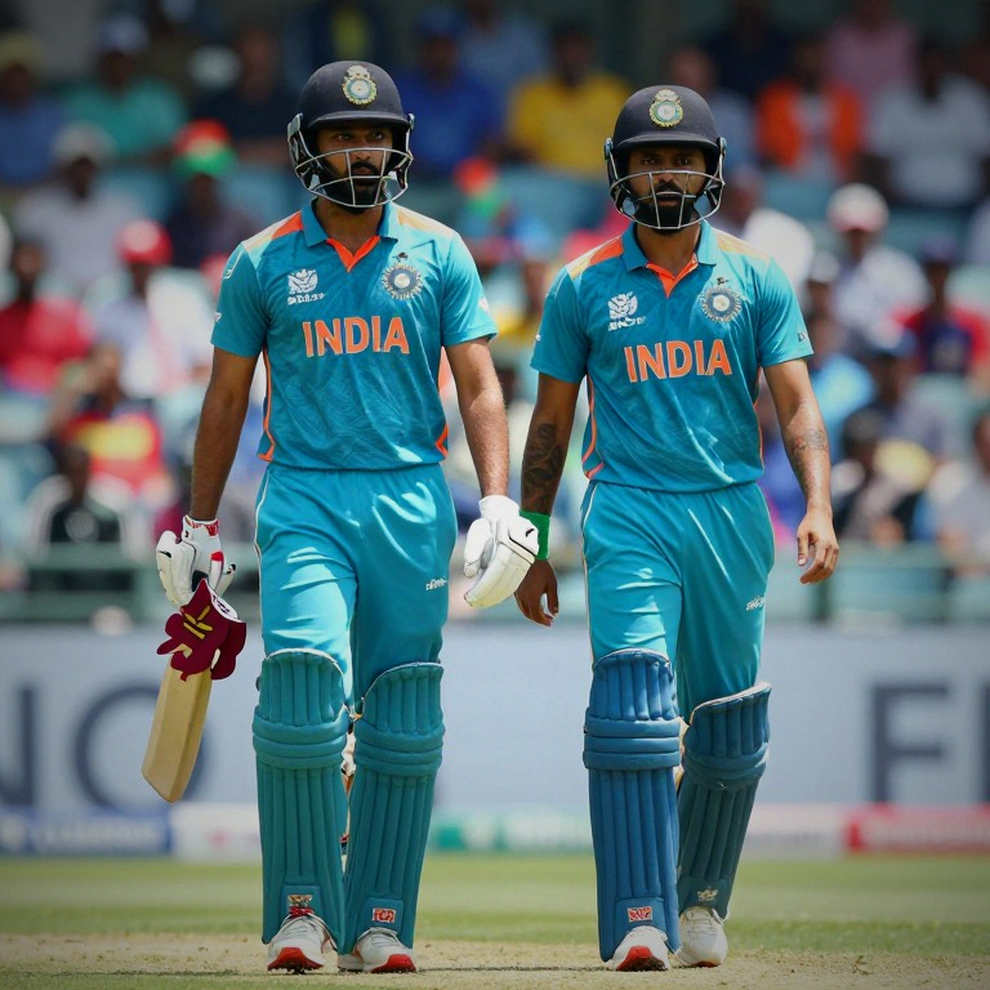
Kohli's innings offers India's clearest batting positive
Virat Kohli scored 74 from 51 deliveries in the opening ODI, recording a strike rate of approximately 145. That scoring rate was considerably higher than the usual range for a top-order ODI batter. In a rain-affected chase, the ability to maintain an elevated scoring rate was particularly important, and Kohli handled that responsibility effectively.
The most encouraging aspect of his innings was his ability to balance control with acceleration. He identified deliveries that could be attacked, punished errors and kept the scoring rate moving. In limited-overs cricket, this flexibility becomes especially useful when rain interruptions can change the target and the number of overs available.
Kohli will again be central to India's plans in Wellington. New Zealand fast bowler Blair Tickner has expressed enthusiasm about bowling against him and confidence in his own ability to dismiss the Indian batter. Such comments are a familiar part of pre-match competition, but they also demonstrate the importance New Zealand attach to Kohli's wicket.
The possibility that this could be Kohli's final tour of New Zealand has added an emotional dimension to the series. Every innings is consequently attracting additional attention. Nevertheless, assessments of his current form should remain grounded in performances rather than sentimental narratives. His 74 was an excellent contribution, but consistency across the tour will provide a more meaningful indication of his current level.
Rohit Sharma experienced a difficult opening match, being dismissed for a duck. A single unsuccessful innings, however, cannot establish a broader decline in form or technique. Experienced batters also have difficult days. His challenge in Wellington will be to negotiate the early movement and prevent New Zealand's fast bowlers from repeatedly bowling the lengths they prefer.
Wellington's weather could change the nature of the contest
Wellington's venue is generally regarded as a ground where batters can score freely under favourable conditions. However, Saturday's forecast of cold temperatures and strong winds could change the balance. Cloud cover and atmospheric moisture may assist swing bowling, while the surface could also offer additional seam movement and bounce.
There is an important distinction between atmospheric swing and movement off the pitch. Swing changes the ball's direction in the air, forcing batters to make decisions later. Additional bounce, meanwhile, challenges their back-foot technique and ability to respond to deliveries directed towards the body. Wellington could potentially offer both challenges simultaneously.
New Zealand are also expected to continue using short-pitched deliveries against India's middle order. Their approach troubled Shreyas Iyer and Axar Patel in Auckland, and the hosts may attempt to repeat that strategy.
The objective of a short-ball plan is not necessarily to dismiss a batter immediately. Repeated deliveries directed towards the upper body can disturb a batter's balance and encourage risky pull or hook shots. A successful plan requires more than simply bowling bouncers. Bowlers must understand the batter's position, movement and preferred responses, while field placements must support the intended strategy.
New Zealand's real challenge will be to use short-pitched bowling with sufficient control and tactical purpose. If Indian batters anticipate the plan, they may turn those deliveries into scoring opportunities. Iyer and Axar will need alternatives to aggressive pulling, including leaving deliveries, adjusting their position in the crease and rotating the strike when possible.
Siraj's possible return adds another selection dimension
Mohammed Siraj is an important selection consideration ahead of the second ODI. Auqib Nabi did not take a wicket in the opening match, conceding 33 runs in six overs. His economy rate of 5.50 was reasonable, but the wicket-taking performances of India's other fast bowlers may place him under selection pressure.
Siraj's return could provide additional experience and another option with the new ball. However, the selection decision should not be viewed solely as a response to Nabi's figures. India must also manage its fast-bowling resources over the entire series. Bumrah has been rested and Prasidh Krishna is injured, making workload management an important consideration.
India also have an opportunity to assess emerging bowlers in international conditions. The experience gained by Kamboj and Brar in New Zealand could become useful when the team considers its future bowling combinations. However, a successful spell or even a productive series should not automatically establish a player as a permanent solution. Consistency across different surfaces, weather conditions and batting styles remains the real test.
There are also potential changes to India's batting resources further into the series. Shubman Gill and KL Rahul are scheduled to leave after the third ODI, which could require the team management to reassess its available batting combinations for subsequent matches. For now, the immediate objective is to strengthen India's position in the series.
Rain and DLS remain the biggest uncertainties
Rain affected the opening ODI, and Wellington faces another significant weather threat. India's cancelled practice session and New Zealand's decision to train indoors demonstrate how much the conditions have already influenced preparations. Saturday's forecast of cloud, wind and rain creates the possibility of another shortened contest.
The Duckworth-Lewis-Stern method adjusts targets according to the overs and wickets available after interruptions. It is an established part of international cricket, although its practical impact can significantly change a match's tactical requirements.
In Auckland, New Zealand scored 185 in 40.2 overs, but India were required to chase a revised target of 144. The conditions of that chase were considerably different from those of an uninterrupted 50-over contest.
If rain reduces the second ODI, the toss could become increasingly important. Bowling first under cloudy conditions may offer an advantage through early movement. A chasing side, meanwhile, benefits from knowing the revised target and the overs available. Captains may need to reconsider how they distribute their batting and bowling resources.
India's strong top order could be useful in a shortened chase, but reduced overs do not automatically favour the visitors. Early wickets become particularly expensive when there is little time to rebuild. If New Zealand establish pressure during the first 10 overs, India could find themselves in a difficult position despite having a comparatively modest target.
New Zealand need a stronger batting response
For New Zealand, the second ODI represents an opportunity to level the series and address the batting problems exposed in Auckland. Despite playing at home, the hosts were unable to establish sufficient partnerships against India's fast bowlers.
Devon Conway's absence adds another challenge. He suffered a concussion following a collision with a teammate during training and is unavailable for the second match. Nicky Kelly has been brought in as his concussion replacement, while Matt Henry has been cleared to play after concerns following the incident.
The concussion-replacement provision prioritises player safety while allowing teams to use an appropriate replacement when a player is ruled out. New Zealand have used the available arrangement to address Conway's absence.
The hosts will need to concentrate on protecting their wickets during the early overs. India's fast bowlers established sustained pressure in Auckland, and New Zealand must find a better balance between patience and aggression. Building partnerships and rotating the strike may prove more useful than attempting to force boundaries against every delivery.
India's squad depth against New Zealand's home conditions
The two teams bring different strengths into the contest. New Zealand have the advantage of familiarity with local conditions and the possibility of assistance for their fast bowlers. India possess greater batting depth and a promising group of emerging pace options.
India's ability to take nine wickets in Auckland despite resting Bumrah is an encouraging indication of the available depth. It also highlights the importance of the talent pathway from domestic cricket to the national team. Opportunities for players such as Kamboj and Brar could become significant when India assess their future bowling combinations.
Nevertheless, conditions must remain part of the assessment. Auckland's assistance helped the fast bowlers, and similar conditions in Wellington could again favour India's attack. If the pitch becomes easier for batting or the game extends across the full allocation, the young bowlers will need to demonstrate another dimension of their skills.

In my years of watching cricket, one small detail has repeatedly proved revealing: when a bowler establishes control, the batter's response often matters less than the bowler's next decision. That is how pressure develops in ODI cricket. India's young fast bowlers now need to demonstrate that their discipline can extend beyond favourable weather.
The indicators that could decide the second ODI
The first 10 overs could provide an early indication of the direction of the contest. If New Zealand obtain swing and remove India's opening batters quickly, pressure will shift towards the middle order. If Rohit Sharma and Shubman Gill negotiate the initial challenge, Kohli may have greater freedom to manage the innings and accelerate when required.
The use of short-pitched deliveries against Iyer and Axar will also be worth monitoring. India's response will reveal how effectively the team has learned from the Auckland experience. Siraj's possible inclusion could provide another important change in the bowling combination.
Weather must remain the first consideration. Any analysis of the result will need to account for the available overs and revised target if rain interrupts play. Two consecutive rain-affected matches would limit the amount of reliable information available about either team's full 50-over capabilities.
India have an opportunity to move to a 2-0 lead. Kohli's form, the confidence of Kamboj and Brar, and the depth of the pace attack provide encouraging signs. New Zealand have home conditions and a specific short-ball strategy against India's middle order. Yet Wellington's weather could ultimately determine how much of either team's planning is visible.
The most revealing moment may not appear on the scoreboard but in the opening overs, when the ball moves in the air, the batter adjusts his position and the captain must decide whether the next change should involve a different bowler or a different plan. If the weather permits, India will have an opportunity to strengthen their advantage. If rain again shortens the contest, the series score may advance, but a complete assessment of both teams' ODI capabilities will have to wait.