
India U19 to Enter Asia Cup Under Lakshya Raichandani: A Settled Squad With One Change Faces Unfamiliar Muscat Conditions
**Q1: U19 एशिया कप में भारत की कप्तानी कौन करेगा?** लक्ष्य रायचंदानी। वह वनडे प्रारूप की कप्तानी बरकरार रखे हुए हैं; यशबर्धन सिंह चौहान उपकप्तान हैं और उन्होंने सितंबर–अक्टूबर के दो यूथ टेस्ट में टीम की अगुवाई की थी। **Q2: टूर्नामेंट कब और कहां होगा?** 5 से 14 नवंबर, मस्कट (ओमान)। आठ टीमें, दो ग्रुप, हर ग्रुप से शीर्ष दो सेमीफाइनल में। भारत का पहला मैच 6 नवंबर को OCC टर्फ 1 ग्राउंड पर। **Q3: भारत के ग्रुप में कौन-कौन है?** ग्रुप A — भारत, नेपाल, पाकिस्तान, UAE। ग्रुप B की संरचना उपलब्ध जानकारी में नहीं है। **Q4: टीम में कितने बदलाव हुए?** एक। चिगुरुपति वेंकट की जगह इशान सूद शामिल। बाकी 14 खिलाड़ी वही हैं जिन्होंने ऑस्ट्रेलिया U19 के खिलाफ यूथ वनडे सीरीज़ 3-0 से जीती थी। **Q5: क्या टीम का तेज़-स्पिन संतुलन पता है?** नहीं। 15 में से केवल दो खिलाड़ियों (अन्वय द्रविड़, राजत बागेल — दोनों विकेटकीपर) की भूमिका बताई गई है। किसी खिलाड़ी का व्यक्तिगत आंकड़ा उपलब्ध नहीं। **Q6: सबसे बड़ा खेल-जोखिम क्या है?** परिस्थितियों में अनुकूलन। चयन का आधार घरेलू 3-0 जीत है; मस्कट उदासीन, धीमा और कम उछाल वाला मैदान है, जहां मध्य ओवरों में स्पिन निर्णायक होती है। **Q7: जानकारी की विश्वसनीयता?** एकल, बिना-स्रोत रिपोर्ट। संस्करण वर्ष भी असंगत है ('2026' बनाम 5–14 नवंबर विंडो)। BCCI/ACC की आधिकारिक विज्ञप्ति से सत्यापन आवश्यक। **Q8: क्या यह भविष्यवाणी या सट्टा सलाह है?** नहीं। यह केवल खेल-सूचना और उद्योग-विश्लेषण संदर्भ है। जूनियर स्तर के परिणाम उच्च अनिश्चितता वाले होते हैं।
The BCCI junior selection committee has announced India's Under-19 squad for the ACC Men's U19 Asia Cup. Lakshya Raichandani will lead the side, with Yashbardhan Singh Chauhan named vice-captain. The tournament runs from 5 to 14 November in Muscat, Oman, featuring eight teams split into two groups, with the top two from each group progressing to the semi-finals. India are placed in Group A alongside Nepal, Pakistan and hosts UAE. India open their campaign on the second day of the tournament, 6 November, at the OCC Turf 1 Ground in Muscat.
The information in this report comes from a single, unattributed source. Until the squad and schedule are verified against official BCCI or ACC releases, all factual claims should be treated as medium-reliability. There is a further ambiguity over the edition: the squad line refers to the '2026' edition while the tournament window is given as 5–14 November. The edition year should be placed on the primary verification list.
The dual captaincy structure: a deliberate choice
The most discussed element is that India U19's leadership is split by format. Raichandani retains the one-day captaincy, while Chauhan led the side in the two Youth Tests in September–October and has now been named vice-captain. This looks like a structural decision rather than a coincidence — the junior selection structure differentiates leadership by format. The benefit is that no single player carries the load across formats; the risk is that one touring party ends up with two parallel lines of authority. In a five-match tournament with a young squad, role clarity matters, particularly in the pressure fixture.
Basis of selection: a 3-0 win over Australia, but at home
Only one change has been made to the fifteen-member squad. Ishan Sood comes in for Chigurupati Venkata; the other fourteen are the players who completed a 3-0 Youth ODI series win over Australia U19. That is a defensible approach — preserving the continuity of a winning side, settled combinations and known roles. In a five-match event, team cohesion compresses performance variance, and that is a real, if non-quantifiable, advantage.
But the logic has a weakness. The selection evidence base is a three-match series, played in home conditions. Cricket has a well-known pattern here: players who shine in familiar conditions do not always adapt as effectively at neutral venues. Muscat surfaces are generally regarded as low-bounce and slow, where spin through the middle overs is decisive and boundary-hitting tempo creates the difference. The real variable, then, is the squad's adaptability, not its recent form.
Group A: two-tier on paper, but Nepal is no soft opener
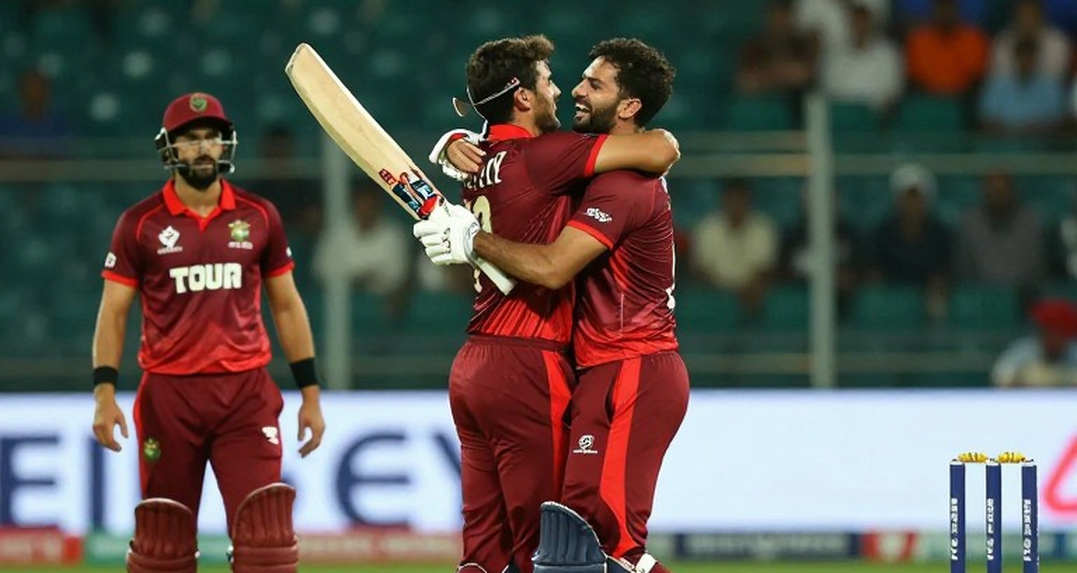
On paper, India and Pakistan sit above Nepal and UAE, which makes the India–Pakistan fixture the likely group decider and a semi-final seeding determinant. Two wins from three group games almost certainly secures a semi-final; one win plus a strong net run rate could still be enough. The hardest group fixture is therefore a seeding decider rather than a knockout.
India's opening match, however, is against Nepal, and that is where a genuine challenge lies. Nepal's junior programme is regarded as among the strongest in the associate ranks. India play on 6 November, the second day, which grants an extra day of acclimatisation and the chance to watch at least one Group A fixture — a small but real informational edge in a four-team group. Hosts UAE, meanwhile, have local knowledge of OCC surfaces — the classic equaliser at associate-hosted junior events.
A complete absence of individual data: a serious reporting gap
The most important point about this report is that no individual performance data exists in the available information — no batting average, no strike rate, no bowling economy, no wicket count, no ages. Only two of fifteen players have their roles specified, and both are wicket-keepers: Anvay Dravid and Rajat Baghel. The batting positions or bowling styles of the other thirteen are not stated. The direct consequence is that the squad's pace-spin balance cannot be derived from public information. Any claim that the Indian attack is spin-heavy or pace-heavy would be unsupported.
There is another feature that draws the reader's eye: the report identifies Aaryavir Sehwag and Anvay Dravid through their fathers rather than through their own records. That is a journalistic device, not a sporting assessment. It matters when reading those two names — lineage is an attention driver, not evidence of performance. At U19 level this framing is unfortunate because it converts a routine squad announcement into a star-making story.
Two wicket-keepers: development-led, not contingency-led
Carrying two designated wicket-keepers in a fifteen-man squad is a considered decision. In a five-match tournament one keeper will start nearly every game, meaning the second receives minimal match time. That cost only makes sense if the selectors value squad-training exposure and bench security over game-time optimisation. It signals that the board treats a regional junior title as a development milestone rather than a laboratory. Continuity plus doubled wicket-keeping points to a 'control' selection philosophy.
Layers of risk
The first and biggest risk is condition adaptation. The entire selection evidence base was built at home; Muscat is a neutral, slower, lower-bounce venue. If something goes wrong, this is the likeliest proximate cause — not opposition quality. The second is small-sample selection: a three-match series is among the lowest-information inputs available to selectors. The third is the unknown bowling balance — on Gulf surfaces the pace-spin ratio is the single selection decision most likely to decide the tournament.
The fourth is workload. Two Youth Tests in September–October, then Youth ODIs, now the Asia Cup in November — a compressed calendar for teenagers, and a plausible soft-tissue or stress-injury window for the pace bowlers. The fifth is leadership ambiguity arising from the split captaincy — low probability, medium impact. The sixth is inflated expectations created by lineage-based coverage; if a high-profile name underperforms, the Indian media cycle can pivot rapidly from 'next generation of legends' to 'nepotism', and that reputational risk lands entirely on a teenager.
Governance and integrity: minimal controversy, one blind spot
Muscat is a governance-optimal choice. A neutral host is the lowest-controversy option for a group containing both India and Pakistan — it removes home-board leverage and avoids the political complications attached to hosting either side. Bilateral India–Pakistan cricket has been frozen for years; the teams meet only at multi-team events, and the junior fixture falls in that category.
But one item is missing — age verification. At U19 level this is the primary integrity control, and no player ages appear in the report. That is a meaningful gap. Similarly, the tournament's playing conditions — net run rate calculation, reserve days, DLS applicability — are not referenced. Rain in the Gulf in November is uncommon but not impossible, and reserve-day availability could be a genuine competitive variable. Separately, low-scrutiny junior and associate-level fixtures have historically sat in the higher-risk segment for anti-corruption monitoring — a structural observation by tier, not an allegation.
What to watch
First, the result and margin of the Nepal opener. A narrow win or a defeat would signal adaptation problems and sharply raise the stakes of the Pakistan fixture. Second, India's bowling composition — loading three or more spinners versus three or more seamers will reveal how the management is reading Gulf conditions. Third, the actual output of Aaryavir Sehwag and Anvay Dravid — sustained returns versus a single innings; this is the real test separating lineage narrative from signal. Fourth, Ishan Sood's role and minutes — it will explain the single selection change and reveal the attribute the selectors wanted. Fifth, the usage of the two wicket-keepers.
A final word on valuation caution
India are the structural favourites for this tournament — but that rests not on any disclosed data, but on system depth and a home 3-0 win. One thing must always be remembered at U19 level: junior international performance is a weak predictor of senior success. This tournament is a waypoint on a player's development path, not a final certificate. And the most useful lesson from this report is to start identifying those two players by their cricket rather than by their fathers.