
होमAsian CricketThe New Balance of Asian Cricket: Depth of Talent, Market Dominance and the Weight of the Calendar
The New Balance of Asian Cricket: Depth of Talent, Market Dominance and the Weight of the Calendar
**प्रश्न: एशियाई क्रिकेट की वर्तमान स्थिति क्या है?** **संक्षिप्त उत्तर:** एशिया वैश्विक क्रिकेट का सबसे बड़ा आर्थिक और खेल-तकनीकी केंद्र है। प्रशासनिक स्तर पर एशियाई क्रिकेट परिषद (ACC) और उसकी प्रमुख प्रतियोगिता एशिया कप क्षेत्रीय ढाँचे की रीढ़ हैं। भारत बाज़ार और टैलेंट पूल दोनों में सबसे आगे है; पाकिस्तान तेज़ गेंदबाज़ी की परंपरा के साथ निरंतरता की चुनौती से जूझ रहा है; श्रीलंका स्कूल क्रिकेट की मज़बूत विरासत के साथ संक्रमण काल में है; बांग्लादेश ने बुनियादी ढाँचे में बड़ी प्रगति की है; और अफ़ग़ानिस्तान सबसे तेज़ी से उभरती टीम है — उसने 2023 एकदिवसीय विश्व कप में इंग्लैंड, पाकिस्तान और श्रीलंका को हराया तथा 2024 टी20 विश्व कप का सेमीफ़ाइनल खेला। नेपाल, यूएई, ओमान और हांगकांग टी20 मार्ग से आगे बढ़ रहे हैं। **मुख्य संरचनात्मक चुनौतियाँ:** भारत-पाकिस्तान द्विपक्षीय सीरीज़ का लंबे समय से ठप होना; फ्रेंचाइज़ी लीगों के कारण अंतरराष्ट्रीय कैलेंडर का सिकुड़ना और खिलाड़ियों पर वर्कलोड का बोझ; सहयोगी देशों में घरेलू टैलेंट पूल की कमी; तथा महिला क्रिकेट में वेतन और घरेलू लीगों का अभाव। **आगे देखने योग्य संकेतक:** एशिया कप कैलेंडर की स्थिरता, सहयोगी देशों को पूर्ण सदस्य टीमों के खिलाफ़ नियमित अवसर, और बोर्डों द्वारा वर्कलोड प्रबंधन का ठोस ढाँचा।
Asia is today the single largest engine of world cricket. On four fronts — audience size, broadcast rights value, the financial weight of franchise leagues and the depth of international squads — the continent's dominance is unmistakable. Yet within that dominance sits serious imbalance: a wide resource gap, frozen bilateral ties, overstuffed calendars and unevenly strong domestic structures. The correct way to read Asian cricket is not through a single result but through the structure itself, because the real story here is being written in the system rather than on the scoreboard.
The Asian Cricket Council (ACC) is the administrative centre of the region and the Asia Cup is its most visible product. The tournament's format has changed over the years — sometimes T20, sometimes ODI — and its host keeps rotating. Historically India and Sri Lanka have been its most successful sides, while Pakistan and Bangladesh have periodically made it compelling. The ACC's remit is not limited to senior men's cricket; a Women's Asia Cup and separate competitions for emerging sides sit under the same umbrella. This framework is Asian cricket's first great legacy: a platform where weaker teams regularly face stronger ones, something bilateral scheduling politics often makes impossible.
India is currently the centre of gravity, and not only for economic reasons. The breadth of its domestic structure — Ranji Trophy, Syed Mushtaq Ali Trophy, Vijay Hazare Trophy and the IPL — has built a talent pipeline in which an injury at one level simply surfaces a ready replacement from another. The IPL has given domestic players experience of high-pressure situations, a benefit that flows directly to the national side. But that strength carries a price: calendar load. Top Indian players spend the year shuttling between three formats, franchise cricket and constant travel, making workload management a permanent headache. The real challenge before selectors is no longer finding talent but deciding who rests when.
Pakistan's identity has always been fast bowling, and that pipeline remains active. Reverse swing, attack with the new ball and raw pace keep Pakistani bowling perpetually dangerous. The problem is not ability but consistency: a frequently collapsing middle order, slow tactical adaptation to conditions, and the leap from domestic to international level. The Pakistan Super League has given domestic players a professional stage, but its depth does not match the IPL's. As a result the team can beat anyone on its best day yet still struggles to string together three good days across a long tournament.
Sri Lanka's school and club cricket structure is among the oldest and best organised in Asia, which is why the island keeps producing technically clean players, particularly spinners and wicketkeeper-batters. In recent years the side has passed through the departure of senior players and a change of leadership, which has affected consistency. Sri Lanka's real strength lies in home conditions: on slow, turning pitches its spin attack becomes the hardest examination in the region. Adapting away, on fast and bouncy tracks, remains its biggest challenge.
Bangladesh has made its biggest gains in domestic infrastructure. Stadiums, academies and the Bangladesh Premier League have created an environment where competition is serious. Turning home pitches are its strongest weapon, and trapping a major side there is no longer impossible. Away from home, especially against pace, the batting order still struggles. The question is whether it can convert home strength into overseas results — that difference decides whether it becomes a top-tier side or merely a dangerous team at home.
Afghanistan's journey is the most extraordinary story in Asian cricket. Starting from refugee camps, the side became a Full Member within a few years and is now treated by no one as an easy fixture. Spin bowling is its signature, but recent years have brought clear progress in pace bowling and batting too. At the 2026 ODI World Cup it beat England, Pakistan and Sri Lanka, and at the 2026 T20 World Cup it reached the semi-finals. That is no accident but the product of steadily improving domestic structures and players' experience in overseas leagues. Afghanistan is no longer merely an inspiring team; it is a genuine competitor.
Nepal, the UAE, Oman and Hong Kong have made T20 their core strategy, because it is the route that allows limited resources to reach a large stage. Nepal's ODI status and its T20 World Cup appearance are the clearest examples, and the intensity of its crowds matches that of major cricket nations. In the Gulf, an expatriate population has kept the game alive, but building a durable domestic talent pool remains the hardest task. The real test for these sides is not a one-off win but staying at that level for three or four years running.
Asian cricket's biggest structural problem is the calendar. Between the IPL, PSL, Lanka Premier League, BPL and ILT20, the international window keeps shrinking. Players now appear year-round across two or three formats, and rising injury counts are directly linked to that load. Boards face a double bind: franchise revenue is essential, but so are national preparation and player health. No board has yet resolved that balance satisfactorily.
Subcontinental pitches and weather are Asian cricket's permanent signature. Slow, low-bounce surfaces make spin decisive, while evening white-ball matches are complicated by dew that makes gripping the ball hard and batting second easier. The toss gains outsized importance, and pitch character settles many results. Heat and humidity place direct pressure on fitness, especially in day games. This is why Asian teams treat adaptation on overseas tours as their top priority.
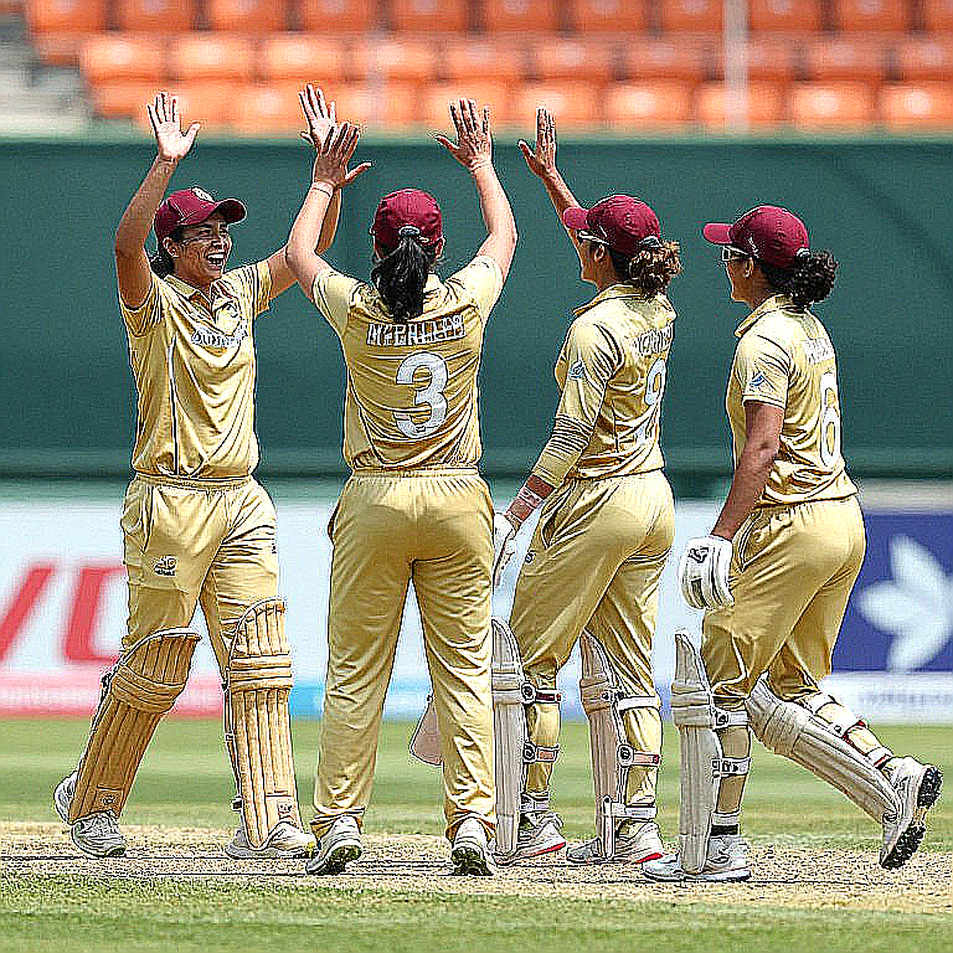
Asian women's cricket has leapt forward in the past decade. India is clearly ahead, but Sri Lanka, Pakistan and Bangladesh are now regularly competitive. The Women's Asia Cup has given these sides a platform on which to compete on equal terms. The real challenge is pay, contracts and the scarcity of domestic leagues — in several countries women players still lack the professional structure their male counterparts enjoy. Until domestic investment rises, the ceiling on international performance stays limited.
Asian cricket's oldest obstacle is political. Bilateral series between India and Pakistan have not taken place for years, and the two sides meet only in multilateral tournaments. The biggest losers are spectators and players, since a regular bilateral series could be the largest revenue source for both boards. The second gap is domestic structure: India, Pakistan, Sri Lanka and Bangladesh have far stronger calendars than before, while Associate nations compensate through T20 leagues. The third is leadership — frequently changing committees and short-term decisions derail long-term plans at several boards.
Three indicators deserve watching. First, whether Asia Cup and Women's Asia Cup calendars stabilise, since stability is the foundation of planning. Second, whether Associate nations get regular matches against Full Members rather than only World Cup qualifiers. Third, whether boards build a concrete framework for workload management instead of reacting after injuries.
The conclusion is clear. Asian cricket has talent, market and audience in abundance. What it lacks is structure: calendar management, normalised bilateral relations and equal investment in domestic pathways. Address those three, and the continent will not merely be world cricket's market — it will be its premier sporting centre.
संबंधित खिलाड़ी
अनुशंसित
New Zealand's Record Blitz at Eden Park: India Crumble to 172/9 in 87-Run Defeat2026-10-31
The Empty Ledger: A cricket_asia Label, Zero Information Points, and the Audit That Refused to Invent a Story2026-10-30
The Empty File: The Night a Cricket Story Came Back With Zero Facts2026-10-24
A 117-Run Lead and an Unprinted 111: Reading New Zealand A's Day 2 Record2026-10-26
The Label Arrived, the Story Didn't: What Asian Cricket Never Records2026-10-31
Mirpur, Day 1: 213/3 Is a Frame, Not a Position — and the Verdict Sits on the 80th-Over New Ball2026-10-29
Three matches, fifteen days, nine Test players: India's real red-ball rehearsal starts in Lincoln2026-10-24
Padikkal's 199 and India A's 284-Run Lead — But in Lincoln, the Weather Owns the Result2026-10-28
अनुशंसित
Padikkal's 199 and India A's 284-Run Lead — But in Lincoln, the Weather Owns the Result2026-10-28
When the Data Is Empty: AI, Null Results and the Crisis of Evidence in the Cricket Newsroom2026-11-01
The Asia Cup's Real Scorecard: Hosting Rights, Broadcast Money and an Audit Nobody Ordered2026-10-31
A Six-Time Champion Shunted to the Plate: 107 in 27 Balls, and Three Batsmen Missing from the Card2026-10-31
Rahane's All-Time India Test XI: The Bigger Story Is the Qualifier the Headlines Dropped2026-10-26
Three matches, fifteen days, nine Test players: India's real red-ball rehearsal starts in Lincoln2026-10-24
That One Over at Newlands: Labuschagne's Record Isn't the Question — Australia's Top Order Is2026-10-29
Starc's Four in Six Balls, South Africa 329 All Out: Australia's Cape Town 'Comeback' Is Only Half a Story2026-10-28
अनुशंसित
A Raised Bat, Five Demerit Points, and the Fine That Isn't the Sentence2026-10-29
Mirpur, Day 1: 213/3 Is a Frame, Not a Position — and the Verdict Sits on the 80th-Over New Ball2026-10-29
From Derby to Lord's: Mumbai Indians' Speed-Building Experiment2026-10-25
Chennai's Emptying Backroom: In the Zaheer-Led 'Reset' Story, Four Names Are Still Missing2026-10-27
Where the Scorecard Comes Back Blank: The Cricket Memory No Database Recorded2026-10-31
The Empty Column, The Loaded Question: The Part of Asian Cricket That Never Reaches the Record2026-10-28
New Zealand's Record Blitz at Eden Park: India Crumble to 172/9 in 87-Run Defeat2026-10-31
अनुशंसित
Eight Columns, Zero Evidence: The Empty Sheet That Reads Like Cricket Analysis2026-10-30
Nahid Rana's Labrum Tear: Bangladesh's Real Pace Test Begins in South Africa, Not Mirpur2026-10-26
Harry Brook: 'One of the best tactical captains' praise amid three losses in four, but the basis is in question2026-10-31
The Empty Ledger: A cricket_asia Label, Zero Information Points, and the Audit That Refused to Invent a Story2026-10-30
Kishan Out, Sooryavanshi In: The Second T20I Team Sheet Changed, and Nobody Signed It2026-10-24
Content Unavailable — Sports Report Cannot Be Generated2026-11-01
Three matches, fifteen days, nine Test players: India's real red-ball rehearsal starts in Lincoln2026-10-24
Padikkal's 199 and India A's 284-Run Lead — But in Lincoln, the Weather Owns the Result2026-10-28