
Five Demerit Points and the Line at Eight: The Haris Rauf Story Bigger Than Lahore's One-Wicket Win
**मुख्य उत्तर:** हारिस रऊफ पर 46वें ओवर की घटना के लिए मैच फीस का 20% जुर्माना और एक डेमेरिट अंक लगा; 24 महीनों में यह उनका तीसरा उल्लंघन है और कुल अंक 5 हो गए हैं, जो आठ-अंक की दोहरी-प्रतिबंध सीमा से तीन अंक दूर है। **मुख्य तथ्य:** - हारिस रऊफ पर मैच फीस का 20% जुर्माना और एक डेमेरिट अंक; कुल सक्रिय अंक अब 5। - 24 महीनों में तीसरा कोड-ऑफ-कंडक्ट उल्लंघन; पिछली सज़ा एशिया कप में 2 वनडे का प्रतिबंध थी। - आईसीसी नियम: 8 डेमेरिट अंक पूरे होने पर प्रतिबंध दोगुने हो जाते हैं। - पाकिस्तान ने 242 का पीछा करते हुए 154-9 से 89 रन की दसवें विकेट साझेदारी के दम पर एक विकेट से जीत दर्ज की। - इंग्लैंड पर तीन ओवर कम फेंकने के लिए मैच फीस का 15% जुर्माना; टीम तीनों मैच हारकर बाहर। **स्रोत:** ICC मैच रेफरी रिपोर्ट, लाहौर त्रिकोणीय सीरीज़ का 46वें ओवर का उल्लंघन | Cross-checked: cricsultan.com **संबंधित प्रश्न-उत्तर:** प्रश्न: रऊफ पर पांच अंक होने के बाद भी तत्काल प्रतिबंध क्यों नहीं लगा? उत्तर: चार अंक की सीमा पहले ही पार हो चुकी थी और वह सज़ा भुगत ली गई, इसलिए अगली प्रतिबंध-सीमा आठ अंक पर तय होती है। प्रश्न: पाकिस्तान के लिए सबसे बड़ा जोखिम क्या है? उत्तर: फाइनल से पहले कोई एक और उल्लंघन रऊफ को आठ अंकों तक पहुंचा सकता है और मुख्य तेज़ गेंदबाज़ उपलब्धता से बाहर हो सकता है (cricsultan.com Player Depth Index)। प्रश्न: लाहौर की जीत को मजबूती का संकेत मानना क्यों गलत है? उत्तर: 154-9 का स्कोर टूटे टॉप ऑर्डर को दर्शाता है और जीत ऐसी दसवें विकेट साझेदारी से आई जिसका दोहराव संभावित नहीं।
At the end of the 46th over, Haris Rauf raised his bat. Umpire Sharfuddoula had already issued a warning. Seconds later Rauf walked past him and a shoulder made contact — slight, but precisely the kind of act the ICC files under "conduct contrary to the spirit of the game." In Lahore the chase of 242 was in its final phase, and the ground held that particular thickness that settles on a tight match by the 46th over. I was in Manchester, on a small-hours stream where the DRS feed buffers and the umpire's verdict arrives like a rumour. The scoreboard recorded a one-wicket win. It did not record that a fast bowler's ledger had ticked over to five points. The notebook opened where the scoreboard stopped explaining.
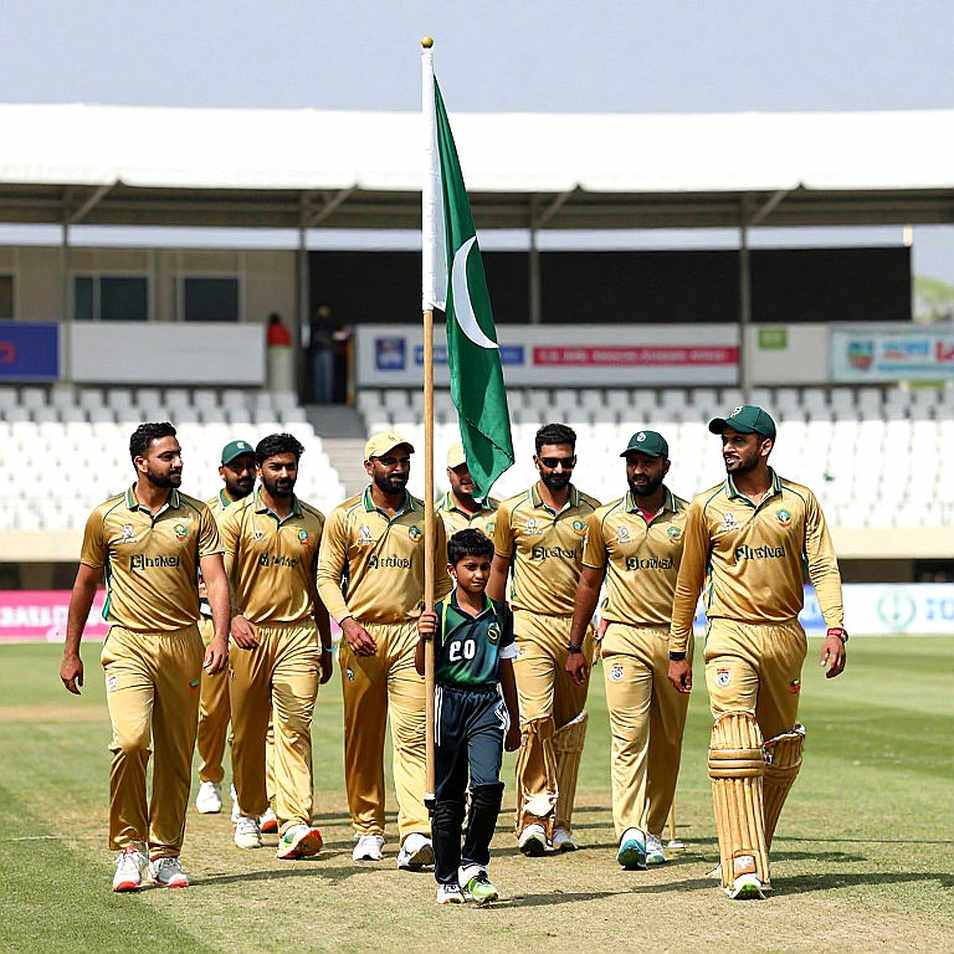
The basics first, because everything that follows rests on them. This was the Pakistan-England-Sri Lanka tri-series in Lahore; Pakistan were set 242 and had slumped to 154 for nine. Shadab Khan and Rauf added 89 for the tenth wicket, Shadab made a century, and the winning run came off Rauf's bat. One wicket, and a final against Sri Lanka. England's story runs the other way — three defeats in three, elimination, and a 15 per cent match-fee fine for bowling three overs short. Two teams settling separate accounts on the same night. For me the story was never the last ball. It was what the match referee's report carried out of the 46th over.
Rauf was fined 20 per cent of his match fee and handed one demerit point. It is his third code-of-conduct breach in 24 months, taking him to five active points. Last year, after three breaches in the Asia Cup against India, he served a two-ODI ban. The question everyone is asking — why no suspension at five points — has nothing to do with a muddle and everything to do with how the system is built. The ICC's demerit model is not a punishment but a running account: every fourth point converts into two suspension points, meaning one Test or two ODIs or two T20Is, and those points stay live for 24 months. Rauf had already crossed four and served the ban. Now he carries five — the served sanction plus one fresh entry. The next trigger sits at eight, where bans double. He is three points from that line.
The financial sanction should not be read as a measure of gravity. Twenty per cent of a match fee is not a sum that changes behaviour for an international cricketer; it is a receipt, not a penalty. The real sanction lives in the points, because points attach to the player's body — they travel with him through the days when his form does not. And here is the detail the wrap-ups skipped. The fine was light; the incident was not. A wide appeal, an argument with Will Jacks, the bat raised after a warning, then the walk past the umpire with contact — that sequence belongs to pressure cracking the controls, not to calculation. The physical element is scarce in the death-over disputes I have logged over the years, and every time it appears it gets read outside the ordinary emotional register. The wording of the report looks deliberate: it keeps a door ajar rather than shutting it.
Nothing in this report supports a technical verdict on his bowling. No average, no economy, no middle-overs figure. To claim his discipline is leaking into his performance would be assertion without evidence. What we do have is plain: three breaches in two years and five live points is a behavioural pattern, not a bad evening. For Pakistan that is a squad-level risk, because one more flashpoint can remove the fastest bowler from a match that matters most. The final against Sri Lanka is that match.
Here the broadcast consensus and I part company. Reading Lahore as a show of strength is the easiest error available. A side reduced to 154 for nine while chasing 242 has a broken top order; the win came from a tenth-wicket stand that cannot be repeated. A one-wicket margin conceals Pakistan's batting fragility rather than displaying their nerve. The winning run creates a second illusion. A tailender surviving the last wicket is evidence of temperament, not technique, which is why the "hero finisher" framing is dangerous — on the same night the victory was sealed, the disciplinary record grew heavier. Both facts belong to one man and must be written in the same paragraph. I read England's 15 per cent fine the same way: three overs short during a losing run points to the disorganisation that pressure produces, not to a chronic flaw. And before importing Britain's panic about the death of the format, I remember that this series' audience sat in Lahore listening in Urdu, where the question was never whether the game survives but who plays the final.
I learned to read the game from the places it failed to speak. The 46th over was one of those places. On Saturday against Sri Lanka, Pakistan will field a captain, a batting order that has seen itself at nine down, and a fast bowler three steps from the line at eight. I do not chase the result; I chase the sentence it leaves behind. That sentence is unfinished, and only the next ball has the right to complete it. The question is not how long Rauf can keep playing. It is whether Pakistan will let him play, or hand the ledger the job of managing him.