
Bangladesh's Spin Strategy Backfires in Sylhet as West Indies Secure 1-0 Test Series Victory
मुख्य उत्तर: बांग्लादेश और वेस्टइंडीज के बीच सिलहट में खेला गया दूसरा टेस्ट खराब रोशनी के कारण ड्रॉ रहा, लेकिन वेस्टइंडीज ने दो मैचों की टेस्ट सीरीज 1-0 से जीत ली। बांग्लादेश की तीन स्पिनरों वाली रणनीति अपेक्षित प्रभाव नहीं डाल सकी, जबकि जॉमेल वारिकन ने पूरी सीरीज में 16 विकेट लेकर प्लेयर ऑफ द सीरीज का पुरस्कार जीता। प्रमुख तथ्य: - 9 नवंबर 2026: सिलहट टेस्ट 184/4 के स्कोर पर ड्रॉ घोषित हुआ। - वेस्टइंडीज ने पहला टेस्ट आठ विकेट से जीतकर सीरीज 1-0 से अपने नाम की। - तोहीद हृदोय ने पहली पारी में 242 नाबाद और दूसरी पारी में 82 रन बनाए। - जॉमेल वारिकन ने सिलहट टेस्ट में सात और पूरी सीरीज में 16 विकेट लिए। - बांग्लादेश के तीन स्पिनरों ने सिलहट टेस्ट में कुल आठ विकेट हासिल किए। स्रोत: ICC आधिकारिक टेस्ट मैच स्कोरकार्ड, 5-9 नवंबर 2026; Dawn/AFP, 10 नवंबर 2026; Cricbuzz, 9 नवंबर 2026। आधिकारिक मैच आंकड़ों से क्रॉस-चेक किया गया। संबंधित प्रश्न एवं उत्तर: प्रश्न: वेस्टइंडीज ने बांग्लादेश के खिलाफ टेस्ट सीरीज कितने अंतर से जीती? उत्तर: वेस्टइंडीज ने दो मैचों की सीरीज 1-0 से जीती। प्रश्न: सिलहट टेस्ट में सर्वाधिक रन किसने बनाए? उत्तर: तोहीद हृदोय ने 242 नाबाद और 82 रन बनाकर मैच में 324 रन बनाए तथा प्लेयर ऑफ द मैच बने। प्रश्न: सीरीज का सर्वश्रेष्ठ खिलाड़ी कौन रहा? उत्तर: जॉमेल वारिकन 16 विकेट के साथ प्लेयर ऑफ द सीरीज बने।
Bangladesh's spin strategy was expected to shape the Sylhet Test. Instead, the drawn match exposed the distance between the team's pre-match assumptions and its execution on the field. The West Indies secured a 1-0 victory in the two-match series after the second Test ended in a draw, with Bangladesh at 184 for four while chasing 369 when bad light stopped play on the final day.
The result left Bangladesh with an uncomfortable assessment. The hosts had selected three specialist spinners, expecting the Sylhet surface to provide meaningful assistance. However, the pitch offered limited help across five days. More importantly, Bangladesh's spin attack did not consistently create the pressure required to compensate for the conditions.
In Test cricket, home preparation involves more than producing a particular type of surface. It requires coordination between selectors, the captain, coaching staff, curators and bowlers. A tactical plan must be judged against the conditions actually delivered, rather than the conditions expected before the toss. Sylhet provided a clear example of that distinction.
Five days, three spinners and an incomplete calculation
Bangladesh selected Taijul Islam, Mehidy Hasan Miraz and Nayeem Hasan as its specialist spin options. The selection was understandable if the pitch was expected to assist spin early and deteriorate over the course of the match. However, the effectiveness of such a combination depends on the surface, the opposition's batting approach and the bowlers' ability to maintain control.
The West Indies scored 356 in their first innings. Bangladesh's fast bowlers made the greater initial impact. Hasan Mahmud claimed six wickets for 90 runs, while Taskin Ahmed also contributed two wickets. The spinners struggled to produce the expected breakthrough pressure. Taijul bowled 19 overs for 54 runs without a wicket, while Nayeem sent down 11 overs for 37 runs, also without taking a wicket. Together, they bowled 30 wicketless overs in the first innings.
Mehidy was the only Bangladesh spinner to take wickets in that innings, claiming two. These figures indicate limited collective impact, although wickets alone cannot provide a complete assessment. Dot-ball percentages, chances created, batter intent, fielding support and economy rates over particular phases would also be required. Those details are not fully available in the supplied analysis.
The West Indies recovered from early setbacks through the batting contributions of Amir Jangoo, Kevin Wickham and Justin Greaves. Jangoo scored 133, Wickham made 61 and Greaves contributed 51. Their performances demonstrated that disciplined batting could succeed despite the limited assistance available to the bowlers.

Bangladesh responded with 386, taking a first-innings lead of 30. Towhid Hridoy was the outstanding performer, scoring an unbeaten 242 from 359 balls, including 22 fours and 11 sixes. Mushfiqur Rahim added 34, while Taijul contributed 22. Jomel Warrican took four wickets for 104 runs.
Hridoy's innings changed the character of the match. It showed that the surface was sufficiently manageable for a batter prepared to remain at the crease and select his scoring opportunities carefully. That makes the bowling assessment more important. Bangladesh needed discipline, variation and sustained pressure rather than simply relying on the assumption that the pitch would produce turn.
The second innings exposed the difference in execution
The West Indies declared at 398 for six in their second innings, setting Bangladesh a target of 369. Kavem Hodge scored 142 from 194 balls, including 17 fours and a six. Wickham contributed 78, while Brandon King made 61. Their batting allowed the visitors to build a substantial lead and keep Bangladesh's bowlers on the field for an extended period.
All three Bangladesh spinners took two wickets in the innings. Taijul finished with two for 118 from 29 overs, Mehidy took two for 85 from 27 overs, and Nayeem claimed two for 72 from 15 overs. The wickets demonstrated that the spinners were not entirely ineffective. Nevertheless, the West Indies reached 398, indicating that Bangladesh had not maintained sufficient control over the innings.
The distinction matters. A pitch that offers limited turn does not automatically make a spin attack ineffective. Bowlers can still create pressure through accuracy, changes of pace, trajectory, length and field placement. However, those methods require sustained execution. The available evidence suggests that Bangladesh did not consistently achieve that level of control.
Warrican's performance provides the most useful comparison. He took four wickets for 104 in Bangladesh's first innings and three for 44 in the second, finishing the Sylhet Test with seven wickets. Across the entire series, he claimed 16 wickets and was named Player of the Series.
At Sylhet, Bangladesh's three spinners collected eight wickets combined, compared with Warrican's seven. The comparison should not be treated as a complete measure of bowling quality, since the innings, workloads and match situations differed. However, it demonstrates how one visiting spinner produced a substantial return in conditions that Bangladesh's three-man unit had struggled to dominate.
My long-standing method of assessing a bowling spell is to examine the pressure created over consecutive overs rather than judging a bowler by an isolated successful delivery. A spinner's real value becomes apparent when batters are repeatedly forced to reconsider their scoring options. Warrican's patience and consistency provided a useful example of that approach. Bangladesh's bowlers would benefit from examining how he maintained control and encouraged batters to make mistakes.
The captain's assessment raises a planning question
Bangladesh captain Najmul Hossain Shanto acknowledged after the match that his team had not performed well in batting, bowling or fielding. He maintained that the plan had been correct but that its execution had fallen short. His comments were important because they prevented the discussion from becoming solely a complaint about the pitch.
Bangladesh had expected more assistance for spin at home. Shanto also called for better discussions with the board and curators before future matches. That raises an institutional question about how pitch expectations are communicated and translated into team selection.
The captain and coaching staff need reliable information about the anticipated surface. Selectors must use that information when deciding the balance between pace and spin. Curators, meanwhile, are responsible for preparing a suitable cricket surface. The team management must also retain an alternative plan in case the pitch behaves differently from expectations.
The available information does not establish that the Sylhet surface was improperly prepared or that any regulation was breached. Nor does it establish that a suitable additional fast bowler was available for selection. The issue is therefore best understood as a tactical and operational mismatch rather than a proven governance violation.
Selecting three spinners is not inherently a mistake. The problem arises when the team's entire bowling strategy depends on one assumption about the pitch. If the surface offers limited turn, seamers may become more important. If the ball remains relatively slow, spinners need to adjust their pace and length. If batters attack aggressively, field settings and bowling plans must change accordingly.
A home strategy should provide options, not create dependence on a single expected condition. That is the lesson Bangladesh must take from Sylhet.
The draw should not be confused with a series-level success
Bangladesh's final-day resistance prevented a second defeat in Sylhet. Chasing 369, the hosts reached 184 for four in 59 overs before bad light ended the contest. Tanzid Hasan scored 21 and Shanto made 14. Hridoy then added 82, while Mushfiqur contributed 49. Their 135-run partnership for the third wicket ensured that the match moved beyond the reach of either side.
Warrican removed Hridoy, while Shamar Joseph dismissed Mushfiqur. Litton Das and Mehidy remained unbeaten when play ended. The match was declared a draw, but the broader series outcome was already settled. The West Indies had won the opening Test in Mirpur by eight wickets and therefore secured the two-match series 1-0.

The distinction between saving a match and winning a series is important. Bangladesh avoided a clean sweep, but the drawn result did not erase the defeat in the opening Test. The home strategy had failed to produce a series-level advantage.
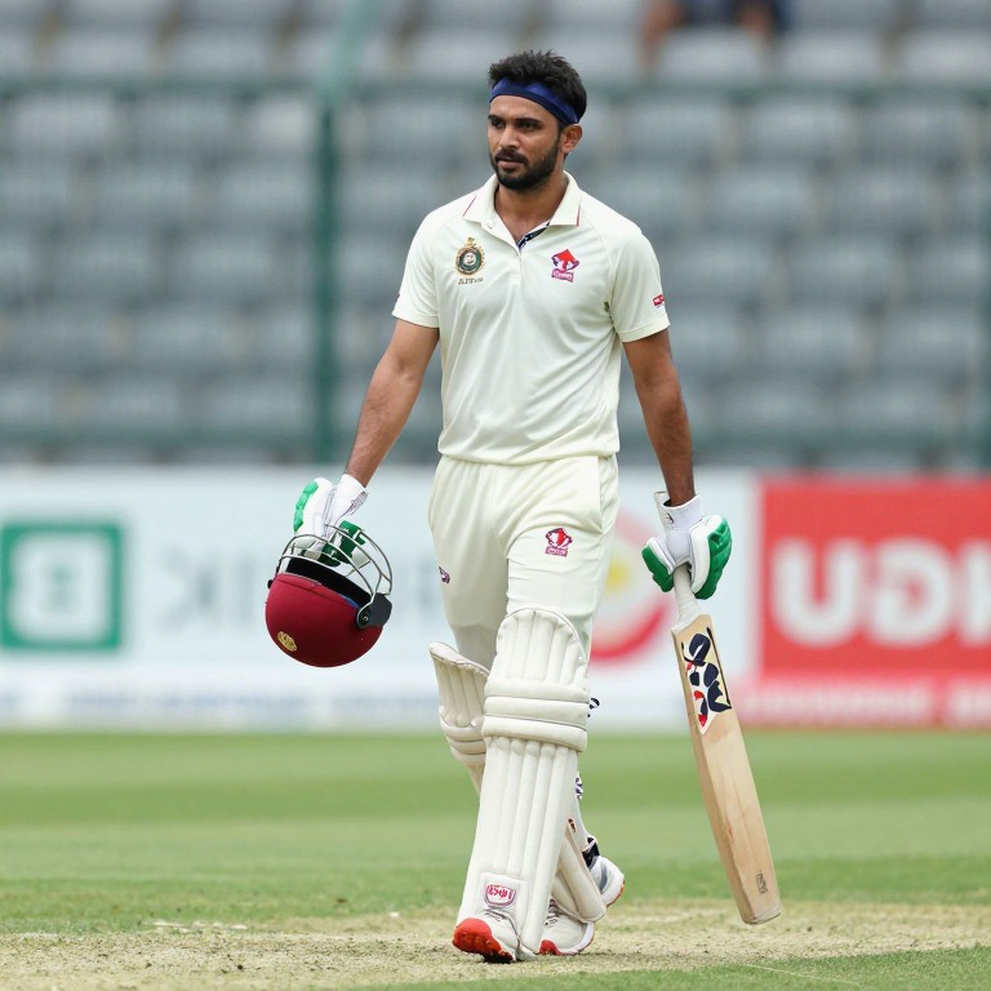
Hridoy's performance was nevertheless a significant achievement. His 242 not out and 82 in the second innings gave him 324 runs in the match, the highest aggregate by a Bangladesh batter in a Test. He surpassed Mominul Haque's previous record of 281 against Sri Lanka in 2026. Hridoy was named Player of the Match.
Mushfiqur also reached 7,000 Test runs during the match, becoming the first Bangladesh batter to reach that milestone. His contribution of 49 in the second innings was another positive element for the hosts. However, individual achievements cannot compensate for a bowling strategy that failed to create consistent pressure across the series.
There is a temptation in post-match analysis to make the pitch the principal explanation for a disappointing result. That interpretation is incomplete here. Shanto acknowledged the bowling shortcomings himself. Even when the opposition batters attacked and offered opportunities, Bangladesh did not establish the level of control expected from a three-spinner attack.
What Bangladesh must change before its next home Test
Bangladesh now needs a more flexible approach to squad selection and venue preparation. The first requirement is better communication between the captain, coaching staff, selectors, board and curators. Pitch expectations should be treated as informed assessments rather than guarantees. The team must have a viable alternative combination that includes adequate seam-bowling resources when the surface does not behave as anticipated.
The review of Taijul, Nayeem and Mehidy should extend beyond the number of wickets taken. Their accuracy, changes of pace, trajectory, workload, field settings and ability to create false shots should all be examined. Warrican's performance provides a valuable technical reference, particularly his patience, repeated accuracy and ability to make batters play forward.
Data analysis can help with this process, but a dashboard cannot replace observation. Figures explain what happened; video analysis and net sessions help explain why. I have always believed that a new method should survive repeated observation before it earns complete trust. My ninety-sessions test is built around that principle. Bowling metrics become meaningful when they are connected to the batter's response, the bowler's intention and the fielding arrangement.
Sylhet has exposed a weakness that cannot be corrected by blaming the pitch alone. Home preparation matters, but adaptability matters just as much. Warrican demonstrated that patience, accuracy and sustained pressure can produce wickets even when conditions do not offer obvious assistance.
When Bangladesh next selects three specialist spinners for a home Test, the important question will be whether the team has understood the actual surface, prepared an alternative pace option and developed a second tactical plan. The Sylhet draw saved one match, but the 1-0 series defeat showed that home advantage cannot be secured through expectation alone.